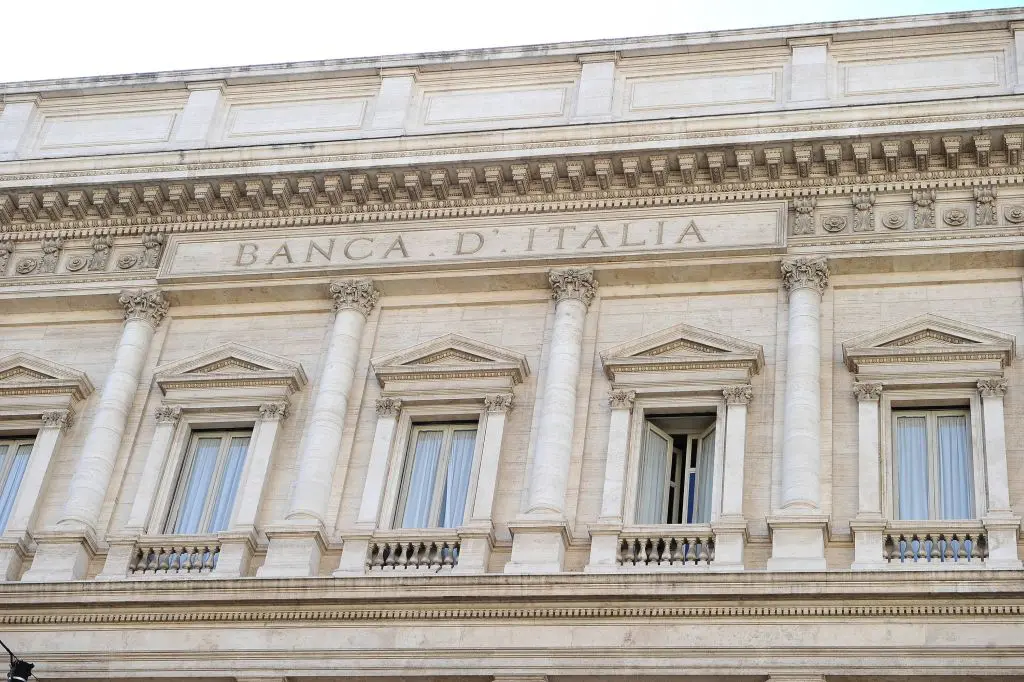
ROMA (ITALPRESS) – “In an international context marked by great instability, the Italian economy, like the European one, has shown an estate higher than expected. The GDP increased in the first part of 2026 and should continue to expand in the second part of the year and in the coming years, although at rhythms contained by the effects of energy regrowth and the increase in financing costs”. Andrea Brandolini, Head of Economics and Statistics of the Bank of Italy, said this in audition at the Budget Committees of Chamber and Senate for the examination of the Programme Document of Public Finance 2026. “The evolution of the crisis in the Middle East, the extensive geopolitical tensions and the trend of financial markets, also in relation to developments connected with artificial intelligence, represent significant sources of risk for the world economy and, in reflexion, for the Italian economy,” he said.
“It is essential to consolidate the country’s growth capacity by strengthening the positive signals found in recent years and which are at the base of the expected trend in 2026. In this respect, it is important to keep the attention to the composition of public expenditure. Both new defence and energy costs and resources traditionally used to support the economy will be able to further promote the dynamics of productivity as the most priority will be the investment component in relation to the current one and will select projects with high yields but that, for their costs or for the risk profile, do not lend themselves to being undertaken by private individuals,” he added.
“The significant increase in returns on international sovereign debt markets makes it particularly important to preserve the balance of public finances. High public debt is a vulnerability factor in changes in market risk tolerance. In this context of great uncertainty, the Italian budgetary policy can leverage the prudence of recent years and the framework of European budgetary rules. Both factors contribute to anchoring average investor expectations. The identification of cover sources in the budget to contain the increase in deficit would allow to reduce the ratio between debt and GDP more quickly,” he explains.
“The deficit expectations for 2026 are generally consistent with the available data, despite the uncertainty that distinguishes these evaluations. It is necessary to pay attention to the trends in the last part of the year, in order to counter any changes in time, given the margin reduced in the estimates of the DPFP compared to the threshold of 3%. Compared to what was envisaged in the Public Finance Document (DFP) last April, the deficit would remain substantially unchanged: 7 the highest overall revenue (about 0.2 percentage points of GDP), would be offset by higher interest and primary expenditure (about 0.1 points of GDP each)” he concludes.
– Photo Ipa Agency –
(ITALPRESS).