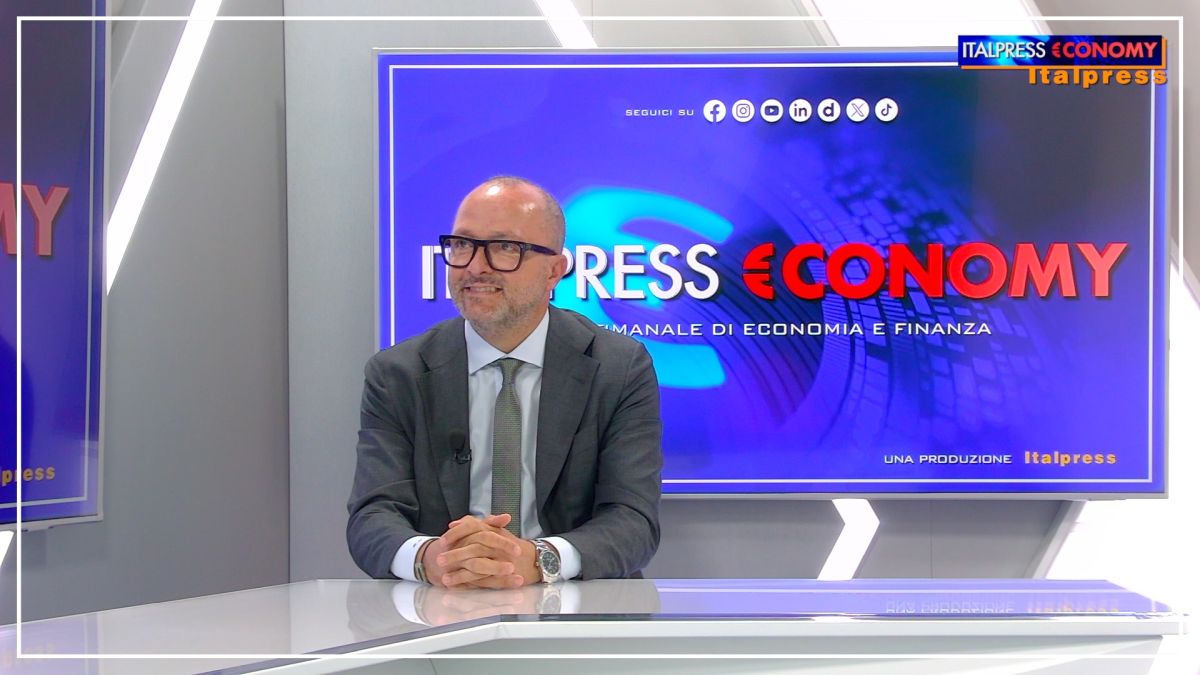
MILAN (ITALPRESS) – From exhibition area to innovation district. It is the budget 11 years from the Expo 2015 traced by Mauro Capitanio, managing director of Principia, the company by public majority (main companies MEF, Lombardy Region and Milan Municipality) that gives the guidelines for the development of Mind, the Milan Innovation District. Captain speaks in an interview with Claudio Brachino for the Italpress Economy television magazine.
“The public partners have been far-sighted – explains Capitanio – and decided to transform the area that hosted the Expo, a million square meters between Milan and Rho, into a real city, an ecosystem of innovation.” Principle, the Ad emphasizes, “does governance, gives guidelines for site management”, which will host research centers, universities and training schools. The most impressive yard is that of the State University of Milan, in transfer from Città Studi: 20 thousand students expected from about 2028, with a focus on STEM subjects. Also present is the Human Technopole genomic research centre, as well as 9 ITS – including the Botticino restoration school – and professional institutes. The ecosystem complements small and medium-sized enterprises, startups, multinationals and third-sector entities, engaged in the coordination of social impacts. The production centre remains linked to research and development in biotechnology, life science and pharma.
At the base of the project, born in 2015, a public-private partnership model that sees Principia collaborate with the Lendlease group. “In my mandate – says Capitanio – we are opening public-public partnerships”, with the involvement of public-saving management companies able to make available “patient capitals” to develop schools, barracks and buildings dedicated to research.
The Mind model, emphasizes the Ad, is already “exportable”: in Pavia the construction of a new ecosystem linked to the production of semiconductors and microcontrollers, in collaboration with the University of the city and with national and multinational realities of the sector. Thanks to a contribution of Regione Lombardia, Principia is completing university laboratories in the area of Parco Cardano and is setting up the industrial plan for the settlement of the private. Contacts are also in progress with the Piedmont Region and the Politecnico di Torino for a possible hub of innovation linked to aerospace-defense: “Germogli also outside Lombardy”, says Capitanio, which indicates in the replicability of the model “the other important mandate” of society.
The Milanese district, adds, has already attracted international attention: “Recently we had delegations from Tokyo and Oslo, representatives of technological parks that come to study this model,” where the public subject “guarantees the security of investments and times” and simplifies the bureaucracy for those investing.
Looking at 2035, Mind aims to become a real city, with 60-80 thousand daily visitors expected, positioning itself among the top 100 Italian cities for attendance. Crucial, for Capitanio, the ability of the staff of Principia to accompany public and private subjects in environmental analysis, investigations on the road and acoustics, guaranteeing certainty of the times.
Finally, the theme of sustainability, to be thought “to the dawn of design”: a city accessible in the means and in the livability, but also in the costs, considering the plans of students and social housing. “We do not want to create cathedrals in the desert that attract business and then empty themselves – concludes Capitanio – but a sustainable 360-degree place”, where it is also possible to live, not only to work.
– Photo Italpress –
(ITALPRESS).