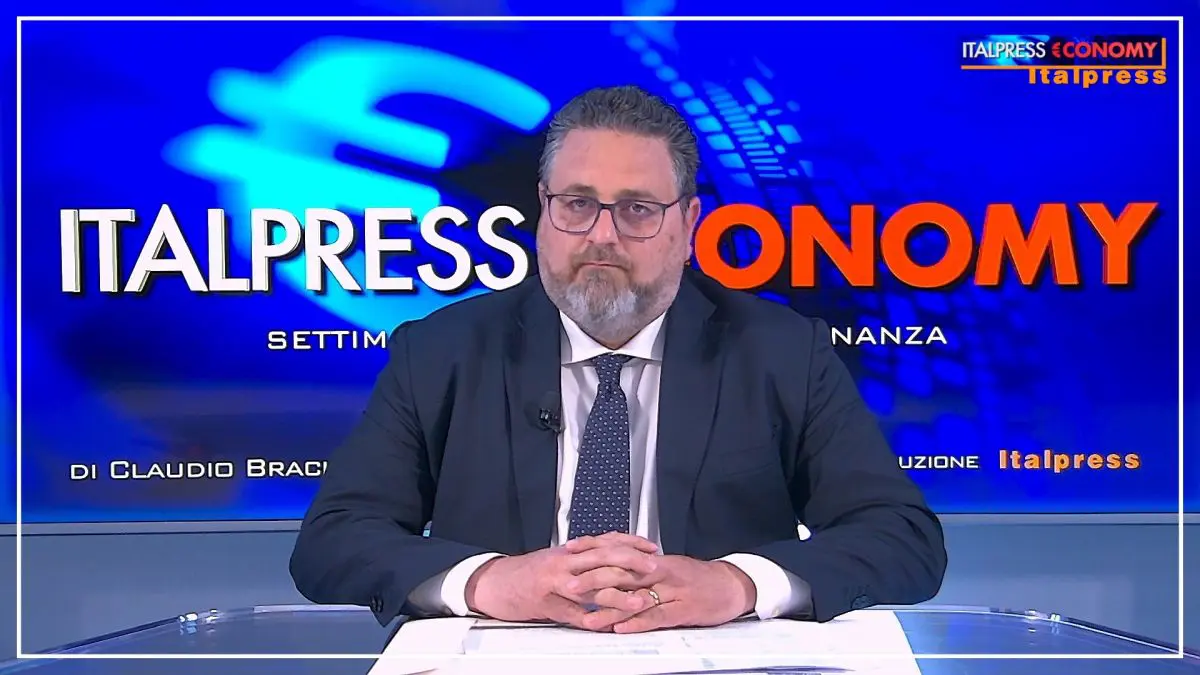
ROMA (ITALPRESS) – Growth of 10% in 2025, which reaches 1,7 billion euros and a financial return of 4.66% in a year marked by strong geopolitical turbulence. Epap, the multicategory body of security and assistance, closes a solid exercise and looks forward with an ambitious reform agenda, from professional welfare to battle against double taxation on returns. Carlo Cassaniti, president of the agency, interviewed by Claudio Brachino for the television magazine Italpress Economy.
Epap brings together under the same roof the professions of the Attuaries, Chimists and Physics, Doctors of Agronomists and Doctors of Forests, and Geologists. A total audience of about 34,000 members, all free professionals, united by a social security structure born with the legislative decree 103, thirty years ago.
“Like all private security institutions – Cassaniti explains – our mission is twofold: on the one hand, collect the contributions of members, invest them and reevaluate the members who will become future pensions; on the other hand, accompany the professionals during the work phase with welfare measures.” A balance between security and assistance that the body seeks to decline in an increasingly integrated and modern way.
“Ours are patient investments, long-term. We look at the performance, but we must guarantee pensions, so we always maintain a calculated risk,” says Epap President.
A philosophy shared by the entire system of private Italian social security institutions, which today counts about 20 entities, manages a total patrimony of approximately 130 billion euros and represents a leading interlocutor for the state.
“We were also in the most delicate moments – recalls Cassaniti -. During the Covid we helped our members, guaranteed subsidies and in some cases we also anticipated them on behalf of the State”. A role that goes well beyond social security management in the strict sense and that includes investments in real economics, with positive effects on the national productive fabric.
If the accounts are solid, Cassaniti does not hide that the system needs deep updates. The central node is the adequacy of performance. EPAP works with the pure contributory system to individual capitalization – the mechanism introduced by Dini law – which guarantees financial sustainability but poses important challenges regarding the scale of future pensions, especially for those with discontinuous careers or non-high income.
“With the pure contribution, you must have high incomes and a medium-high contribution to have good pensions – the president emphasizes –. This is why it is necessary to intervene both on the payment of contributions and on that of supplementary contributions, which finance our welfare”. The new presidential mandate, launched last year, put a reform season at the centre: new rules for building pensions and a more organic regulation for assistance measures.
The most significant step is that from purely welfare to an integrated system. “We want to provide our members with all the tools to enrich their professional knowledge – explains Cassaniti –: specialized training, instrumentation for studies, social culture. The pension of members begins on the first day of work”.
In addition to support for parenting – with additional contributions on motherhood and kindergartens compared to those of law – the institution aims to develop measures that look at the evolution of professions, including the theme of artificial intelligence, on which the system of social security agencies already participates in the table established by the Ministry of Labour.
Among the structural variables that concern the system, the demographic decline occupies a prominent place. To complicate the picture, the raising of the average age of the married populationthe time horizon of the issues. “These two aspects together – warns Cassaniti – deeply alter our actuarial scenarios. You have to find a balance, and there are many tables open on this theme.”
A warm front is that of taxation. The first pillar compulsory insurance bodies, such as EPAP, pay 26% on returns, compared with 20% on second pillar pension funds, which are optional. A disparity that Cassaniti defines “a paradox” and that brakes the ability of entities to reinvest resources in welfare.
The topic is supported by international studies: “Every euro invested in preventive health generates an estimated return of 14 euros – says Cassaniti –. Lowering the tax levy on the yields of the first pillar would free resources which, invested in welfare, would produce a hugely positive multiplier effect for future public spending”.
“It’s a theme that politics knows well – says the president of Epap -. In June we were summoned by the Minister of Labour Marina Calderone to discuss, among the various proposals advanced in the thirty years of the agency, also the theme of double taxation, which we consider not more extendable”.
– Photo Italpress –
(ITALPRESS).