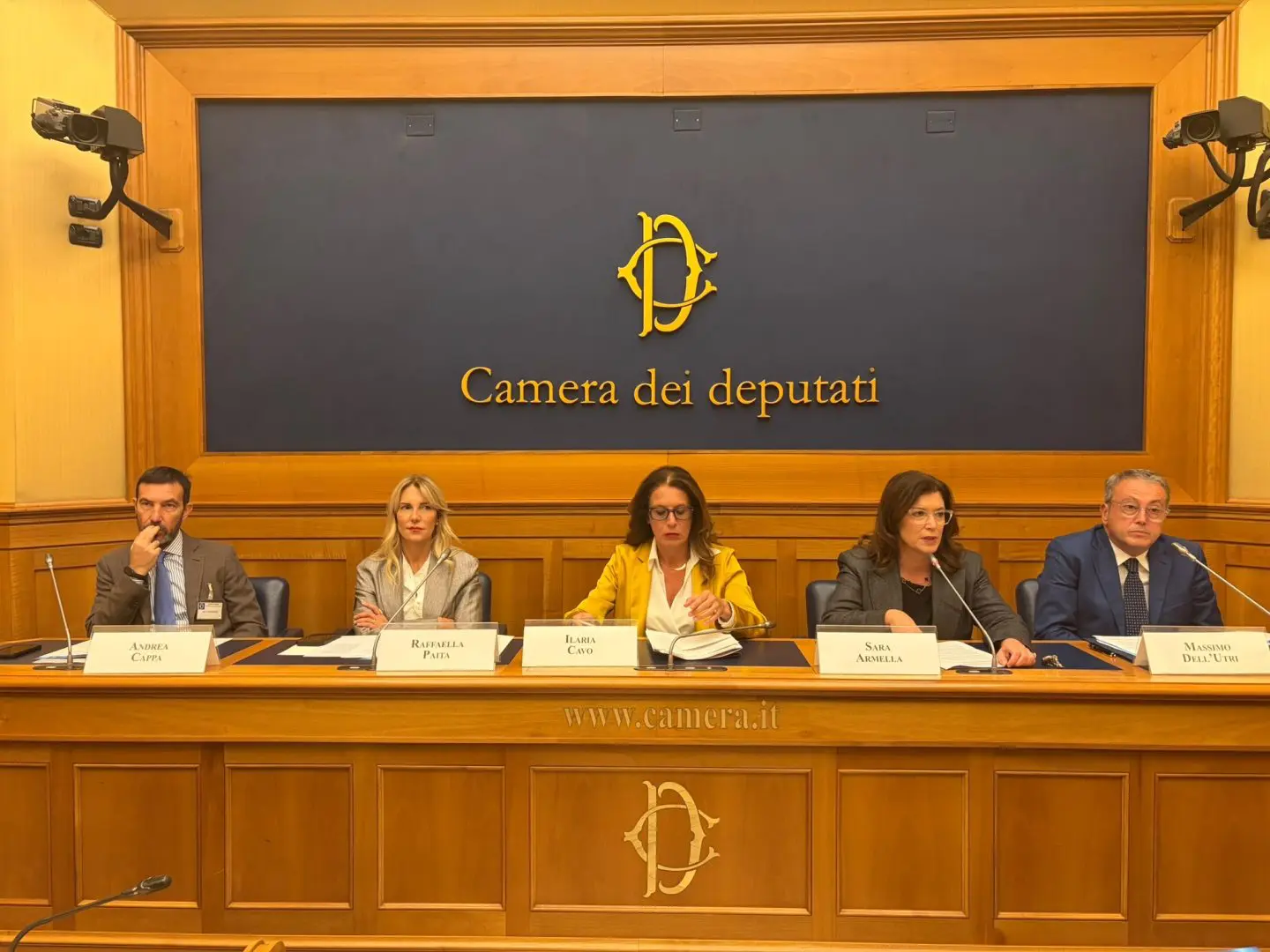
ROMA (ITALPRESS) – How are the strategies of Italian companies changing in the face of the duties, geopolitical tensions and the new rules of international trade? This is the question at the centre of the fourth edition of the International Trade Forum, scheduled on October 23 at the Hotel Excelsior Gallia in Milan. The title chosen for this year is “New routes of global trade. How companies adapt to change and anticipate challenges.” The programme was presented this morning in the press room of the Chamber of Deputies. Promoted by ARcom Formation, the initiative will bring together representatives of Italian and European institutions, enterprises and experts of economics, geopolitics, logistics and customs. During the day, the results of an investigation by Noto Sondaggi on 200 Italian exporting companies will be presented, to understand how US duties and new trade rules are affecting business activities, what countermeasures have been adopted and how international market access strategies are changing. The press conference was attended by the Secretary for Foreign Affairs and International Cooperation Massimo Dell’Utri, the Vice-President of the X Commission of the Ilaria Cavo Chamber, Senator Raffaella Paita, scientific director of ARcom Formation Sara Armella and the Director-General of Confetra Andrea Cappa. The need to strengthen dialogue between institutions and enterprises has emerged from their interventions to address a context in which political decisions, trade barriers and technological transformations increasingly affect economic choices. “The Forum is an important moment of great attention that concerns foreign trade,” said Dell’Utri, recalling the difficulties of an international stage marked by a geopolitical crisis that, until a few years ago, would have been difficult to imagine. Tensions between the main powers and the use of protectionist measures make it more complex to operate on foreign markets, increasing uncertainty for companies that export. In this scenario, the comparison between institutions and production system becomes important to identify answers to new critical issues and support the presence of Italian companies on international markets. For Ilaria Cavo, the difficulties must not make forget the opportunities offered by the Italian export results.
The MP recalled the data on Japan’s overcoming by export value, stressing the importance of analyzing this result to understand the strengths of the production system and the possibilities for further growth. “Italy must be a bridge and Europe must be able to negotiate more and more united,” said Cavo, indicating in the capacity of the European Union to present itself with a common position a fundamental condition for facing international competition. European cohesion is particularly important when it comes to negotiating with large economies and defending the interests of enterprises, especially small and medium-sized enterprises, which have less resources to autonomously address changes in the commercial framework. The comparison between public and private sectors is also the basis of the Forum. “The Forum was born to seek comparison between public and private sectors”, explained Sara Armella, scientific director of ARcom Formation. Geopolitical analyses, he observed, can help companies interpret international scenarios, assess risks and choose how to move in different markets. At a time when political decisions can change trade conditions quickly, knowing the evolution of trade rules and relations between countries becomes an integral part of business planning. The challenge is to promote the opening of markets and, at the same time, to create conditions that allow enterprises to compete in an increasingly complex context. The Forum, free and accessible also in live streaming, aims to offer a space for deepening and comparison of possible solutions. Senator Raffaella Paita emphasised the uncertainty generated by US duties and relapses for Italian companies. The new trade barriers can affect the costs, margins and ability of enterprises to maintain their position in the target markets, pushing them to assess alternative strategies. The framework also contributes to technological innovation and the increasing weight of economies such as India, which are changing the balances of world trade. According to Paita, companies need a less bureaucratic Europe, able to accompany changes rather than add obstacles. The simplification of procedures and greater response capacity by institutions can help businesses adapt more quickly and focus resources and investment on development.
Another central issue concerns customs, whose efficiency can directly affect the competitiveness of enterprises. “As the Customs Code is applied, it determines the competitiveness of our companies on global markets,” said Andrea Cappa, CEO of Confetra. The Italian system involves several public administrations and the way they operate and coordinate has direct consequences on the times and costs of import and export operations. For small and medium-sized enterprises, complex or uneven procedures may result in additional burdens and operational difficulties. On the contrary, simplification of fulfilments, digitization and improved administrative coordination can make logistics chains more efficient and facilitate access to foreign markets. The European customs reform will be one of the main topics of the Milan day. Matthias Petschke, director of the Customs Directorate of DG TAXUD of the European Commission, is expected to take part in a discussion with representatives of the Customs and Monopoli Agency, logistics and business world. The focus of the debate will be the new EU customs authority, the European Data Hub, the Trust and Check system and the use of artificial intelligence in controls. The goal will be to deepen how the evolution of digital procedures and tools can help make controls more effective and more fluid exchanges. To open the works, coordinated by journalist Mariangela Pira and Sara Armella, will be the institutional interventions of the mayor of Genoa Silvia Salis, of the undersecretary of State Matilde Syracuse and of the deputy Ilaria Cavo. A contribution from the Director-General of the World Trade Organization, Ngozi Okonjo-Iweala, is also planned. The geopolitical framework will be deepened by the analyst Dario Fabbri, with an intervention dedicated to new economic balances a year after the introduction of US duties. It will follow a round table on the global competition, to which will participate, among others, the Euro MPs Brando Benifei and Carlo Fidanza, Professor Giorgio Sacerdoti and representatives of Confindustria, ICE and the enterprises. The comparison will address the relationship between commercial policies, international rules and industrial strategies, with particular attention to the conditions necessary to maintain competitive Italian presence on foreign markets. The results of the survey by Noto Sondaggi will be illustrated by Antonio Noto, founder and director of the institute. The research will examine the effects of trade barriers on exporting companies, target market choices and changes in supply chains. The survey will offer a photograph of the difficulties encountered by companies and responses put in the field, from the diversification of markets to the revision of commercial strategies. The goal is to understand how companies are reacting to a context in which political decisions and international tensions increasingly affect the organization of economic activities. In the afternoon are expected the Minister of Enterprise and Made in Italy, Adolfo Urso, and the European Commissioner for Trade and Economic Security, Maros Sefcovic, who will intervene with a video message. Federico Fubini, Deputy Director of Corriere della Sera, will explore the impact of artificial intelligence on international trade. Technological innovation is transforming data management, logistics processes and market analysis, opening new opportunities but also requiring adequate investments and skills. The ability to integrate these tools into business processes is an additional factor in competitiveness, especially for enterprises called to operate in increasingly dynamic markets. Also plannedpresentation of the ARGO white paper – Observatory on International Trade and a new quarterly magazine dedicated to the evolution of global trade, created by ARcom in collaboration with Studio Armella & Associati. The Alfiere International Trade Award will also be presented, aimed at under 35 professionals who have distinguished themselves in the field. Four panels and tables will complete the day, with insights into the competitiveness of enterprises, customs reform, risk management and opportunities for Made in Italy. The aim is to compare the needs of companies with the work of the institutions, identifying concrete solutions to address the new conditions of world trade. In a scenario marked by duties, geopolitical tensions and regulatory changes, the ability to anticipate risks, diversify markets and adapt strategies will be increasingly important for the future of Italian exports.
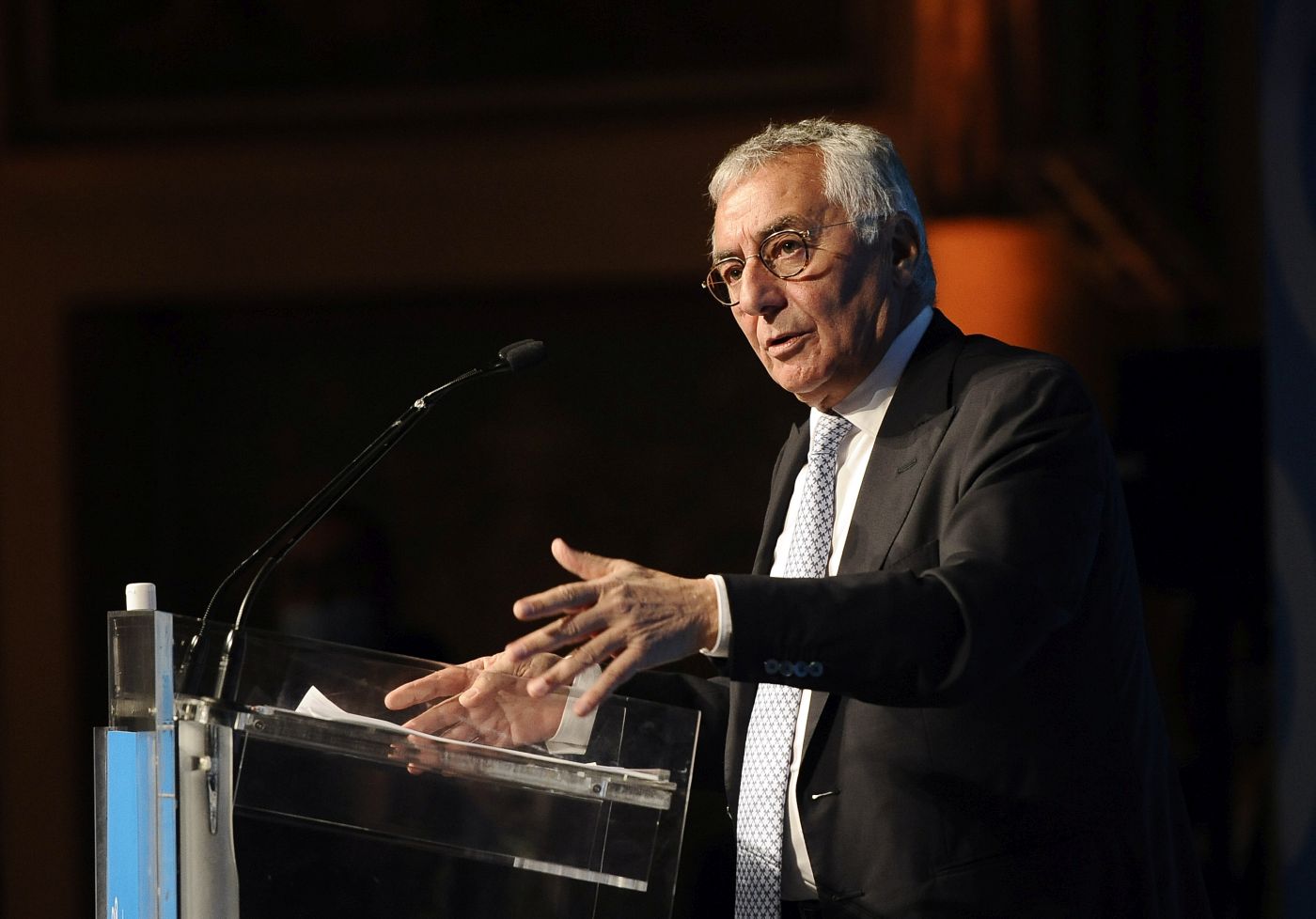
– photo office press Forum International Trade –
(ITALPRESS).