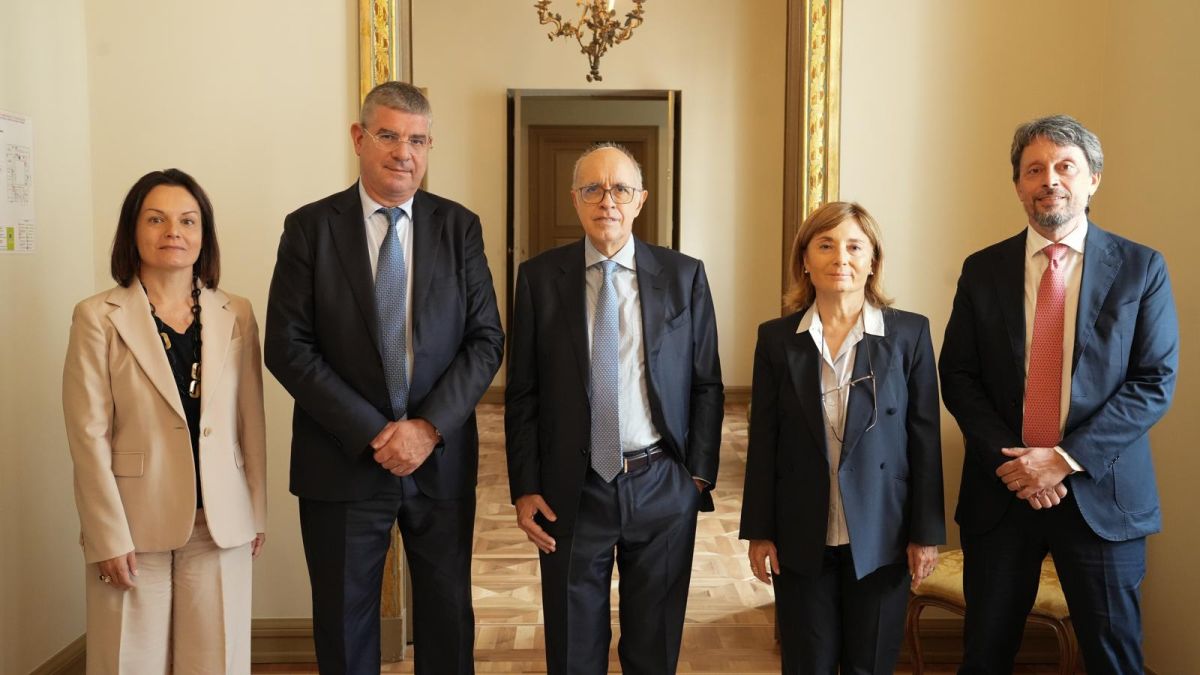
MILAN (ITALPRESS) – Fondazione Cariplo hosted an important moment of discussion dedicated to the theme of the house, which brought together some of the most authoritative representatives of the institutions, finance and the third sector active in Italy and Europe in the field of social housing and access to living. This event, born from the desire to share the experience of more than 30 years matured by Fondazione Cariplo in the field of housing, represented the final stage of the roadshow promoted by the European Investment Bank Group (EIB Group), after the meetings held in Bologna and Modena. The initiative, led by EIB Vice-Presidents Gelsomina Vigliotti and Ioannis Tsakiris, head of the EIB Group’s activities in the area of living, is part of a journey already started in several European countries, including France, Portugal and Germany, to promote the Accessible and Sustainable Housing Action Plan. Through this programme, the EIB Group aims to increase its support for the sector to reach 6 billion euros of funding in 2026, favouring investments for the construction of new housing, the redevelopment of existing building heritage and the adoption of innovative solutions to respond to the growing housing emergency. The roadshow involved public administrations, real estate operators, institutional investors, foundations, cooperation, banks and financial intermediaries, with the aim of encouraging greater collaboration between public and private individuals. During the Milan meeting, new investment opportunities and financial instruments were presented to support the development of social housing, housing in calmed canon and university residences in Italy. Opening the work, the President of Fondazione Cariplo Giovanni Azzone recalled that the difficulty of accessing a house at sustainable costs is not only about the traditionally vulnerable groups, but also families, young people, students and essential workers. The role of philanthropy, he emphasized, is not to replace institutions and market, but to experiment, reduce the initial risks, aggregate the actors and build models capable of reaching a systemic dimension. “We are particularly pleased to have welcomed this important moment of dialogue and sharing among the main actors involved in the theme of the house,” said Giovanni Azzone, President of Fondazione Cariplo. “We have been working for almost thirty years to facilitate access to living and have joined with conviction the EIB’s proposal to host this appointment. To face such a complex challenge it is essential to network, share experiences and share resources and skills. From the discussion a strong willingness emerged to collaborate to identify concrete and sustainable solutions. In this perspective we have already started a comparison with some important European foundations to build a European alliance on living, in the awareness that it is a question that exceeds national borders and which the philanthropy can offer a significant contribution thanks to the experience developed over time”. At the heart of the morning’s reflections, the growing difficulty of guaranteeing sustainable housing for students, young workers and households with medium-low incomes. A particularly obvious challenge in Milan, where the strong economic attractiveness of the city continues to fuel housing demand, contributing to the growth of property prices and rental fees and reducing access opportunities to accessible housing solutions. Italy is becoming a key market for EIB Group investment in social infrastructure, thanks to the combination of important needs tobitatives and a growing demand for student housing. In addition to financing, the EIB Group is expanding its consultancy activities, including ongoing initiatives with Rome and Florence, while strengthening cooperation with regions, financial institutions and investment platforms specialised in increasing the offer of affordable, social and student housing throughout the country. “The house has become one of the most urgent challenges for Europe, with important implications for social cohesion, economic resilience and competitiveness,” said EIB Vice-President Ioannis Tsakiris. “After investing more than EUR 18 billion in social housing and accessible over the last five years, the EIB Group is further strengthening its support. Working with public and private partners, we want to mobilize more investments, expand funding solutions and accelerate the implementation of affordable and sustainable accommodation across Europe. Our goal is clear: to transform Europe’s housing ambitions into more homes for people, in faster times and to the necessary scale.” “The EIB Group supports Italy’s housing needs through innovative regional partnerships and targeted investment platforms,” said EIB Vice-President Gelsomina Vigliotti. “From the accessible housing in Emilia-Romagna to new student housing through the Pythagorean Fund, initiatives announced these days demonstrate how European finance can offer concrete solutions to communities across the country, expanding housing opportunities, supporting urban development and improving the quality of life.” The challenge posed by the EIB to the Italian system – which emerged today – is to overcome a logic based on individual operations to build a national pipeline of aggregable, financial and replicable projects. The Director General and CEO of Fondazione Cariplo Sergio Urbani noted that the Italian problem is not the absence of initiatives, but their fragmentation. In the country there are public entities, specialized real estate funds, cooperatives, banks, foundations and managers with relevant skills and portfolios. “It is a mechanism that collects initiatives, makes them comparable and organizes them in volumes compatible with the intervention of a European institutional financier, also in terms of guarantees and sustainability regarding the flows generated by rent on social conditions”. Urbani also recalled that social and accessible lease requires long-term debt under favourable conditions, selective use of equity and a component of public contribution, which is not a limit but transparent coverage of the gap between intervention costs and practiced fees. “The measure of success – Urbani concluded – will be the ability to transform a plurality of local initiatives into a program that can generate, over time, a significantly greater number of sustainable and accessible homes.” -photo press office Fondazione Cariplo – (ITALPRESS).