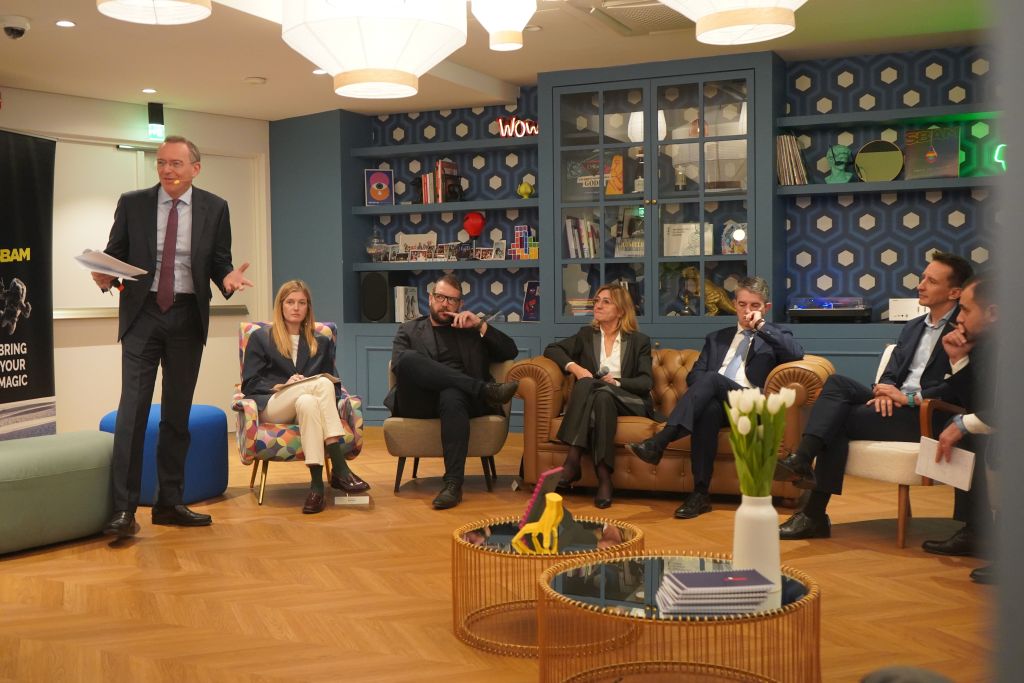
MILAN (ITALPRESS) – JAKALA today hosted a new Digital Coffee dedicated to the transformations in the insurance sector. At the heart of the meeting, the presentation of Insurance Radar 2026, the research of JAKALA that crosses the perspectives of 521 Italian consumers, 100 insurance agents and five industry experts, highlighting the distances between protection needs, purchasing behaviour and company strategies. From the study it emerges that the Italians recognize the risks, but not always ensure to face them. The average portfolio counts three policies per household, while the gap between perceived risks and undersigned covers is about two policies, especially in the fields of health, weather and travel.
The round table, moderated by Andrea Cabrini, Director of Class CNBC, has deepened the main directions of evolution of the market, thanks to the contributions of Tiziana Lamberti (Intesa Sanpaolo), Paolo Crivello (Reale Mutua Assicurazioni), Alberto Federici (Unipol), Federico Mancin (SBAM), Pasquale Imbimbo, Dafne Birtig and Francesca Antiga (JAKALA).
The research identifies three attitudes towards protection: 38% of respondents are Proactive, informs and periodically updates the covers; 36% is Abitudinary, possesses policies but tends not to see them; the remaining 26% is Costretto and is mainly in response to needs or deadlines.
Overall, 62% of respondents do not actively manage their protection: a data that highlights significant development potential for the insurance market. On the one hand, the possibility to accompany customers already insured in the revision and adaptation of the covers; on the other, the opportunity to intercept and activate protection needs still unexpressed, exceeding a predominantly reactive purchasing logic.
Also covers reflect this trend: 72% of respondents are insured for road accidents, 58% for theft or damage to the vehicle, while only 38% have a cover for the house. The price (64%) and the complexity of the products are mainly slowing down: 54% consider the clarity of the conditions a decisive criterion.
“62% of respondents do not manage their protection proactively. It is a signal that should change the agenda of the companies: the next great opportunity of growth will bring out needs that today remain unexpressed and turn them into concrete protection. Those who will read better changes in people’s lives, anticipate their risks and activate the right answer will guide the market. Because to be more risk experts, insurance will have to become much more experienced than its customers,” says Pasquale Imbimbo, Partner & Insurance Market Leader of JAKALA.
Despite increasing digital autonomy, 97% of respondents want to interact with a consultant at least in a phase of the insurance path. 33% rely entirely on an agency, while 29% follow a hybrid path, informing online before contacting an intermediary.
Digital is therefore established as a research and comparison tool, without replacing the value of consulting in the most complex decisions. A shared orientation also by agents: only 5% imagines a future of predominantly digital distribution.
For companies, the challenge is not only to digitize the relationship, but to use digital to strengthen the commercial capacity of the network: to intercept new needs, to qualify opportunities and to make counseling more effective. In this perspective, digital innovation can become a leverage of growth and distribution productivity, as well as operational efficiency.
“From the psychological point of view, protecting oneself means imagining uncertain and little pleasant scenarios today, and for this reason the mind can tend to postpone or torely on what is more tangible and immediate. This explains 97% of the interaction with a consultant: to lighten, probably, a difficult decision. Understanding these behaviors requires a double listening: that of customers, to grasp what really moves them, and that of the market, to read signals, dynamics and contexts in which choices take shape. It is from the meeting of these two voices that the data becomes understanding,” says Dafne Birtig, Insight Research Expert of JAKALA.
“The insurance sector has a key challenge ahead of itself: moving from protection sales to awareness building. In a market where needs and behaviors are increasingly diversified, the ability to communicate clearly, personalized and relevant becomes a strategic leverage to build trust. This is where the future of the relationship between companies and consumers is played, far beyond the time of subscription”, adds Federico Mancin, Head of Strategy of SBAM.
Artificial Intelligence is already a reality for distribution networks: 65% of respondents say they use AI tools, especially for communication with customers, needs analysis and document management.
The new frontier for companies will be transforming this adoption into commercial value, overcoming mainly operational uses to integrate data and AI into consulting and distribution processes. Locate customers with still inexpressed protection needs, recognize the most relevant moments to activate them and support intermediaries in the formulation of customized proposals represent some of the main opportunities. Technology does not replace the human relationship, but can strengthen it, helping to increase the quality of counselling, conversion opportunities and the value of the relationship over time.
“Research shows that there is no single insurance customer profile. Needs, expectations, behaviors and approaches, even towards AI, change significantly between different segments. For this reason, even the most advanced technologies need to start from listening to people: research is what allows you to use them to the best, and to make counseling really effective”, concludes Francesca Antiga, Digital Insights Director of JAKALA.
– photo press office JAKALA –
(ITALPRESS).