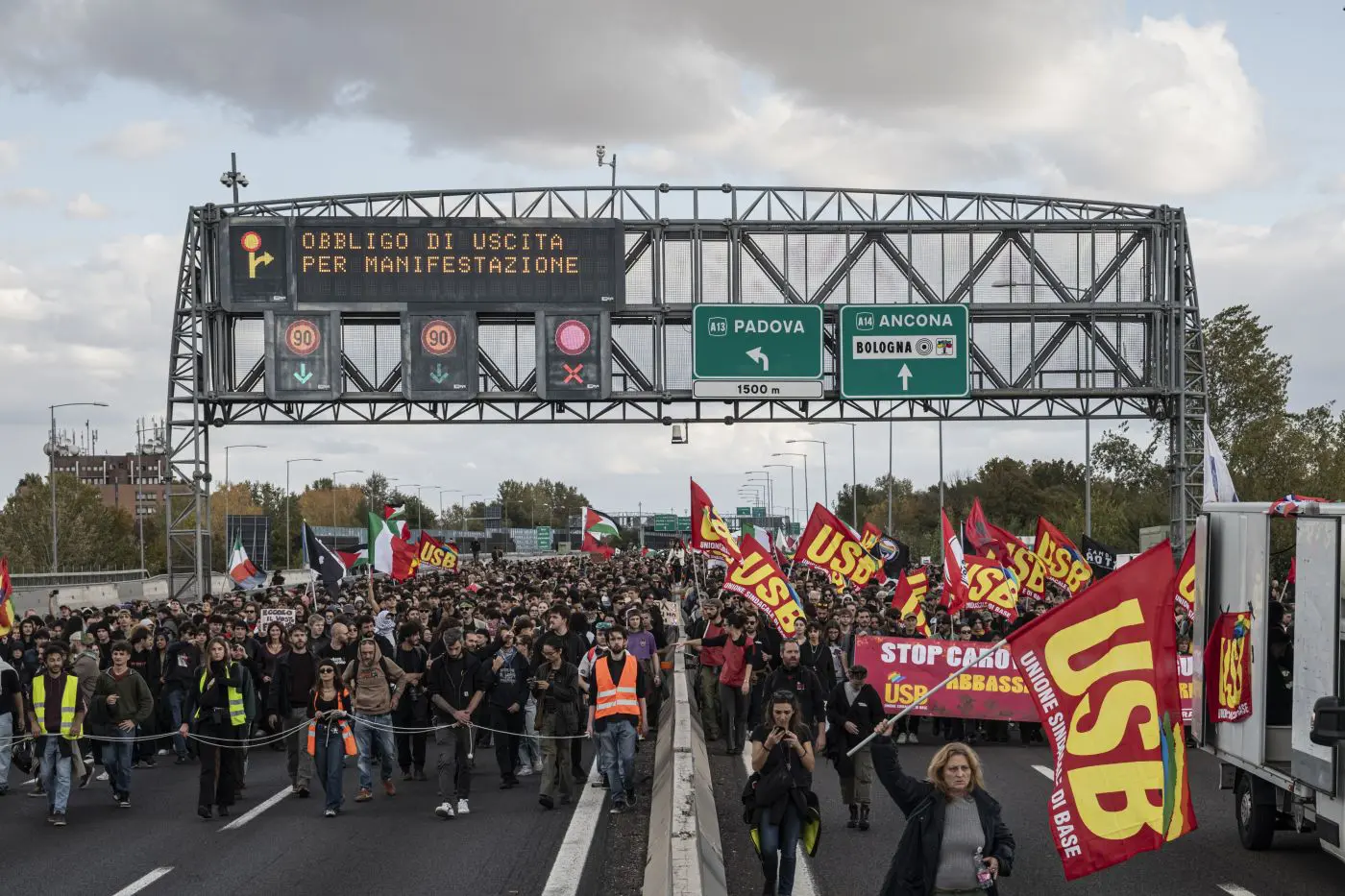
ROMA (ITALPRESS) – Waiting to officially know the degree of adherence to the national strike held yesterday by some autonomous trade unions, the CGIA Study Office estimates that abstention from work has cost to the country system up to 817 million euros. If we add indirect costs, the “loss” could probably be around billion euros.
“The strike is a fundamental right, enshrined in Article 40 of the Constitution, and is an essential tool with which workers make their claims heard. No analysis, and so much less this, can question its legitimacy or diminish the democratic and social value of this principle,” the CGIA states.
“Every strike – we read again – has a hardly quantifiable cost that goes beyond the day of abstention from work and falls on citizens, businesses, public accounts and the same workers. Often the ad effect is enough to condition the behavior of many users of public services who prefer to stay at home rather than risk being trapped in traffic, even if then public transport circulates regularly.”.
“Shots involve a loss of productivity for businesses, especially for public ones; fewer hours worked also means less tax and tax revenue. Remembering that in Italy the National Health Service delivers 2.5 million daily benefits, these inconveniences add the costs of reprogramming and elongation of waiting lists, which mainly weigh on the most fragile patients. When freight trains work in hiccups and ports and interports are closed or semi-closed, containers remain blocked and supplies slip. With kindergartens and those of the non-attached obligation, many parents must ask for a permit to care for their children – the study continues. When there are no public transport, many workers in the private sector to go to work must use their own car and take charge of the related expenses (fuel, parking, highway ticket, etc.). As we said above, even the skier loses the pay of the day, about 1/20 of the monthly salary and in most CCNL for that period does not mature the thirteenth. It should be noted that many activities that undergo the cancellation because of a strike are still recovered in the following days (reprogrammed medical visits, moved production, transport goods that slip a few days, etc.). So the “managed output of a day” and “permanent loss of added value” are not the same.
In Italy the daily added value in 2026 should be around 5.6 billion euros. Starting with this, the CGIA has calculated how much productivity is lost for each employee who adheres to the strike, according to the degree of membership. If yesterday the rank of the latter was 20 percent, the cost for the country system, according to the Study Office of the CGIA, could have reached 817 million euros to which are added a whole series of indirect costs that could increase the overall “loss” around the billion euros. On the territorial level, however, the most critical situations are felt especially in the most industrialized areas of the country. By always imposing a degree of accession to the strike of 20 percent in all regions, in Lombardy the “cost” comes to touch a maximum value of 193,6 million euros. They follow Lazio with 94.3 million, Veneto with 75.3, Emilia Romagna with 74.6 and Piedmont with 60.2.
– Photo Ipa Agency –
(ITALPRESS).