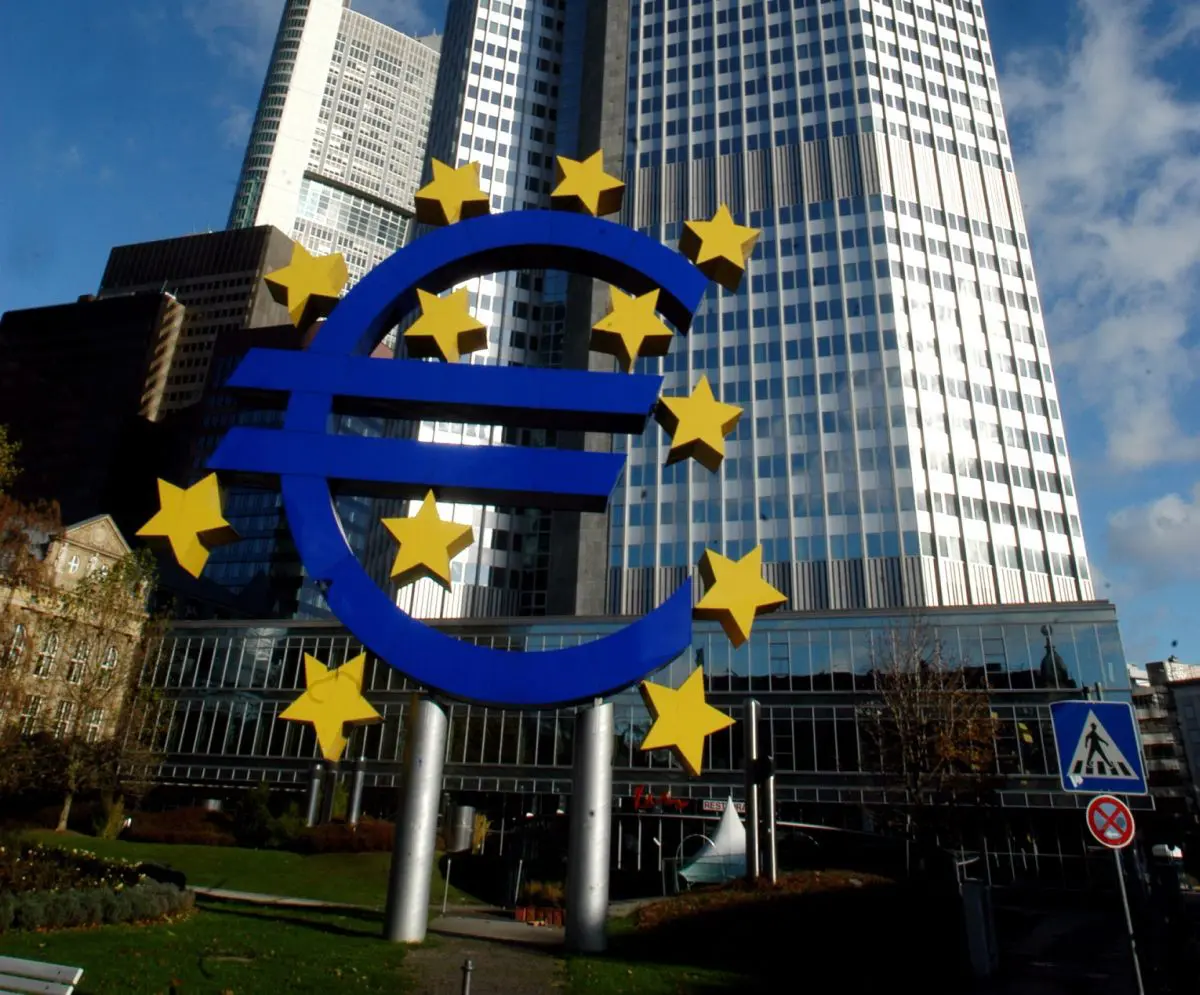
ROMA (ITALPRESS) – “The prospects for energy prices, although highly variable, are currently on levels close to the basic scenario of macroeconomic projections for the euro area formulated by Eurosystem experts in June 2026 and well above those recorded before the Middle East conflict. The uncertainty remains high and the inflationary impact of energy shock must still be fully manifested.” So the ECB in its Economic Bulletin. “The Governing Council therefore closely monitors the intensity and duration of shock, as well as its indirect and second impact effects and undertakes to define monetary policy in order to ensure that inflation is based on the objective of 2% in the medium term,” the bulletin continues.
“The Governing Council maintains a favourable position which allows to address the uncertainty caused by the conflict. In order to define the appropriate monetary policy orientation, the Council will follow a data-driven approach, based on which decisions are taken from time to time at each meeting.” In particular, the decisions of the Governing Council on interest rates will be based on the assessment of the prospects for inflation and the associated risks, considered the new economic and financial data, as well as the dynamics of underlying inflation and the intensity of the transmission of monetary policy. The Governing Council does not intend to bind itself to a particular rate path.”.
“The Governing Council renewed its call for urgent action to strengthen the euro area economy while maintaining the solidity of public finances. The simplification and harmonization of rules in the EU’s single market, the acceleration of energy transition and the completion of the Union of savings and investments are essential in this regard. Budgetary manoeuvres in response to energy shock should be temporary, targeted and modulated.”.
“Although the energy component inflation decreased in June, its increase from the beginning of the conflict, with its impact on the increase in food prices, goods and services, will probably keep inflation above the target until the first half of 2027. Afterwards inflation would be reduced, as energy quotations should come down and other prices should be chosen according to expectations. However, the conflict between the United States and Iran “continues to represent one of the main sources of uncertainty. The Governing Council therefore closely monitors the extent and persistence of energy recovery, as well as transmission methods at prices and wages, expectations of inflation and overall economic dynamics.”.
“The growth prospects are subject to low risk. Despite the agreement protocol agreed last June between the United States and Iran, the first attempt to resolve the conflict,” the geopolitical situation “remains fragile. New interruptions in energy supplies could result in an additional increase in energy quotations for a longer period than is currently expected. This would affect real incomes, expenditure and investment,” the ECB explains. “The risks to inflation prospects are upward oriented. The energy shock could intensify again and the effects on other prices and wages could be more pronounced than current expectations. The rise in high energy prices would make inflation more likely through indirect and second-impact effects.”.
– Photo Ipa Agency –
(ITALPRESS).