
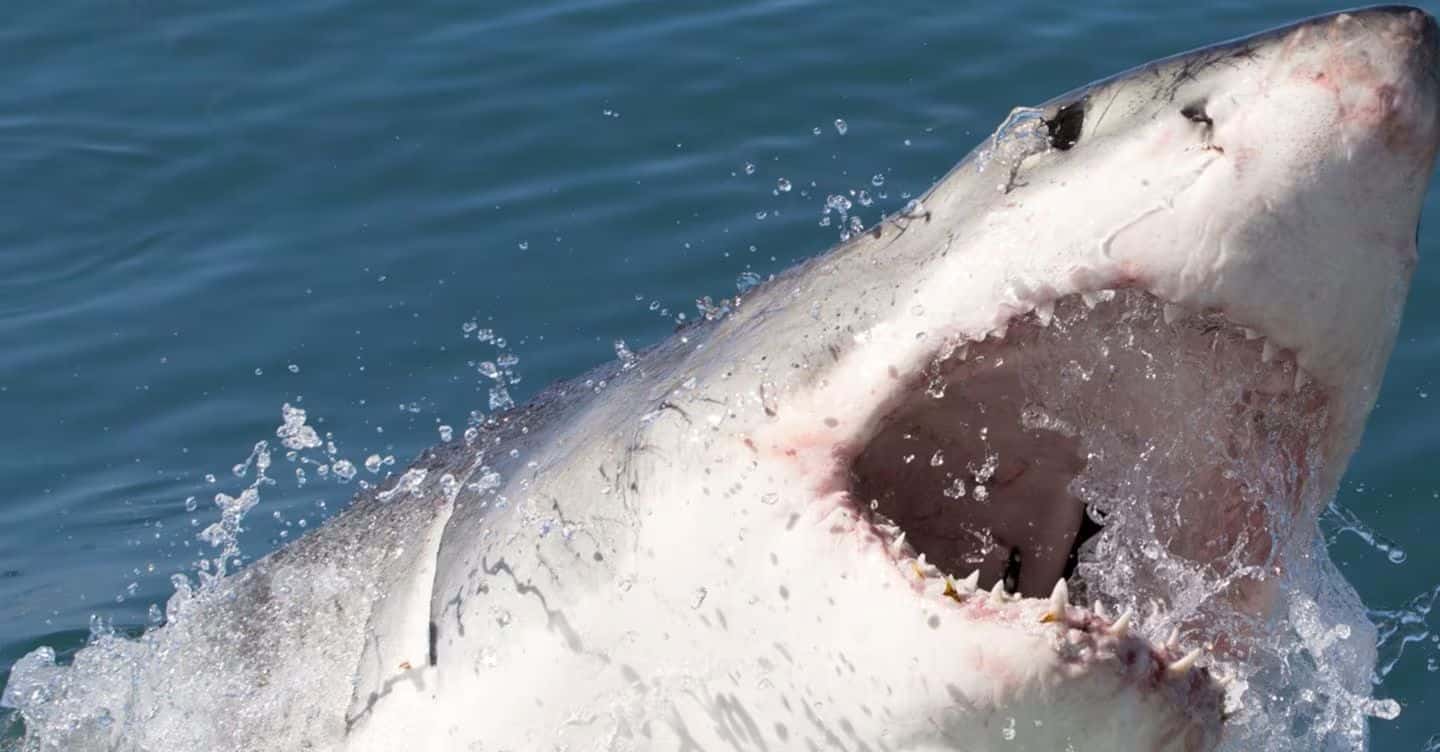
Contender’s “ping” cannot be felt under water. Ping is the word used in the Ocearch tracking system to indicate a transmission sent from the device applied to the dorsal fin of the shark. The last one arrived on July 16 and was classified as “Z-ping”: the tag emerged long enough to communicate with a satellite, but too little to allow to calculate the coordinates. The Ocearch tracker shows that the device is still active without saying where the shark is.
The last reliable location dates back to April 23, when Contender was off the Outer Banks in North Carolina. Since then the transmitter has produced several partial signals, on June 25 and then in July. None of these allows to argue that the shark is still near the Outer Banks: associating the most recent signals to that area means confusing the last position known with the current one.
Contender is an adult male of white shark about 4.2 meters long and heavy, according to the estimate made at the time of marking, almost 750 kilograms. It could be 30 years old. It is the largest male ever marked white shark, league and released by Ocearch in the Northwest Atlantic population, a more precise definition of the “big white shark of the Atlantic” used in many titles. The same organization studied much larger females: Nukumi, marked in 2020, measured over 5.2 meters and weighed about 1,600 kilograms. Ocearch reconstructed the data of the two animals here.
Contender was marked on 17 January 2025, about 70 kilometers off the border between Florida and Georgia. The name comes from Contender Boats, a boat company that supports the expeditions of Ocearch. On its dorsal fin, a SPOT transmitter was installed, the theme of Smart Position and Temperature: a device designed to follow the horizontal movements of marine animals that flow with a certain frequency. When the sensor detects being out of the water, try sending a series of messages to the Argos satellite system. The manufacturer describes the operation of SPOT tags here.
To obtain a location, at least three messages are needed during the passage of a satellite. If the fin stays out of the water for a few moments only one comes: it is the Z-ping, which signals an afforata without localizing it. A break in broadcasts can simply depend on how the shark swims. The big whites spend a lot of time under the surface and the tag does not record a continuous course like the GPS of a car. The lines shown on the map also connect distant points between them and do not reproduce all the movements made in the meantime.
Since it was marked, the track has reconstructed for Contender more than 11 thousand kilometres of travel along the North American coast. In 2025 he went up to New England and Canada, arriving in the Gulf of San Lorenzo and then in the waters of Cape Breton, before returning south. The route is part of the known seasonal behaviour of the species: the white sharks of the Western Atlantic are observed above all between New Jersey and Massachusetts during the summer and off Florida in winter, while in spring and autumn they are distributed along a much larger portion of the coast. It is also documented by a study published on PLOS One.
For this reason, Ocearch believes it is plausible that Contender is going back to Cape Cod or Atlantic Canada, but it is still a prediction based on the season and travel completed last year. In those waters the large specimens find suitable temperatures and many prey, including seals and large fish. The migration to the north is therefore not a generic search for “hot water”: they count above all the availability of food and the conditions encountered along the coast. According to Ocearch, 88 percent of white sharks marked in the south-east of the United States reached Atlantic Canada; the NOAA usually places large whites between Massachusetts and New Jersey during the summer.
Contender is interested in researchers especially because he is a mature male. There are still little known places and periods when white sharks mate, and Ocearch is testing the hypothesis that one of the reproductive areas is located off the Carolines. The movements are compared with blood analysis, hormonal levels, ultrasounds and biological samples collected during shipments. The Caroline research project looks for males and adult females in the area between March and April.
L’articolo The biggest white shark ever showed, but we do not know where it is from IlNewyorkese.