
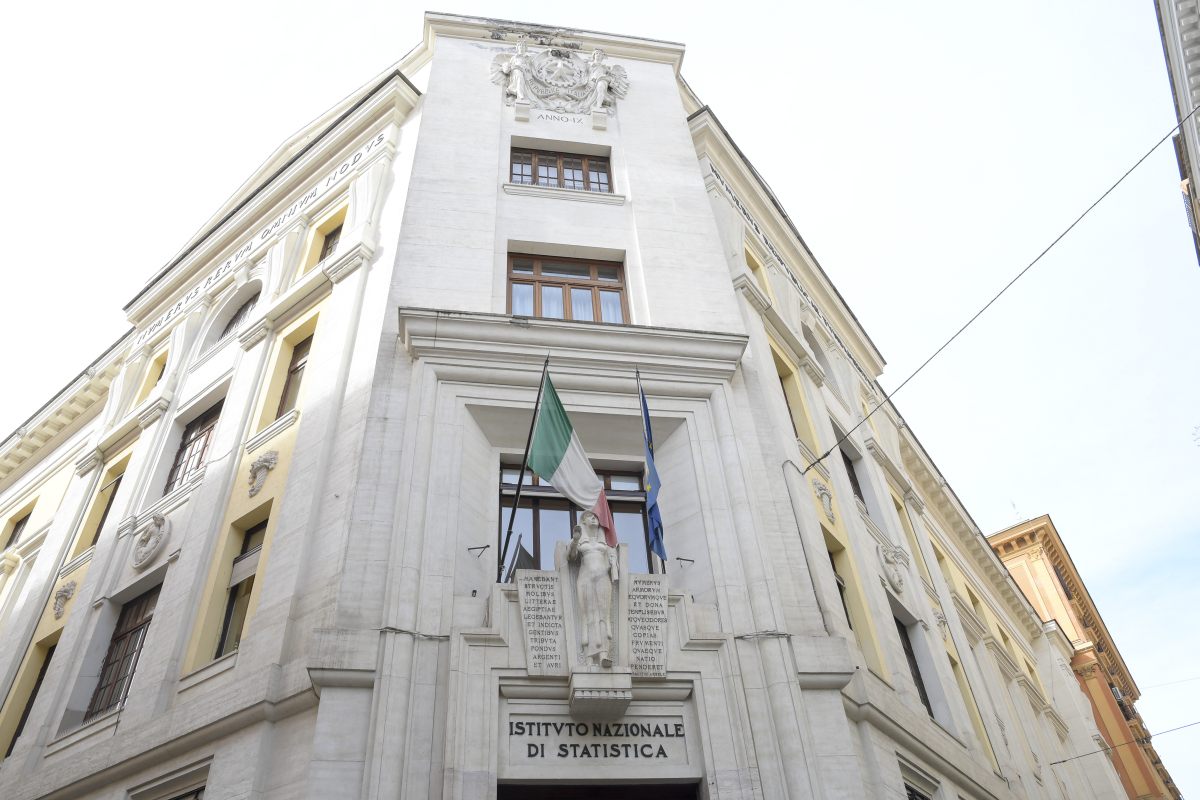
ROMA (ITALPRESS) – In the coming years there will be a “progressive reduction of the resident population in Italy”, determined “from the interaction between a structurally negative natural dynamic and a positive but insufficient migration balance to compensate for it”. These are the updated forecasts of Istat, according to which “the ageing of the population is one of the safest results”.
According to the new demographic forecasts, “the population passes from 58.9 million residents on 1 January 2025 to 58.7 million in 2030, 55 million in 2050 and 45.8 million in 2080”. The births are kept on stable levels until 2030 (355 thousand births annually). It then descends to 335 thousand in 2050 and to 281 thousand in 2080.
“Although the uncertainty associated with birth increases over time, the future birth will not be able to rebalance the natural dynamics,” explains Istat. The foreign migration balance “remains positive along the entire pre-visive horizon: from about 296 thousand people in 2025 descends to 247 thousand in 2030 and to 204 thousand in 2050, and then returns to grow up to 221 thousand in 2080′′′′. However, “the migration contribution does not compensate for the losses resulting from the negative natural balance”.
For Istat, the number of households in Italy “increases from 26.7 million in 2025 to 27.9 in 2043, when it reaches its maximum, then down to 27.6 million in 2050, mainly because of the progressive extinction of the generations of the baby boom”. The expected increase in households (+3.5% over the entire period) is supported “especially by households without nucleus, that is, without the presence of relationships of couple or parent-child type” that “pass from 10.7 million in 2025 to 12.3 million in 2050 (+15.8%), coming to represent 44.7% of the total of families compared to the initial 40%”.
The persistent decline of birth “increases the share of children without children”, while “conjugal instability favours the spread of unipersonal and monogenital families”. Between 2025 and 2050 the number of people living alone increases from 10.0 to 11.6 million (+16%), so that their share of total households rises from 37.5% to 42%”.
For Istat, the number of families in Italy “increased from 26.7 million in 2025 to 27.9 in 2043, when it reached its maximum, then down to 27.6 million in 2050, mainly because of the progressive extinction of the generations of the baby boom”.
The expected increase in households (+3.5% over the entire period) is supported “especially by households without nucleus, that is, without the presence of relationships of couple or parent-child type” that “pass from 10.7 million in 2025 to 12.3 million in 2050 (+15.8%), coming to represent 44.7% of the total of households compared to the initial 40%”.
The persistent decline of birth “increases the share of children without children”, while “conjugal instability favours the spread of unipersonal and monogenital families”. Between 2025 and 2050 the number of people living alone increases from 10.0 to 11.6 million (+16%), so that their share of total households rises from 37.5% to 42%”.
-Photo IPA Agency-
(ITALPRESS).