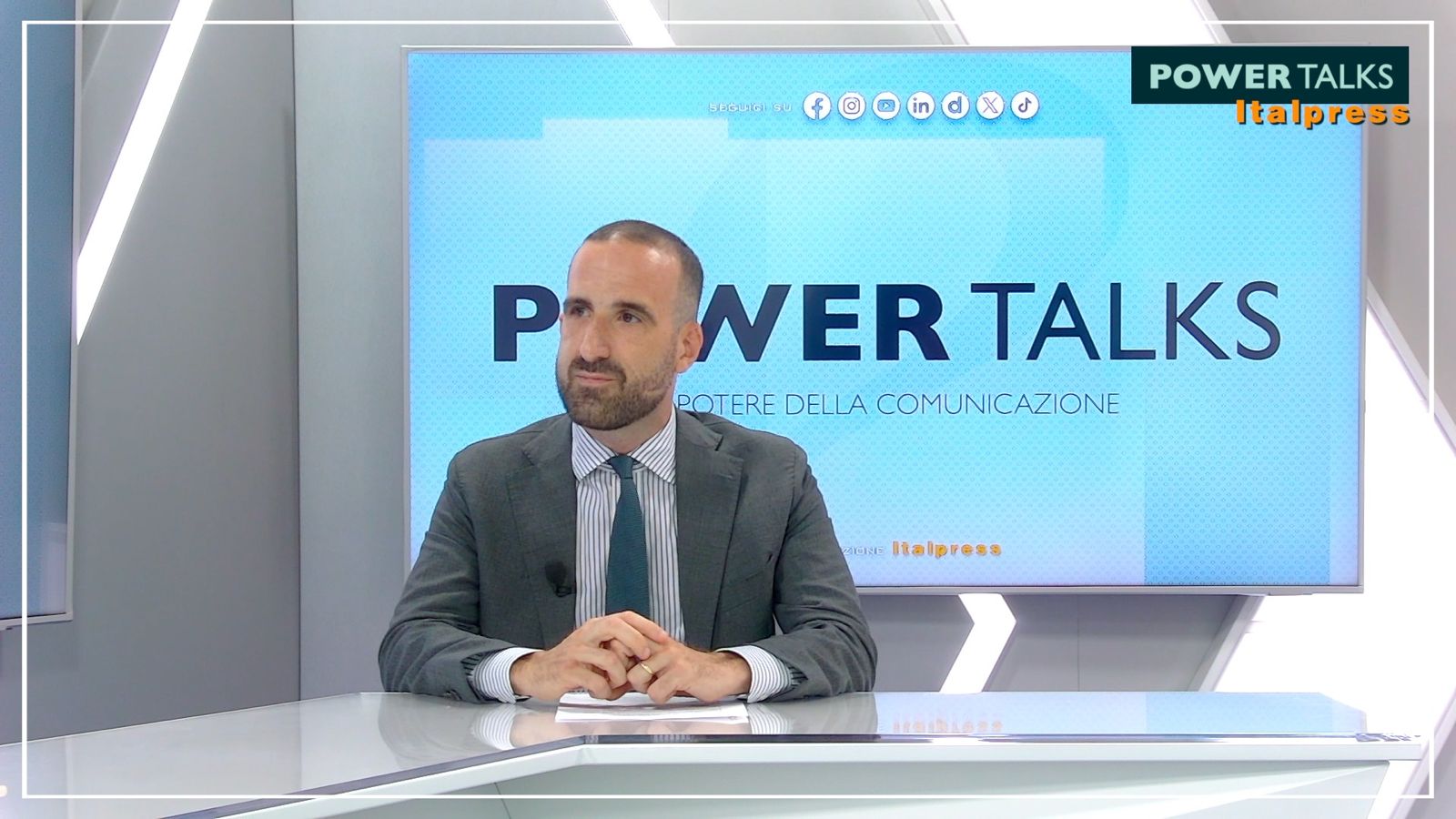
ROMA (ITALPRESS) – Dazi, geopolitical tensions, sustainability and new markets are global phenomena that are changing the balances of international trade, with concrete effects on businesses and citizens. To be more involved are mainly small and medium-sized enterprises, called to diversify strategies and markets to maintain competitiveness in a constantly evolving scenario. These are the themes at the center of the twenty-second episode of “Power Talks – The Power of Communication”, editorial format born from the collaboration between Italpress and Philia Associates, in which Jessica Nicolini interviews Stefano Comisi, professor of ARcom Formation, to analyze how international trade is changing and why today communicating these changes has become fundamental.
“When we talk about duties, we are talking first of all about taxes, so taxes on products involved in international trade – explains Comisi. For consumers the most immediate effect is on prices, while for companies, especially those of Made in Italy, the impact results in higher costs related to import and export”.
According to Comisi, the phenomenon of duties can no longer be considered a temporary measure. “The so-called war of duties was not born in 2024 or 2025. Already during the first Trump presidency, important interventions were introduced, many of which remained in the following years.” And then, “today duties are a political and economic instrument.”.
The consequences directly affect exporting companies because “the importer rarely wants to fully support the weight of new duties and often comes to a distribution of costs along the supply chain – says Comisi –. This means a reduction in margins for enterprises.”.
In this scenario, however, according to the teacher of ARcom Formation, there are also opportunities for growth. “The companies must review their supply chains, optimize costs, invest in training, certifications and in greater collaboration with the customs authorities. An opportunity can also come from the exploration of new markets.”.
Among the areas with greater potential there are India and South America. “The agreement with Mercosur opens up new scenarios for European commerce – it highlights – while India can represent a new frontier of international trade. It does not mean replacing established markets like the US, but diversifying opportunities.”.
For Italian SMEs, which are an important part of the national production system, diversification becomes a necessary strategy. “A small or medium enterprise can explore new clients and new scenarios without necessarily overturning its structure. The ability to adapt is an element that always characterizes our entrepreneurial fabric”.
Comisi then addressed the issue of sustainability and new European rules, including the regulation on deforestation and CBAM, the carbon adjustment mechanism at borders. “They are new generation tasks requiring more attention to businesses. CBAM is already operating and involves costs related to carbon emissions, while the subject of forced labor will be increasingly central in international business relations.”.
In an increasingly complex regulatory framework, the response of enterprises goes from prevention. “The work of consultants has changed: today companies prefer to invest in compliance, preventive advice and training. Compliance with standards allows you to reduce risks and build a more reliable relationship with institutions.” Looking at the next few years, the challenge will be to anticipate changes. “Businesses must adapt their logistic and commercial chains to news and not wait for the problem to arise. The real challenge is to invest in prevention.”.
– Photo Italpress –
(ITALPRESS).