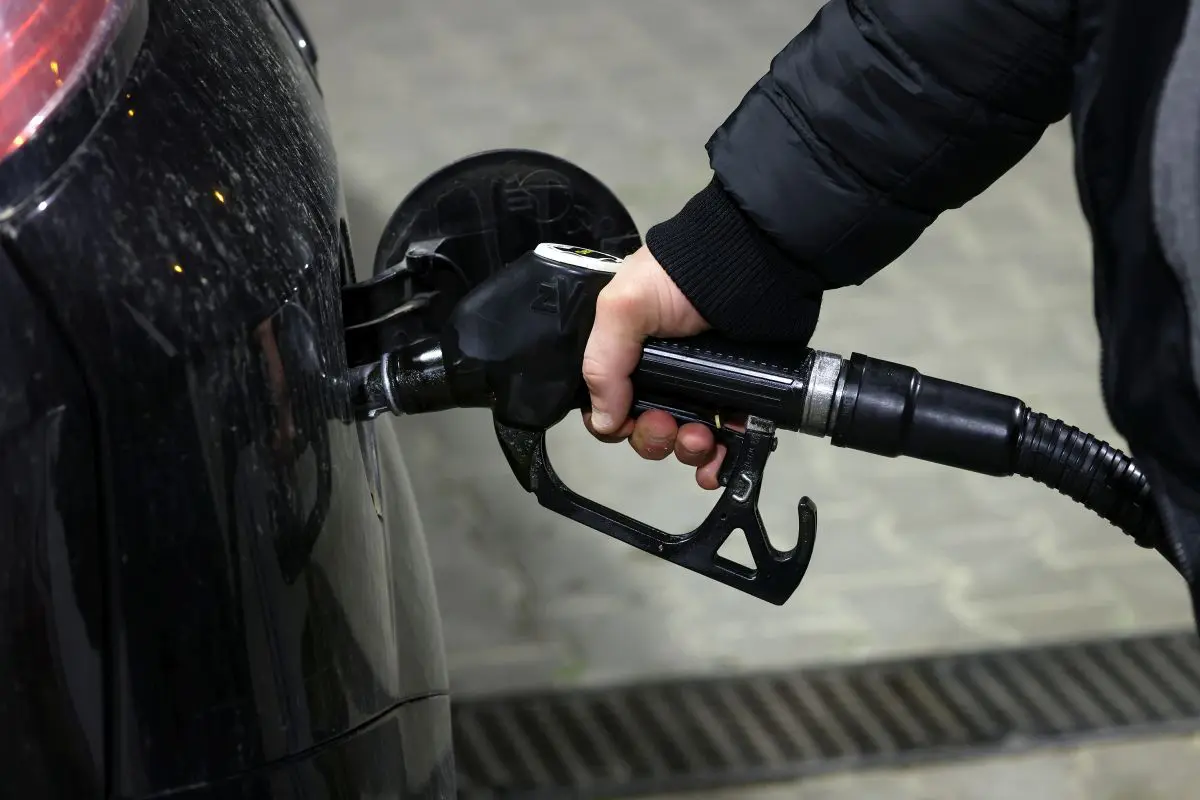
ROMA (ITALPRESS) – Bolzano is the Italian territory where to supply costs more: 1,961 euros per liter for gasoline and 2,10 euros for oil. But the geography of the chases follows a different map. Compared to the end of February, the largest increase in gasoline is recorded in Friuli-Venezia Giulia, with over 29 cents per liter, while for the diesel oil the negative primacy passes to Sicily, with almost 40 cents. Immediately after it is placed Campania, with an increment near 39 cents. This is what emerges from the CNA data processing of the Ministry of Enterprises and Made in Italy updated to date.
The new survey confirms relevant territorial differences, both in the level reached by prices and in the intensity of increases. At the extreme opposite are the Marche, where the most contained values for both fuels are recorded: 1,903 euro per liter for gasoline and 2.037 euro for diesel. Even in the less expensive territory, therefore, the diesel has now exceeded the threshold of the two euros.
At national level, the last survey published by Mimit indicates an average price on the road network self service of 1,911 euro per litre for petrol and 2.040 euro for diesel. Compared to 27 February, gasoline increased by 24.3 cents, equal to 14.6%, while gasoline grew by 31.9 cents, equal to 18.5%. After Bolzano, for gasoline the highest prices are recorded in Sicily, with 1,944 euros per liter, in Friuli-Venezia Giulia, with 1,943 euros, in Valle d’Aosta, with 1,942 euros, and in Molise, with 1,940 euros. Follow Calabria, with 1,938 euros, and autonomous province of Trento, with 1,936 euros. The lowest prices are found in the Marche, with 1,903 euros per liter, in Lazio, with 1,909 euros, in Veneto, with 1,910 euros, and in Emilia-Romagna and Lombardy, both with 1,913 euros. Between Bolzano and the Marche the distance reaches 5.8 cents per liter. Even higher the oil values. After Bolzano, where the average price reaches 2,10 euros per litre, follow Sicily, with 2,090 euros, Friuli-Venezia Giulia, with 2,084 euros, Valle d’Aosta, with 2,074 euros, Calabria, with 2,071 euros, and Sardinia, with 2,068 euros. The Marches present the most contained value, pairs to 2,037 euros per liter, followed by Lazio, with 2,044 euros, and from Umbria, with 2,045 euros. Between Bolzano and the Marche the gap is 6.3 cents per liter.
The CNA processing also shows that the ranking of waste does not coincide with that of higher prices. For gasoline, the increase greater than at the end of February is recorded in Friuli-Venezia Giulia, where the price has passed from approximately 1,651 to 1,943 euros per liter, with an increase of 29,2 cents. They follow Piedmont and Tuscany, with increases around 28 cents, and Lazio and Molise, with about 27,8 cents. For oil, the strong acceleration of the last days brings Sicily to the top of the ranking of the rinks.
The price rose from about 1,692 euro at the end of February to 2.090 euro per liter, with an increase of 39.8 cents. It follows Campania, where the diesel has passed from approximately 1,673 to 2,059 euros, with an increment of 38,6 cents. Friuli-Venezia Giulia, with 37,6 cents, and Veneto, with 37,3 cents. For a company that consumes a thousand litres, a 40 cent increase of approximately 400 euros. A cost that multiplies rapidly for transport, installation, maintenance, service, construction and delivery activities and which can not always be transferred to final prices.
“Carburetors and energy are moving back in the same direction, the wrong one for businesses and families,” says the national president of the NAC, Dario Costantini. “For a small business it is not marginal costs. They are the necessary resources to reach customers, deliver the goods, heat the premises and run laboratories and machinery. When these increases are added, they buy margins, they stop investments and reduce competitiveness.”.
“It also concerns a non-homogeneous spatial trend,” continues Constantine. “In some areas prices are higher and the most marked increases, creating additional competitive disadvantages for businesses. It is necessary to strengthen transparency in price formation, to monitor all sectors and to build a structural energy policy, able to guarantee small businesses sustainable costs and greater stability”.
-Photo IPA Agency-
(ITALPRESS).