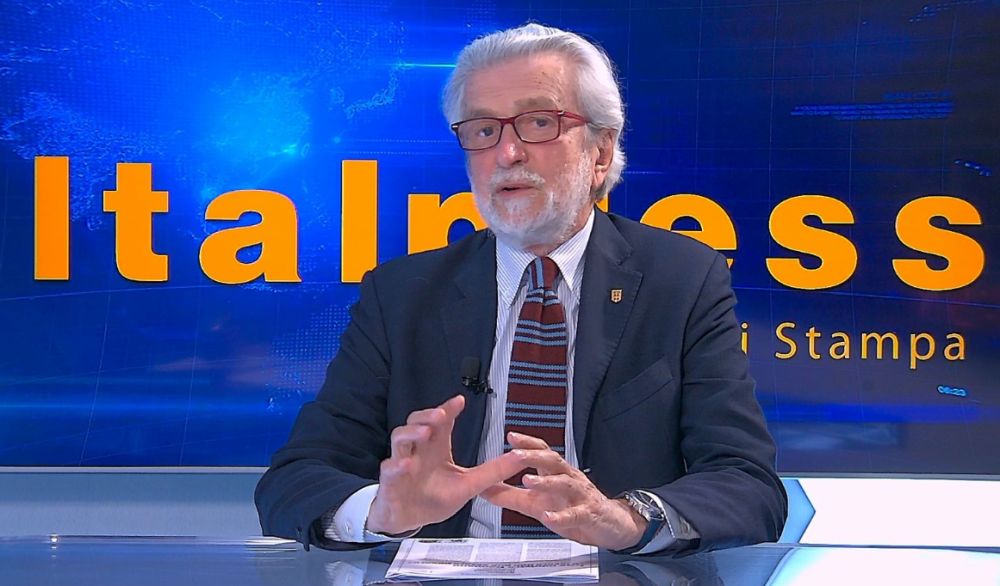
ROMA (ITALPRESS) – Provide a contribution to repositioning the left around the issues of reducing inequality and affirming a new generation of social rights. Starting from these premises the book “Italy that does not arrive at the end of the month” – published by the Fondazione Feltrinelli – written by Cesare Damiano along with Mimmo Carrieri and Agostino Megale. The volume in the subtitle shows what can be read as an invitation: “Work and wages: a question of left”. Explains the former minister and unionist of the Cgil: “We know that the left has always been identified in work. Then the question that we have asked ourselves is like never today, according to statistics, the workers and especially the workers no longer vote on the left, but vote by majority the centre-right. This means that the left has made his mistakes. In my opinion, a fundamental error has been, since the 1990s, an idea of globalization of the economy too optimistic. Secondly, having accepted an idea not typically of the left, that which inevitably replaced the market with the liberalizations and privatizations of the economy.”.
“I believe, however, that the state still needs to address the industrial policy of a country. In some cases, I think of the Jobs Act, when a centre-left government sends a message to the workers saying ‘I will be weaker than the protection of dismissal’, then we cannot expect those workers to think they are protected by that kind of policy.”.
According to Damiano, the centre-left has to pay particular attention to two problems: “The first linked to purchasing power and job stability. The second is the future of welfare, that is to say the social state: we talk about pensions, shock absorbers and health. In Italy there are, according to statistics, at least 3 million so-called poor workers. My generation at work combined the word well-being, stability, and future. The poor word was not together with the word work. Today unfortunately, despite the fact that you have the job, it is not said that you arrive at the end of the month. So there is an impoverishment of wages. The wages of 2024 compared to those of the 1990s – speaking of averages – lose almost three percentage points.”.
“If we think of France and Germany, we see that wages earn more than 30% of their purchasing power. So an abyssal distance that has to ask us about what we have to do to give back breath to wages and job stability.” In this scenario, the objectives should be, with regard to wages, “decrease the distance between net wage and gross wage, the so-called fiscal wedge”, says Damiano.
Then, “incentive the renewals of contracts as long as they happen at their natural expiry, because not doing so in the right time means loss of purchasing power, while encouraging renewal means less costs for the entrepreneur and more money to the worker”. A third measure is the minimum wage: “Because the wall against the wall, we start with those workpieces that have no contractual protection, I think of riders, who are super exploited. In that case we apply the minimum wage, these 9 euro gross per hour, which should be reassessed for the inflation that has been in this period, and we make by law not derogable the contractual minimum of all contracts stipulated by the most representative trade unions”.
On the ground of precariousness, Damiano observes how to pass “from the logic of flexicurity to that of flexstability”, then recognize the flexibility of performance to the company, but in return the worker must have the stability of the working relationship. “In essence, we must no longer be afraid to say that indefinite work is also a goal for young generations. It is not true that young people want to jump from work to work. They do it, in some cases, to improve or to compel”.
Finally, on the issue of pensions, since we are now in the contributory system with which “so much verses are collected, we set a threshold, for example 64 years, from which you can retire by choice. It is obvious: first I go less I take, I go later and I will take more. Distinguishing and facilitating the entrance to the pension even before 64 years, as already happens, to those who carry out wearful or heavy work,” concludes Damiano.
-Foto Italpress-
(ITALPRESS).