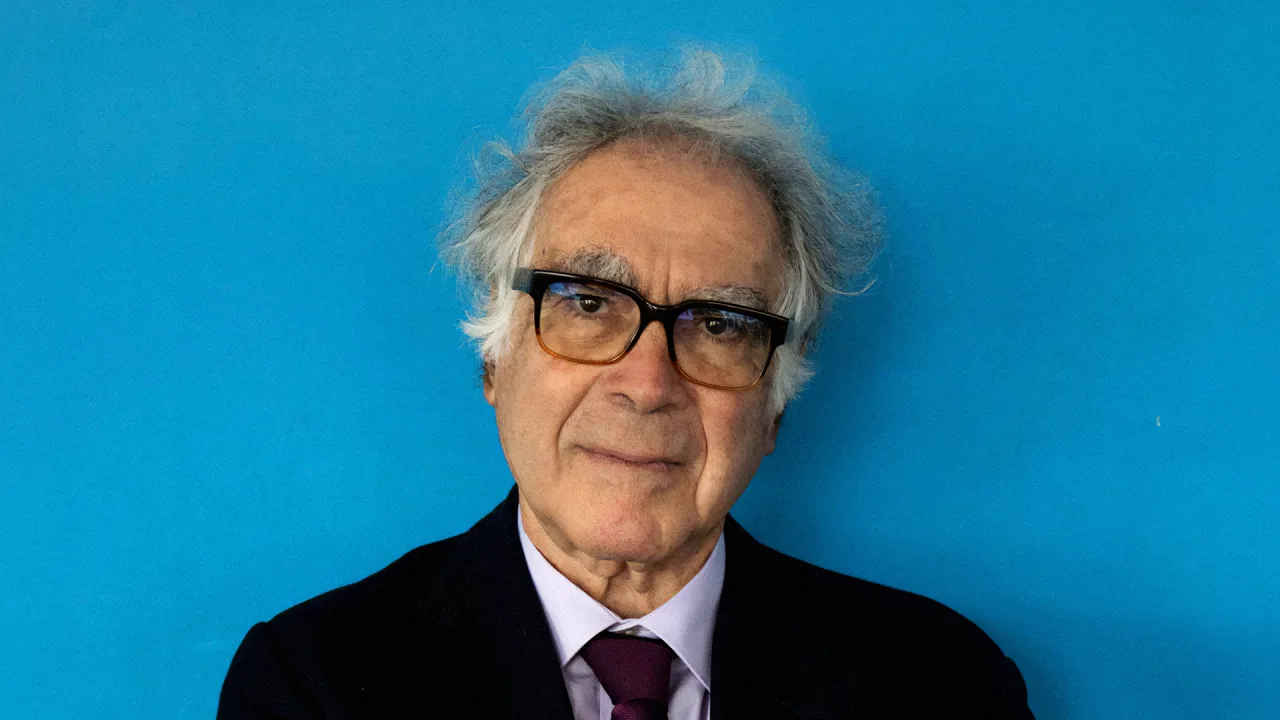
He died in Bologna Carlo Ginzburg, one of the most read and translated Italian historians abroad. She was 87. The Scuola Normale Superiore of Pisa, where he had been first pupil and then professor emeritus, reminded him as a scholar who had changed the way of making history: not starting from kings, governments or large institutions, but from people left on the margins of documents and often known only because they ended up in front of a court, an inquisitor, to an authority.
Ginzburg was born in Turin on April 15, 1939. He was the son of Leone Ginzburg, an anti-fascist intellectual who died in 1944 in the Roman prison of Regina Coeli after being arrested by the Nazis, and Natalia Ginzburg, one of the most important Italian writers of the twentieth century. But it would be reductive to explain his work only through his family. That context gave him an early relationship with books, with political persecution and violence in history, but Ginzburg built a very precise method: to search for the minimum traces left by those who almost never had the chance to tell.
Its name is mainly related to microhistory, a current born in Italy in the 1970s and then became influential even outside the Italian academy. Microhistory starts from very limited cases to rebuild larger processes: the relationship between popular culture and culture, religious control, the circulation of books, the way institutions listen, record and often deform the words of ordinary people. In Ginzburg the detail always had a cognitive function. It was necessary to enter the places where the sources are few, indirect or written by those who exercised power.
His first important book was I benandanti, published in 1966, born from the trial study of the Inquisition in Friuli between the sixteenth and seventeenth centuries. He told men and women who said they were fighting in a dream to protect the crops and that they gradually ended up in the categories of witchcraft used by the inquisitors. Ten years later the cheese and worms came out, his most famous book, dedicated to Menocchio, a Friulian mill of the sixteenth century tried and then executed for heresy. Through the minutes of the trials, Ginzburg reconstructed a vision of the world made of readings, popular religion, imagination and conflict with ecclesiastical authority.
An important part of his work also concerned the way historical research is being built. In the essay on the “indicative paradigm”, Ginzburg put together the work of the historian, the doctor, the detective and the art connoisseur: figures forced from small, incomplete and often ambiguous signs to arrive at a plausible reconstruction. The same interest for the clues is found in Indagini on Piero, published in 1981 as the first volume of the necklace “Microstorie” by Einaudi, where he applied his method also to the painting of Piero della Francesca.
Its importance also depends on a question that crosses many of his books: how can one tell the life of people who have left few traces and who almost always appear in the documents because someone was judging, questioning or accusing them. Ginzburg taught to read those cards with caution, looking in the folds of the verbal words, fears and ideas survived to the authority filter. She leaves two daughters, Silvia, art historian, and Lisa, writer and historian of philosophy.
L’articolo The historian Carlo Ginzburg died from IlNewyorkese.