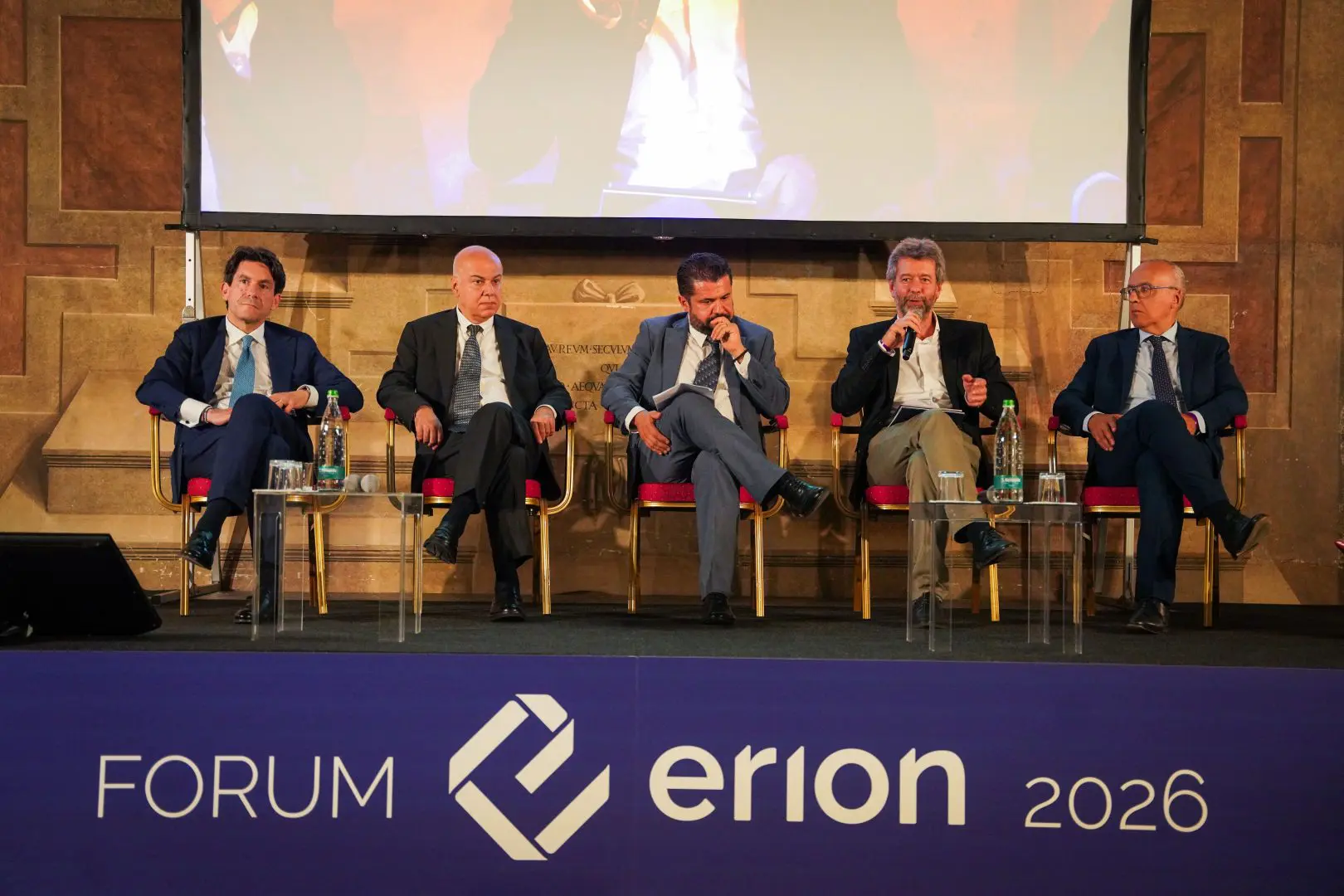
ROMA (ITALPRESS) – Sustainable transition is no longer just a response to environmental challenges and is not questioned for businesses, but represents the new ground for global economic competition. However, there is a strong misalignment between policy and enterprises on the instruments made available by governments and, above all, an excessive regulatory complexity that compromises the effectiveness of the actions. This is what emerges from the strategic relationship created by TEHA Group in collaboration with Erion and presented at the Forum Erion 2026 at the Palazzo della Cancelleria in Rome.
The report has identified the priorities to which it is no longer possible to give up to continue to compete in the sustainable transition, offering enterprises and decision makers a map of the areas on which to build a more effective joint action. Since extreme climate events in Europe between 1980 and 2024 have caused estimated economic losses in around 822 billion, without a real sustainable transition and in the case of climate immobilism, the cost of extreme events could come to weigh, for Italy, over 9.5 percentage points of GDP by 2035. On the contrary, speeding up the current transformation could generate benefits higher than costs, with a GDP growth that could exceed 1.1% already in 2035 and up to 8.4% at 2050.
“Sustainability policies must be implemented with a pragmatic approach, focusing on priorities that represent an indispensable component of competitiveness, such as energy autonomy, circulation and supply chain resilience,” says Danilo Bonato, Strategic Development Director and Institutional Relations Erion Compliance Organization.
The Italian companies adopting circular economy models are 28% more solid from a credit point of view and are therefore more attractive for private investments: compared to traditional competitors, circular enterprises generate on average 1.5 times more cash, 6% less indebted and have a greater ability to cover the debt with the operating result (24%). For this reason, despite the unpredictability of the current European regulatory scenario, 75.5% of companies believe it is appropriate to maintain or increase their sustainability commitments and 68.6% declare that they have strengthened their ESG policies over the last three years.
When sustainability becomes a factor of competitiveness, enterprises must be able to rely on policies and tools to transform environmental objectives into opportunities for growth and innovation. None of the companies involved in the study indicate the reduction of public intervention as a priority.
On the contrary, almost 60% believes it necessary to strengthen support for the industrial system through continuous incentives, energy costs interventions, authorization simplification and support for clean technologies. Among the main competitive pressures perceived by enterprises emerge energy, sustainable innovation and product environmental standards.
The report shows that enterprises and institutions are not fully aligned with the priorities of sustainable transition. The divergences on the tools needed to help companies achieve the objectives set but, above all, the regulatory complexity that distinguishes these areas.
“The node of transition is not choosing whether to move forward or go back It is understanding on what priorities to build the future competitiveness of the EU production system. The transition requires rethinking. from non-negotiable areas to continue to compete, innovate and generate value. Without dialogue, collaboration and shared visions, enterprises and decision makers are likely to move along divergent trajectories, reducing the effectiveness of both industrial policies and private investments,” said Carlo Cici, partner & Head of Sustainability of TEHA Group.
– Press office photos Erion –
(ITALPRESS).