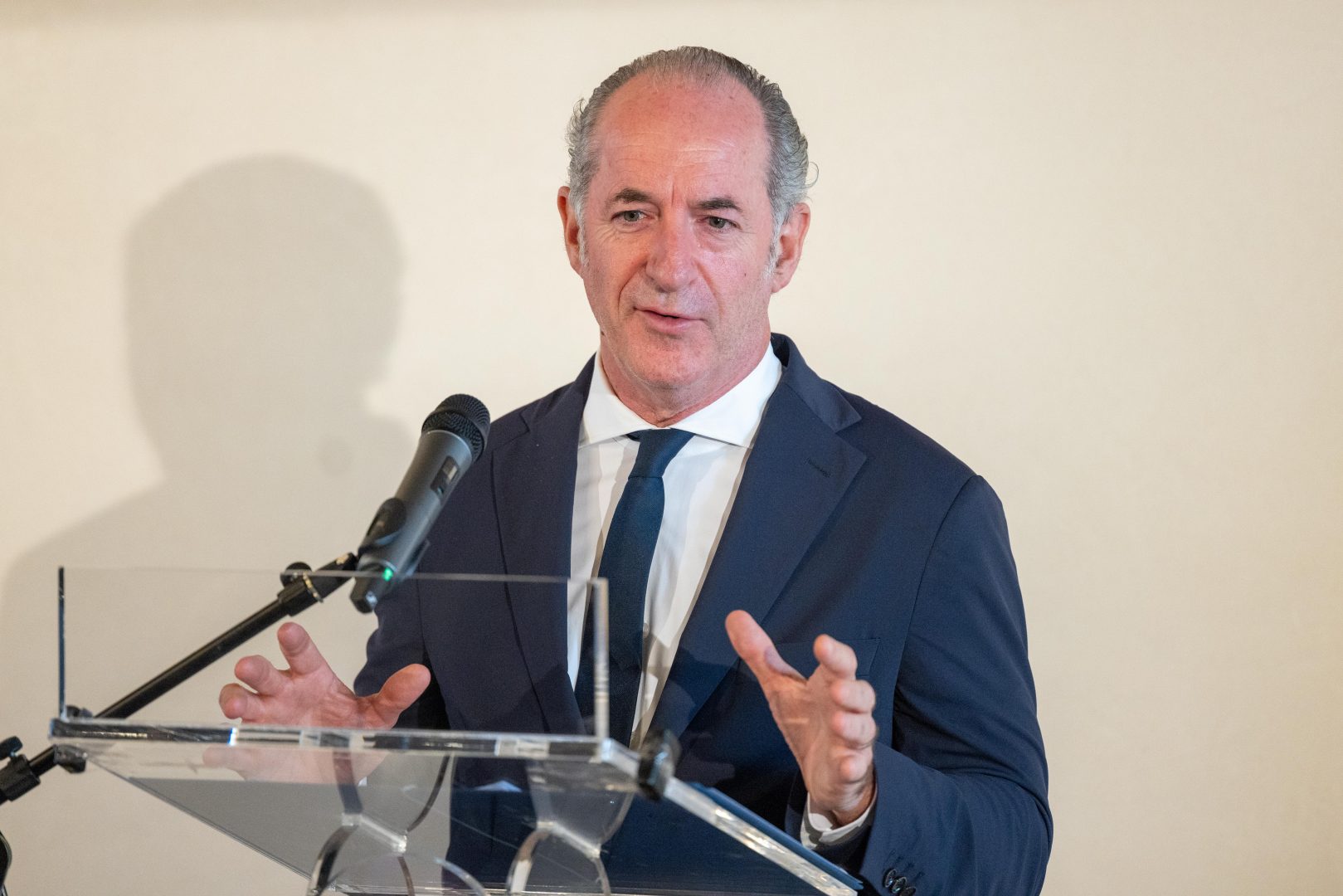
VENICE (ITALPRESS) – “I fully respect the decision taken by the Council of Ministers today to challenge the Venetian law on the end of life. It is a constitutional prerogative of the Government, which has the right to apply to the Consulta when it considers that a regional norm present profiles of unconstitutionality. As it is also fully legitimate that the representatives of the League on CDM did not participate in the vote. Personally, I strongly disagree with the choice made by the Regional Council of Veneto, which I personally supported and voted for. A choice of responsibility, respect for the decisions of the Constitutional Court and, above all, attention to citizens and their freedom. We wanted to give certain rules to situations already foreseen by our order, avoiding leaving only patients, their families and doctors in front of decisions of extraordinary delicacy”. Thus the President of the Regional Council of Veneto, Luca Zaia, commented on the decision of the Council of Ministers to challenge the regional law 8 September 2026, n. 17, on procedures for health care to medically assisted suicide, approved by the Venetian Legislative Assembly on 2 September.
“The appeal will be a further opportunity for further legal study – continues President Zaia. The Constitutional Court has already expressed itself on the norms of Tuscany, Emilia-Romagna and Sardinia, clarifying also the spaces within which the Regions can intervene. Now you will have a way to pronounce also on the Venetian law. We await this judgment with serenity, convinced of the seriousness of the work done and the desire to fully respect the constitutional framework. But I believe that the real problem is another, and that it cannot be attributed to this government or to a single political majority: Italy has been dragging for too many years a legislative vacuum on the end of life that no Parliament has yet managed to fill. I remember 2009 and the story of Eluana Englaro, who died after seventeen years in a vegetative state, when a long judicial battle led by his father Beppino led to the authorisation to suspend artificial feeding and hydration. That story deeply shocked the country and opened a debate that, after seventeen years, we cannot consider concluded. In 2019, with the ruling on the case of Dj Fabo, the Constitutional Court shared four rigorous conditions for the non-punishability of suicide aid: an irreversible pathology, physical or psychological sufferings judged intolerable, dependence on life support treatments and full ability to make free and conscious decisions. But that judgment certainly did not claim to replace the legislator forever. It was a necessary response to a regulatory vacuum, accompanied by a precise call to Parliament to intervene.”.
“Since then seventeen years have passed – Zaia emphasizes –. Governments and majorities of different orientation have happened, but a national law is still not there. That is why I do not consider this a battle between right and left. On such deep issues the sensibilities cross all sides, because before political affiliations individual consciences come. The point is not to establish who is right on the moral level, but to assume the responsibility of giving the country a clear discipline, respectful of the dignity of the person and able to guarantee the necessary safeguards, beginning with palliative care and the protection of the most fragile people”.
“I hope, therefore, that this new constitutional event will also become a stimulus for Parliament to finally address the issue, without any other reinforcements. Parliament finds the strength and courage to intervene, approving a law that finally gives concrete answers to these sick people, to their families and to those who accompany them every day on a path of suffering. Regions cannot be left alone to respond to terminal patients who under the judgment of the Court have the right to manage their end of life and therefore to have an answer from the regional health system. I hope that when we talk about ‘end life’, a liberal and non-liberticid approach prevails. A liberal state must be able to respect the convictions of all, including those of those who make choices that we personally do not share. Freedom of conscience must be valid both for those who are favorable and for those who are contrary, without the convictions of one becoming impositions for others. This is, in my opinion, the responsibility of a modern policy and of a country that really wants to put the dignity and freedom of its citizens at the centre,” concludes President Zaia.
– Photo of repertoire Region Veneto –
(ITALPRESS).