
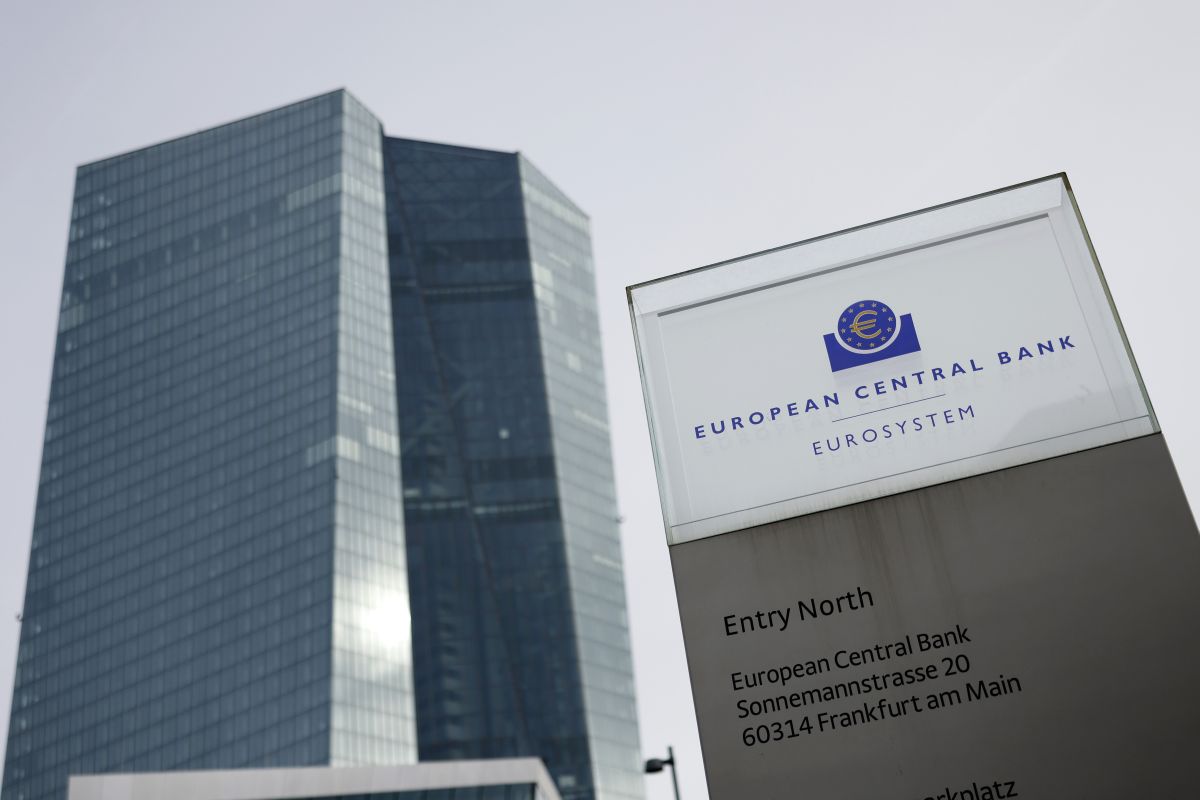
FRANCOFORTE (GERMANY) (ITALPRESS) – The Governing Council of the European Central Bank has decided to raise the three reference interest rates by 25 basis points. “Conflict in the Middle East is generating inflationary pressures and the decision to increase rates is solid compared to a number of scenarios that outline how shock could evolve and affect the medium-term prospects for the euro area,” the ECB points out.
In detail, interest rates on deposits at the central bank, major refinancing operations and marginal refinancing operations will be raised at 2.25%, 2.40% and 2.65% respectively, with effect from 17 June 2026. In the basic scenario of the new projections of Eurosystem experts, overall inflation would average 3% in 2026, 2.3% in 2027 and 2.0% in 2028. Inflation net of the energy and food component would lead on average to 2.5% in 2026 and 2027 and 2.2% in 2028. Compared to March, our experts have corrected the inflation projections of 2026 and 2027 in the basic scenario, especially because of the highest trajectory of energy prices, which should to some extent be transmitted to food inflation, goods and services. In the basic scenario economic growth would average 0.8% in 2026, 1.2% in 2027 and 1.5% in 2028. This is a downward revision for 2026 and 2027 which reflects the most pronounced impact of war on commodity markets, real incomes and climate of trust.
Perspectives remain uncertain, with risk of rising inflation and low risk for economic growth. The overall implications of the war on medium-term inflation and growth will depend on the intensity and duration of shock on energy prices, as well as the extent of its indirect and second impact effects. This uncertainty is also reflected in the breadth of inflation and growth values in the new scenarios formulated for illustrative purposes by Eurosystem experts, which will be published together with projections on the ECB’s website.
With today’s decision the Governing Council “remains in a favourable position to address the uncertainty caused by the war – BCE emphasizes. To define the appropriate monetary policy orientation, it will follow the situation carefully and adopt a data-driven approach that decisions are taken from time to time at each meeting. In particular, the decisions of the Governing Council on interest rates will be based on the assessment of the prospects for inflation and the risks associated with them, considered the new economic and financial data, as well as the dynamics of underlying inflation and the intensity of the transmission of monetary policy, without binding on a particular path of rates.”.
– photo IPA Agency –
(ITALPRESS).