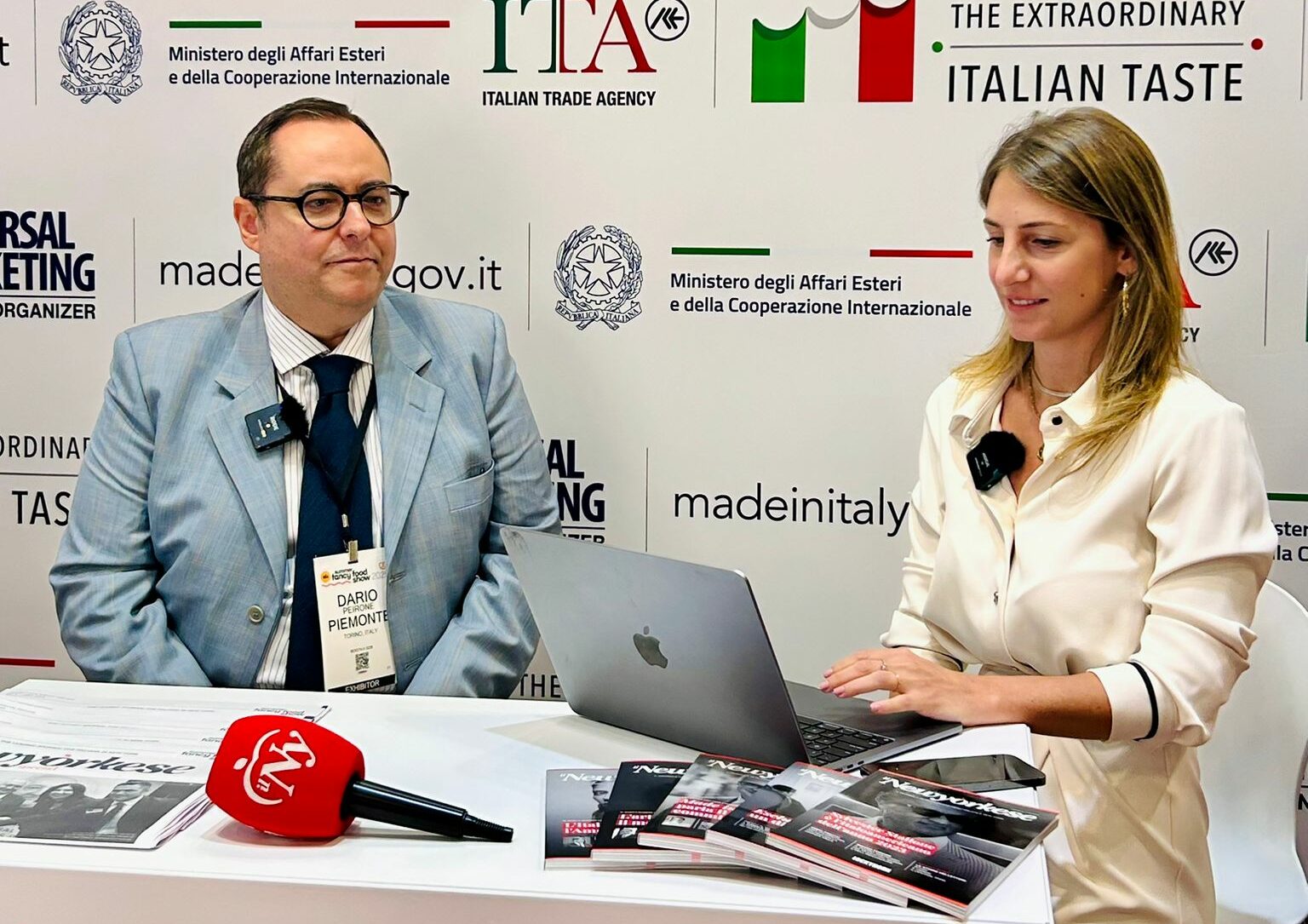
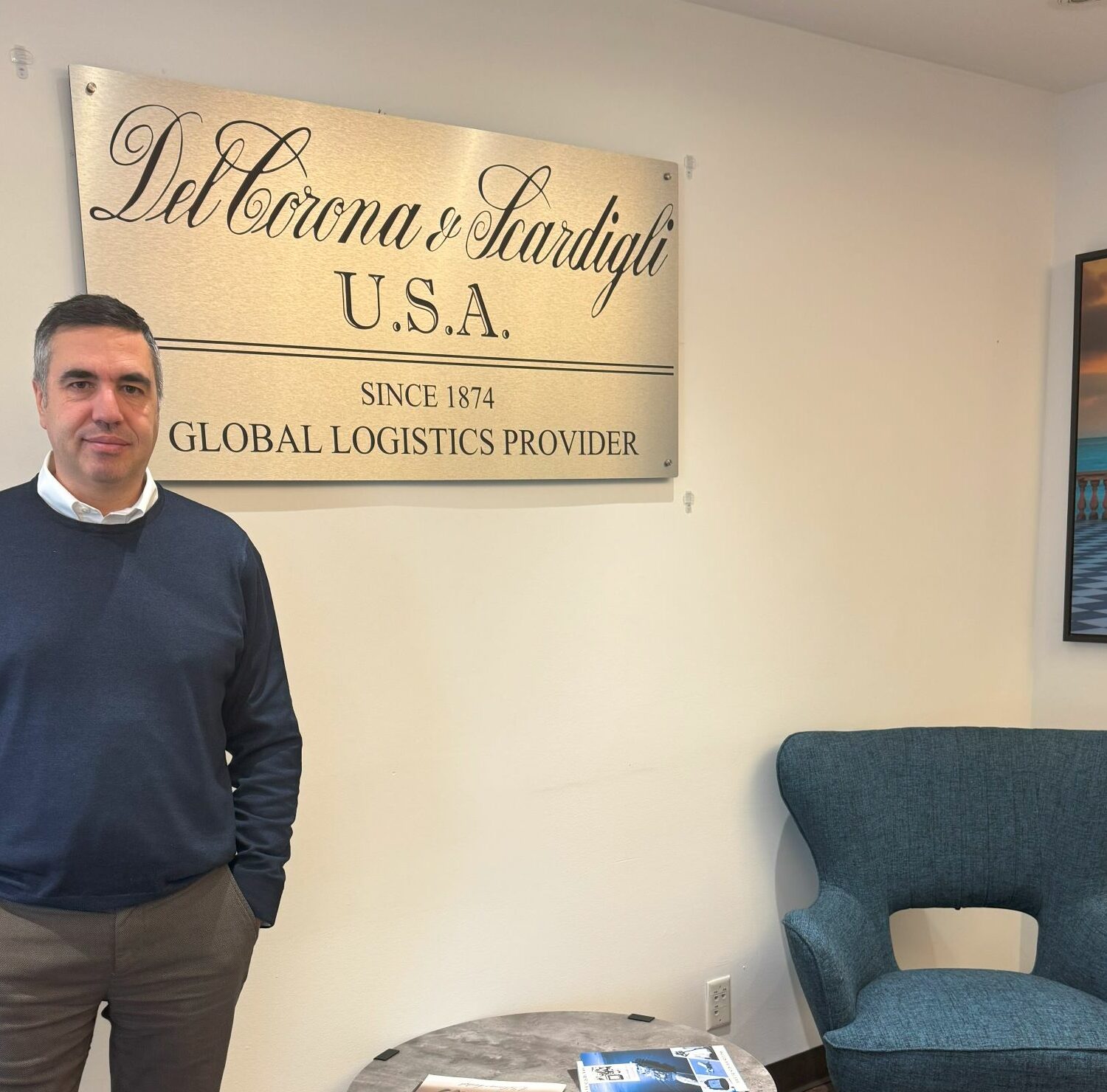
Stefano D’Angelo, CEO of Del Corona & Scardigli USA, told in the podcast Ritratto de ilNewyorkese, the story of the company that manages, which interweaves two families.
How does Del Corona & Scardigli start in the United States? Del Corona & Scardigli USA is the American branch of the group Del Corona & Scardigli, which is based in Livorno. The group is owned by two families: the Del Corona and the Scardigli, of which I am a member, as the D’Angelo family. The decision to open in the United States dates back to 2006, while I moved here in 2011.
In these fifteen years we have grown exponentially. We have supported many Italian companies, helping them not only to transport their products, but also to make them known, to work on marketing, to enter the market.
We went from four employees in 2006 to over 120 people, with eight offices and four warehouses. From the B2B transport perspective from Italy to the United States we are one of the main market players. We work with very well-known brands and others less known, but for us each customer is equally important. I tend in particular to Italian customers, because I am Italian too and know how complex it is to succeed in a competitive market like the American one, especially in a difficult period like the current one, between economic uncertainties and new duties.
Yours is a classic story of Italian family SMEs.
I started working in Livorno, before moving to the United States, and my father and his associate Luigi Del Corona were and are still my mentors.
My father will be 80 years old in April, Luigi is on the threshold of 70, and they still work daily for many hours. I still learn from them today. It is clear that, moving to New York, I had to learn a lot on my own, especially to understand the American market, very different from the Italian market.
Without the thrust of my father and Louis in the last twenty years, the growth of our group would have been unthinkable. Me and Ettore, Luigi’s son, hope to be able to give in the future the same thrust they have given them in these years. Today I speak of the United States, but the group is present practically all over the world: Canada, Mexico, Chile, Brazil, China, Europe, Australia, India are just some of the nations where we are directly present. We are also working on projects in West Africa for 2026.
Three values that represent your company and your families. I would certainly say honesty, integrity and humanity. For us the human relationship is central. The customer is not only a customer: many of our customers have become friends.
In a highly technological sector such as logistics, how much does human capital still count? It matters fundamentally. Technology is indispensable, but cannot replace the human relationship. This applies not only to customers, but also to suppliers. Our main suppliers are the world’s largest shipping companies, such as MSC, CMA, Hapag-Lloyd, and having direct and human relations with the management of these companies is essential.
The relationship with employees is equally important. I don’t speak of friendship, but of closeness, of respect. If people working with us did not put in their work a commitment similar to ours, we could never succeed. We are in few to lead the group and we could not manage a reality of this size without the real contribution of all. It is essential that employees feel the company as something of them, that the result of the company is also their result.
What does the American dream represent for you? For me the American dream is to grow professionally and grow the company. When I arrived here, our presence in the United States was minimal for turnover and structure.
My goal was to expand the customer base, increase turnover, number of employees and services offered. The dream is never really “reached”, because the targets grow every year, but compared to 2011 the results have gone beyond expectations: today Del Corona & Scardigli has a solid footprint throughout North America.
Italianity and American market: what happens when these two worlds meet? Italians are probably the best problem solvers in the world and in our sector the problems are everyday and always different. From this point of view we have an extra march.
The interface with Americans is not always simple. The average American initially remains shrouded by our flexibility: we always seek a solution, even bypassing the problem creatively, but always legitimate. We often solve problems that seemed insurmountable and this becomes a factor of loyalty.
We think about the complexity of customs, the FDA for food and pharmaceutical products, the USDA and other bodies: we have the ability to find solutions, even very creative. Indian, Chinese or Vietnamese customers tell me that this approach only finds it with Italians.
Covid was a global watershed. What impact did it have on your company? The first months were very hard: with the lockdown the factories were firm, the customers did not export and the transports practically blocked.
Then, however, there was an impressive boom. The marine and air freights have exploded, with increases up to 70 percent. Sailing companies have recorded huge profits and we, as shippers, have benefited from increasing demand.
People, not being able to spend on trips, restaurants or entertainment, started buying material goods, which had to be transported. This has contributed to the increase in costs and, subsequently, to the inflation that still weighs much, especially in a city like New York.
And on the duty front, how are you facing this new phase? The agreement reached by the European Union with the United States, however imperfect, was one of the best possible in that context. 15% on generic goods is the best result among those obtained from other countries, hit much heavier.
Moreover, thanks to the creativity of exporters and importers, this additional cost has so far been largely absorbed without being overturned on final consumers. I do not know how long it will last: I fear that in the coming months this extra cost will end up reflecting on the final prices, with possible inflation effects.
Looking at the future, what is your goal for 2026?
If the geopolitical and economic context remains relatively stable, I expect a 2026 similar to 2025, perhaps slightly better, especially if there are no new sudden shocks. At this moment I think it is important to be careful, but also ready to adapt, as we have always done.
The article Stefano D’Angelo: «In the United States DCS grows thanks to the Italian problem solving» comes from IlNewyorkese.