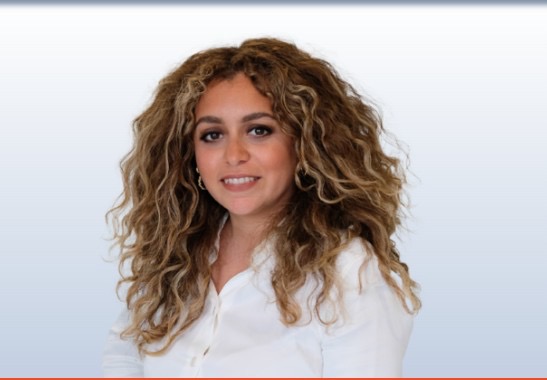
Chiara Inghirami is an Italian-American approach with an international route between Europe and the United States. After graduating in law in Italy, he obtained an LLM from the Georgetown University Law Center. He has gained experience between Piacenza, Washington and New York. He works in New York for EEP today.
You have always had the “American dream”, so move to the United States, especially in New York?
My story is a little different: I was born in New York. Then, at age 13, I moved with my family to Turin for family reasons. I finished my studies in Italy and for a long time I was undecided whether to stay or return to the United States. Finally I chose to return to New York, so yes, in a way the “American dream” has always been there.
Do you feel more at home in New York or Italy?
It’s hard to answer. I feel at home in both places. In New York because I was born here, where I can speak my native language and where my family lives. In Italy because I lived there for many years, I built important relationships and I met my husband. Sometimes I feel “too American” for Italy and “too Italian” for America. It’s like my heart was split in half.
Does this sometimes feel “too American” for Italy and “too Italian” for the United States arise more from a personal perception or the gaze of others?
I’d say more from my perception. Sure, sometimes you feel a little different from others, but I also see it as a value. It allows me to think of my daily life from different points of view. I live it as a great wealth.
Have you perceived difficulties related to your age or identity?
Yes, sometimes between the courtrooms I happen not to be taken immediately seriously by some colleague, a little because I am a woman and a little because I have a “different” name. But it is something that goes beyond time and experience and in these years I am doing a lot of it.
You have had legal training both in Italy and the United States. Tell us about your path?
Before moving to Italy I attended the Italian school Guglielmo Marconi in New York, but I spoke Italian only in family. In Turin I attended the International School of Turin, in a very stimulating international environment. After high school I studied jurisprudence at the Catholic University of the Sacred Heart in Piacenza: it was a great change, because for the first time I studied only in Italian and with a completely different method. At the end of my studies, I decided to return to the United States. After careful research I realized that to practice the profession of lawyer in the States needed a master (LL.M.) as a requirement to support the Bar Exam. So I enrolled at Georgetown University in Washington DC, where I got my master’s degree and after a few days I started working at Elefterakis Elefterakis and Panek, first as a paralegal and today as a lawyer.
Between the Italian and American university system, what do you prefer?
The Italian university has given me fundamental skills that I still use today. In fact, oral examinations in Italy have taught me to prepare myself on large amounts of material and to expose it in a clear and immediate way. It is a capacity I often use in court: you have to be ready for everything and know how to respond at the moment, just like during an exam. I really liked the American university for the environment. Having chosen an address related to international law and human right, the classes were very international, and the activities were more than writing and comparison. A different style, with a more direct relationship with professors and many services for inclusion in the world of work.
How did this double training affect your identity?
Living and studying in two different systems changes you deeply. It opens your mind and allows you to see situations from different perspectives, not only in work but also in everyday life.
New York is one of the world’s legal capitals. What makes you unique to a lawyer?
The amount of opportunities and cases. It is a very dynamic city and this is also reflected in the legal system: it is fast, intense, but also quite efficient despite the enormous volume of work.
What are the most critical aspects of the system?
The highest number of causes. Sometimes there are not enough resources, especially side defense in some cases, and this slows down procedures.
You do civil law. What kind of city emerges from the cases you follow?
I often see people in difficulty, who may have little already and then suffer damage. Many do not even know their rights. Our job is to help them get justice.
Is there a case that struck you particularly?
Actually, there are so many. Recently I happened to follow the case of an irregular immigrant worker, who got very badly working in a construction site here in the city. The employer had not given him adequate protection and at the time of helping or helping him he thought well that he did not assume any responsibility. NY state law is clear: even if you are an irregular worker you have rights but our client did not know. It was very strong to see how vulnerable these people are, but also how much the system can help them.
Looking at Italy, what seems better or more fragile than the Italian legal system?
Not having worked directly on it is difficult for me to express an opinion. But I have the impression that in Italy there is a very thorough and technical preparation. The level of competence is very high.
What advice would you give to an Italian student who wants to become a lawyer in New York?
If you are very motivated, you like challenges and want to work in an Anglophone environment, this is your city. But, as in everything, it is important to know well about the path to follow. In New York there is a lot of competition, but also many opportunities. In general, it is easier to find work than Italy, also thanks to the practical experience that you begin to acquire already during your studies. For this reason, those who are really motivated have concrete possibilities to succeed: more than the starting point, the determination counts.
L’articolo Chiara Inghirami: “My heart is divided between Italy and the United States” comes from IlNewyorkese.