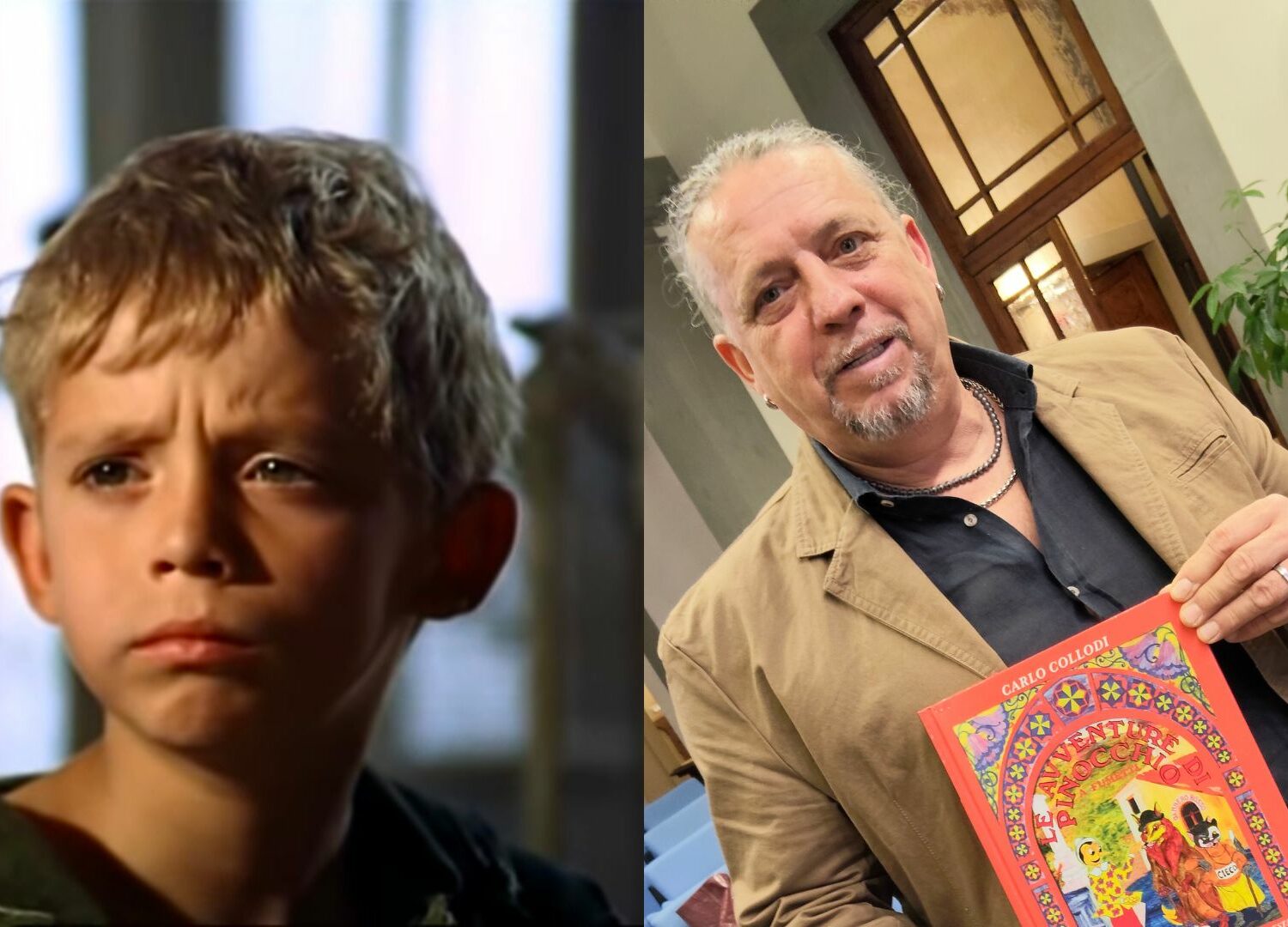
If “Domenica is always Sunday”, as Renato Rascel and Mario Riva sang, then Pinocchio is always Pinocchio. Unchangeable, universal, capable of crossing epochs, languages and generations without losing its evocative force.
It is no coincidence that on that “wooden patch” become a child rivers of ink have been poured, nor that it continues to inspire artists of every discipline. Emblematic, in this sense, the Pinocchio exhibition that’s me by the painter Silvano Campsites, called “Nano”, which traced the history of the puppet collody making it dialogue with the great Hollywood stars through 36 original paintings, then exposed by the National Foundation Carlo Collodi di Pescia.
From literature to cinema, from illustration to comics, to the latest digital variations and artificial intelligence, Pinocchio continues to live new lives. Among the most famous is the one signed by Walt Disney in 1940: a technical masterpiece, praised for the quality of animation and awarded with two Oscars, but penalized at the time by the historical context of World War II, which limited its diffusion in European and Asian markets.
Alongside international fame, there are also lesser known but equally significant routes, such as that of the writer Angelo Patri (Angelo Petraglia), who emigrated to the United States and deeply influenced by the pedagogy of John Dewey, who contributed to spreading an educational and modern reading of the character.
And then there is the Italian Pinocchio par excellence: the television of 1972 directed by Luigi Comencini who exceeded the 58 million viewers. The face of that Pinocchio is Andrea Balestri, who in my opinion is the true Pinocchio, for perfume and poetics, as well as total adherence to that script that entered the heart and in the costume of Italy.
We meet him on the occasion of the celebrations for 200 years since the birth of Collodi, in a lively and attended climate. Among memories, anecdotes and reflections, emerges the portrait of a man who went through success without being a prisoner.
“Someone has observed that many characters of that period are no longer there…though yes, I agree, touching however well iron! But with the ending of ‘Pinocchietto’ that addressed to the old babbo very… “Babbino, babbino dear, now I am thinking of you!” He says, while they laugh and move people sitting in the large hall while our ‘toscanaccio’ with chestnut ‘codin’ and some white streak in the hair, he continues to recall the ability of the director to find the right actors.
“I later did something with Bud Spencer and more, I also worked for Lizzani, but, while the latter wanted the role of actor, Comencini appreciated instead the spontaneity. And then the return to the beloved province of Pisa, I went very well.”.
It will, but… magic? Here is to see it again in the various months of work – or perhaps fun – spent on the set of the Lazio countryside, observing it running trottolino barefoot away from unusual situations, just during the shooting of the set.
How was the return to Pisan province? As a child, a child of 6 and a half years if the tone of my friends was canzonatory… Pinocchiooooo, Pinocchiooooo, well, being teased is not that he cared me so much, he took the ‘grilletto’ and…, if said instead in affectionate and bonari terms, then I smiled.
How did Comencini choose you? He saw over 3000 photographs in schools, then found me… but the beginning was not promising.
Why? Why made me break a picture of provocation and I knew about it? I answered him that courage I had so much and with the hammer ‘sdrrrrengg’! It is in fact that he was very angry with jokes not too benevolent to another. Definitely a way to understand the character he was looking for.
What was the climate on the set? Fabulous. Comencini was of a unique sweetness, affectionate, more babbo than director, as well as Nino Manfredi, true figure very nice. I was well with him, as with Franco Franchi and Ciccio Ingrassia
Cat and Fox. That’s right.
And with Gina Lollobrigida, the Turchina Fairy? Some controversy. She, rightly from Fata Turchina, demanded the “she”. But I, as a little girl, gave the “you” to all.
And then there was also a clash. She said to me, “Your Deaths”, in perfect Romanesque… and I answered for the rhymes, touching also the mother!
What happened next? Success that we were all ready for the international press – I still remember my ‘ball’ dress – while answering questions, under the billion flashes that blinded us. She had not yet arrived and, once the service was finished, they went away. When the lady showed up late… open up heaven! He wanted to be able to start again and, at the refusal, the earthquake happened. There was a push, she almost fell… and then, definitely something swollen. The story of the rocks instead was true, and so the star, like a fury, was directed by Comencini and told him: “You send that baby away now! And he’s quiet. “I have found my Pinocchio, the Turchina Fairy decides her!
Did the reports recover? Well, I didn’t want to see the footage anymore. But she was a great actress. Rest in peace.
After that, you left the cinema. Why? I didn’t care so much. Time passed.
You did a completely different job. Yes, ecological operator for 31 years in a proud and satisfying manner; any occupation ennobles man. And this applies to the lawyer and the netturbino.
Your life is full of edges, not regrets. That’s right.
I agree because his nose is not stretched even by a millimeter! What about today? I’m retired, but I’m not real, because I have my own theatrical company and have a lot of fun. We do comedies because we love to make people laugh, as well as bring the show “Pinocchio tells Pinocchio”. In summary the path of those 8 months that I acted in the wide spaces of Lazio. What about again? We work so much, with satisfaction and demands certainly do not lack, not even from abroad.
Have you seen the “Pinocchio” of Benigni? Yes, I saw it and in my opinion he made a masterpiece for photography, costumes, scenography, etc., despite the interpretation of a man aged 55. This thing found me quite skeptical.
The interview closes between smiles and call me out of the field. Andrea Balestri remains tied to that character who made him famous, but without nostalgia or regrets. Inevitable the memory of the beautiful book of Curzio Malaparte, “Maledetti Toscani” hoping for me!… not to have been so damned. As a smart person surely Pinocchio will appreciate the good irony!
With the final, it looks good, that all that has been said and written here, are not long lies, but sacred truth!
L’articolo Pinocchio, the eternal mirror of Italy between art, cinema and memory proviene da IlNewyorkese.