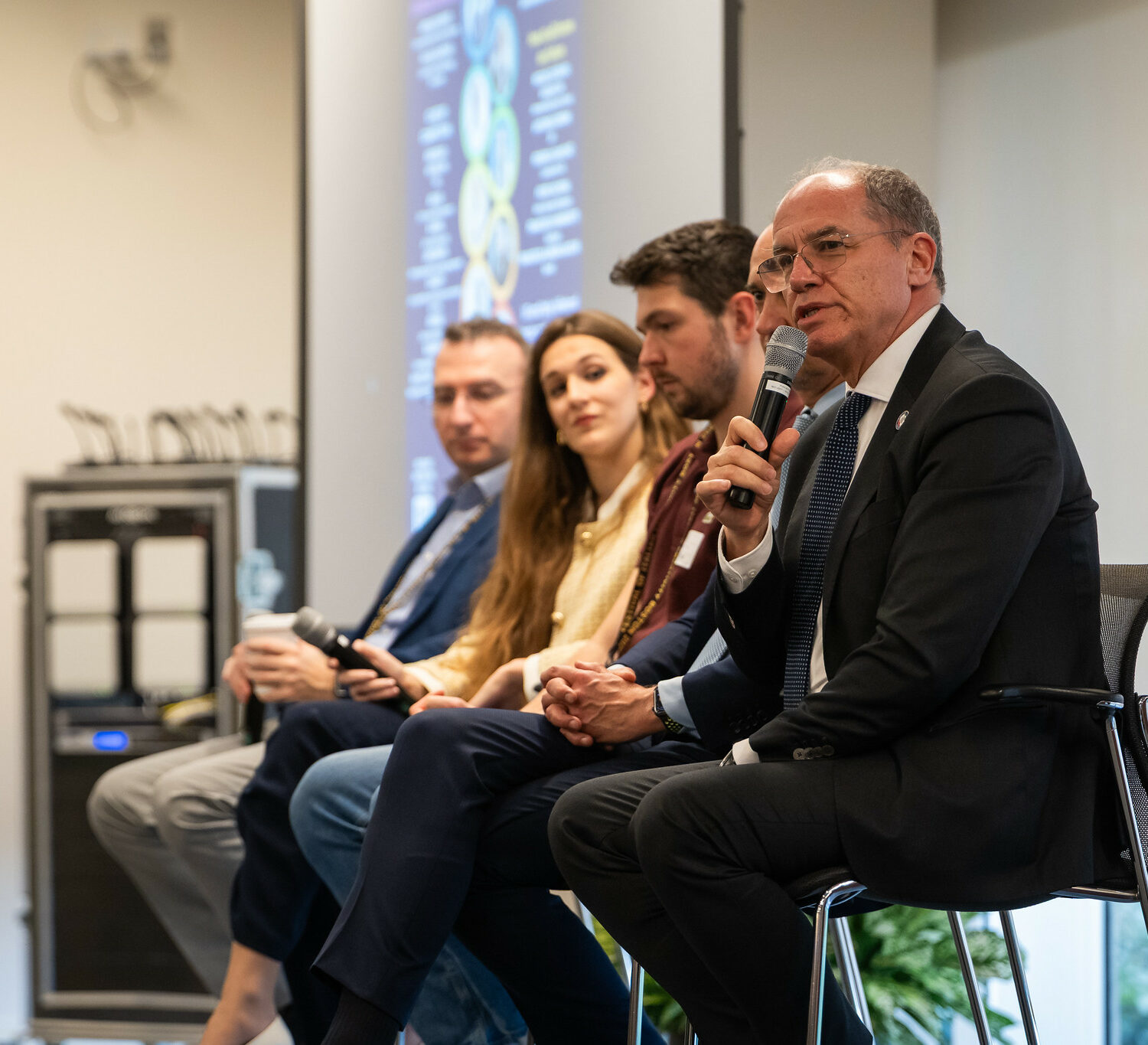
In Boston, in recent decades, one of the most dense ecosystems in the world has been consolidated for research, innovation and technological transfer: universities such as Harvard and MIT, large industrial groups, venture capitals and research centers coexist in the same space and generate a scientific and technological ecosystem that has few equals in the world. This is why the General Consulate of Italy in Boston organizes the Science, Technology and Business Days, arrived in 2026 at the third edition, with the aim of connecting the Italian system to the American one. For Paolo Gaudenzi, university professor and scientific advisor of the Consulate, the point is not so much “to gather” innovation as to try to make it work as a lever: “We try to put together science, innovation with the needs of society”.
STB Days are born exactly on this line, and not by chance the program is built around four areas that today define global technological competition: life sciences, energy and environment, artificial intelligence and new materials. Pillars on which public and private investments are also concentrated in the United States and Europe.
Gaudenzi lists them as areas where “to give more concrete answers to the needs of society”, from medicine to sustainable energy sources, to advanced manufacturing.
“It is a work done to develop collaboration and to give more concrete answers to the needs of society, in life science, that is, in medicine, in environment and energy, that is to create sustainable and clean energy sources, but this also applies to data science and artificial intelligence, and the development of new materials and new manufacturing.”.
Within this framework, the recurring theme of the distance between perception and economic structure of Italy abroad is also back. On the one hand, the country continues to be identified with traditional sectors; on the other, it remains one of the main manufacturing economies of Europe, with a strong technological specialization: “For us the image of Italy is very important, and the narrative on our country has spread from food, fashion, furniture to something much more extensive, without neglecting the importance of the old. We are a country of high technology: our export produces machinery, therefore great machine tools, robots, we produce drugs”.
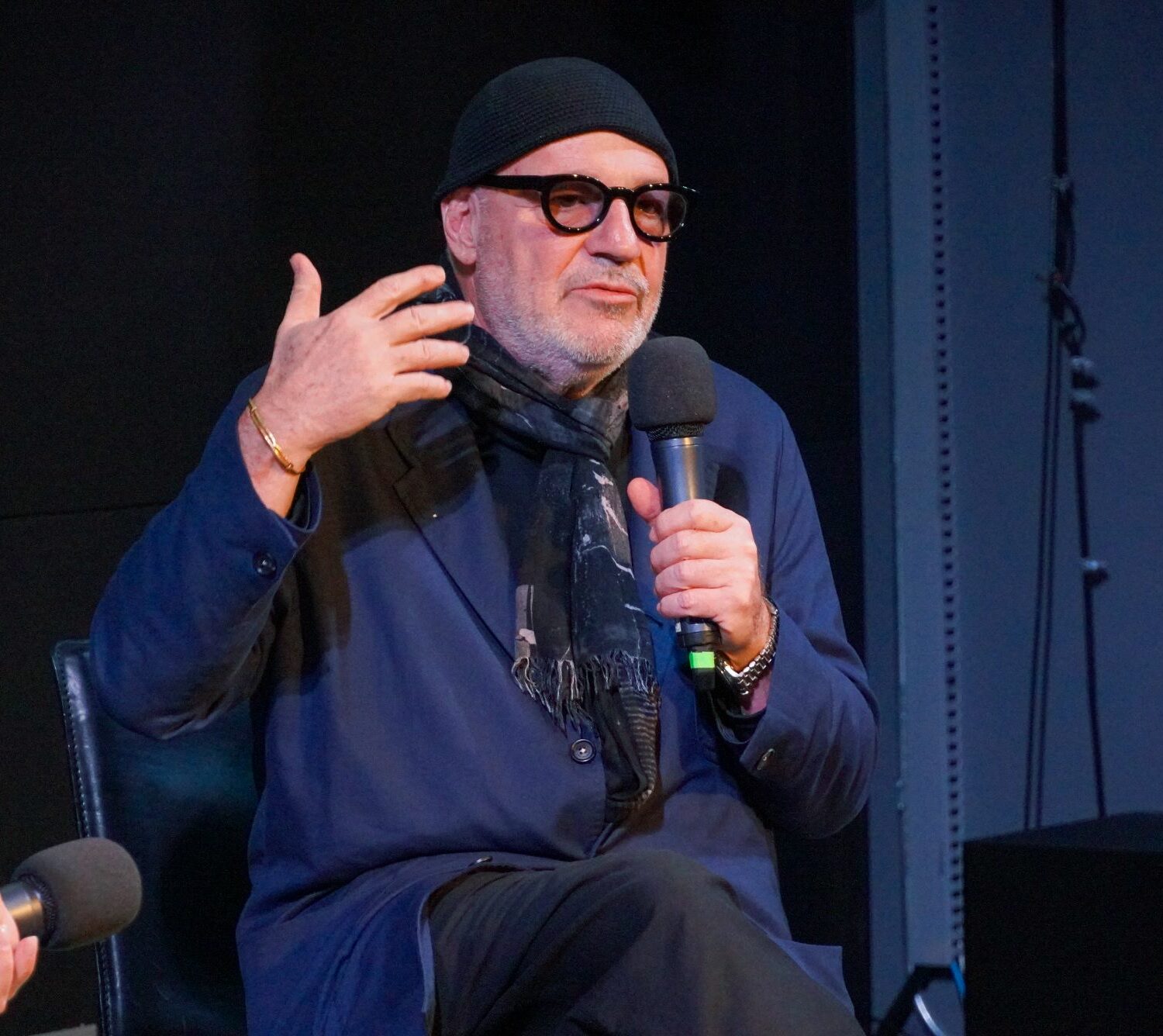
(A destra) il professore Paolo Gaudenzi assieme (a sinistra) al Console Generale d’Italia a Boston, Arnaldo Minuti
The point, however, is that if it is true that Italy is still among the world’s leading exporters of industrial machinery, this dimension remains unseen outside the specialized environments. The diplomatic and cultural work that passes from events such as the STB Days serves to make this part of the production system more legible.
The most structured part of his intervention concerns artificial intelligence, addressed with a typical approach to complex system engineering. Instead of defining it in abstract, Gaudenzi proposes a change of perspective: “In the face of artificial intelligence we are sometimes a little lost, we cannot understand what it is. A way to understand what it is to see how engineers work on complex systems, such as space. These systems are made up of many parts: to understand them you have to decompose them, see what is the single part, how the parts work together, and all those together realize the goal of the mission”.
The reference is to the model used in aerospace engineering, where complexity is managed through breakdown and control of interactions between components. Applied to society, this scheme leads to read artificial intelligence as an element inserted in larger systems.
“The intervention of AI agents in our society can be better understood if we apply the tools of Model Based System Engineering, what decomposes the complexity of spatial systems, reporting it in the reading of our society. In each of the parts that make up a very complex system there is human contribution. Today some of these contributions can be made through the use of AI agents who replace humans in doing certain tasks”.
Gaudenzi, however, maintains the focus on the method: “As a space system, it applies to a company, it is worth a large hospital, it is worth a ministry: they are all complex systems. We try to decipher the complexity and we will better understand how AI agents can be used in our favor, under our control”.
L’articolo Paolo Gaudenzi tells the technological side of STB Days proviene da IlNewyorkese.