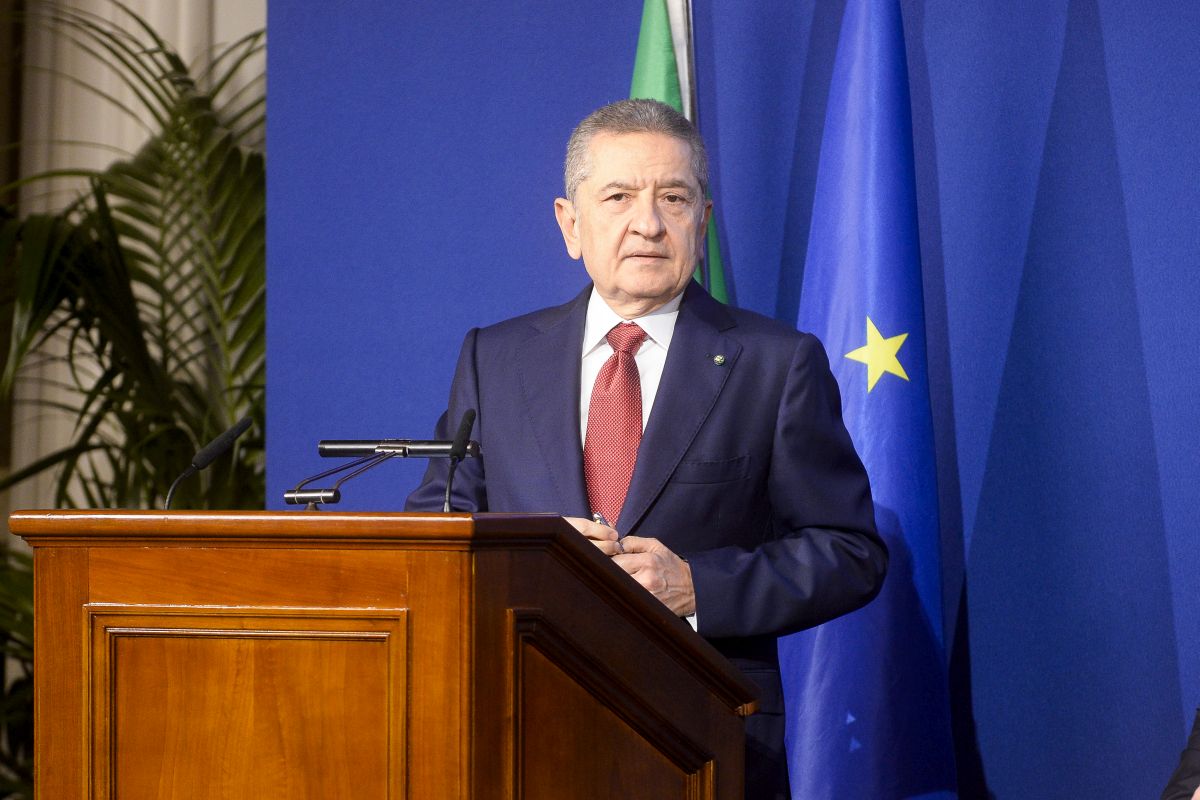
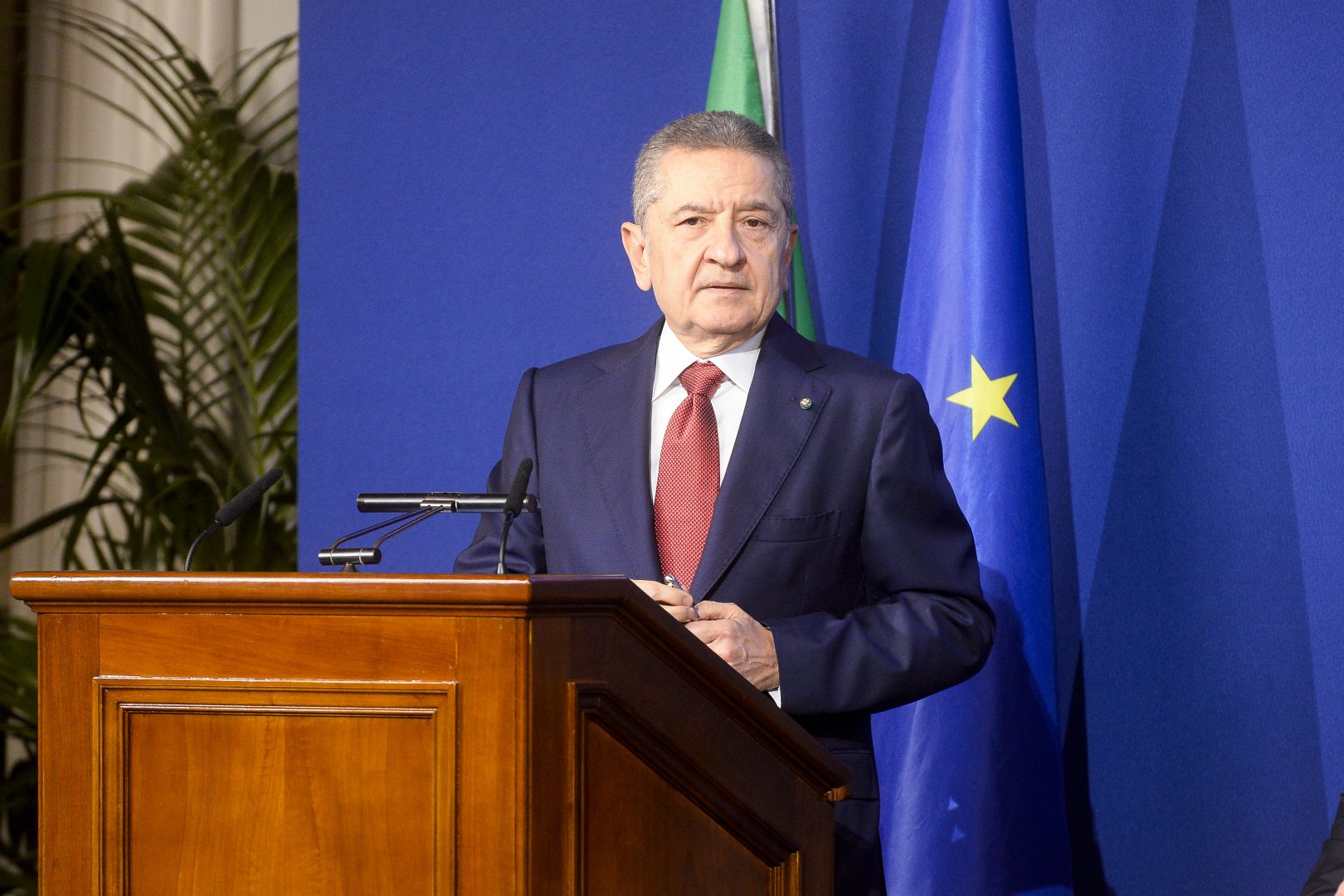
ROMA (ITALPRESS) – The summit in China “is a very important event, with a historical scope in which the two main countries met which at this time have the control of resources of technologies and strategic knowledge of the world, China and the United States, and a third country that does not have the same geopolitical value” but “at this time is an important actor, because involved in a war and because it is a country that has natural resources, Europe is missing because we do not have a strategic value from a geopolitical point of view comparable to what the United States has.” Thus the Governor of the Bank of Italy Fabio Panetta at “NEXUS – Visions and strategies of development of the territory”, at the Fiuggi Convention Centre.
“Today countries are confronted to maintain resource control and maintain a geopolitical premise and lack of European projects, the lack of joint investment in many strategic sectors – in the field of technology and energy – makes us an actor at this moment politically far below its own potential.”.
“In the medium and long term, artificial intelligence can bring considerable benefits to the world economy” but “as in all technological revolutions today we are in a transition phase, where adaptation to new technology can be expensive, even painful for some companies and for some workers: we have to equip ourselves to be avant-garde – added Panetta – We must begin to worry about the effects of artificial intelligence even during the transition. We are now discussing its financial, environmental and social sustainability. We must begin to worry about how to use artificial intelligence to enjoy the benefits it can determine and at the same time we must begin to reflect on how to deal with a phase that could be particularly costly.”.
“In recent years the Italian economy has kept more than we would have expected a few years ago and the real surprise is that of employment” which “has increased and also increased the good quality employment, but the problem of the labour market today is the low level of wages. The inflation that emerged after the pandemic was largely unexpected, the rise of raw materials surprised and an impennata inflationism that has distorted the purchasing power of wages. Despite companies having high profits, wages increased in less than inflation. The decurtation of purchasing power was very important, it reached 8%: now it is reabsorbing. But now we are facing the new inflationary flame and we can expect that, at least in the short term, this threatens the purchasing power of wages,” he said.
“We cannot think that we continue to intervene as we have done in the past because employment has grown a lot, we cannot think that it will grow long to the very high rhythms of the past. It is true that there are still many unused female labour resources, there are many young people, but the adaptation of the economy and the increase in employment is necessarily gradual, nor can we think of facing the increase in inflation and the loss of purchasing power with public finance” that “encounts a limit”. Intervention “is a great temptation, I feel so much about it in politics. In the past it was done fortunately, because we limited the effects of loss of purchasing power. But now it is not that we can continue to subsidize wages that are not paid by enterprises”
“The European Central Bank, like all the world’s central banks, is now faced with a number of complicated choices because we have to decide how strong to push on the accelerator of interest rates: I think we have maintained a good balance, increasing rates twice, without excess of zeal, with moderation. It is so complex and uncertain that giving indications on what will be done in the coming months could be at the end misleading, so it is prudent”, Panetta continued.
“There are tensions that cross the international financial system, we have remained very outside of these tensions that touched some countries bordering Italy, we stayed on the margins because a message has passed so there is no expectation that in Italy the excess of ‘generosity’ prevails Tax. I think it is shared by many, also because it has been seen that in the end it does not pay much money, if they then generate tensions, anxiety and crisis. I believe that fiscal discipline and reasonableness are for the moment the basic scenario,” he concluded.
-Photo IPA Agency-
(ITALPRESS).