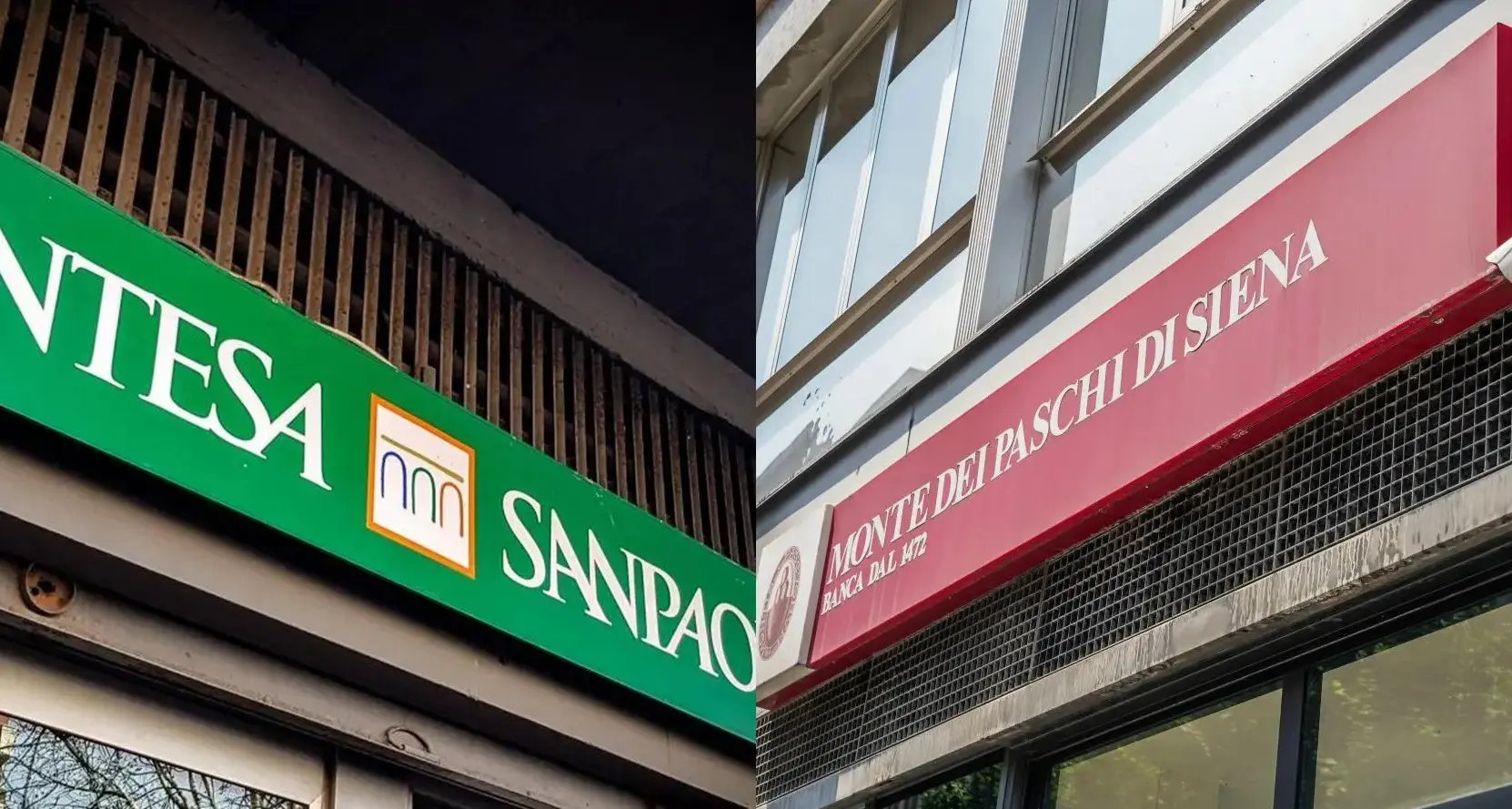
MILAN (ITALPRESS) – Two operations that may seem similar because both aim to value shareholders, but that, to look at them more closely, they have a profoundly different nature. This is the thesis by Franco Paparella, an ordinary professor at Sapienza University of Rome, in an article published on the Sole 24 Ore, in which the comparison between the OPAS of Intesa Sanpaolo on MPS and the defensive manoeuvre proposed by Luigi Lovaglio managing director of the Senese bank becomes above all a comparison between new value and simple re-allocation of the existing value.
According to Paparella, the transaction of Intesa Sanpaolo brings to MPS shareholders an additional benefit because it intervenes a third party willing to recognize a prize. The OPAS, in fact, incorporates a prize of 12.5% compared to the prices preceding the announcement. It is value, in the form of cash and securities, that comes from the outside of the bank and that is added to the one already incorporated in the shares.
Different, however, the mechanism chosen by MPS as a response to the pressure of the Intesa operation. The extraordinary distribution, altogether 1,208 euros per share between cash component and General shares, according to the analysis does not create new wealth for the members. The bank, in essence, returns to the shareholders a part of the assets that already belonged to them. It changes the form of value, but not its origin.
And it is here that, in the reading of Paparella, there is the decisive difference. In the case of the OPAS of Intesa there is an external buyer who pays an award to obtain control and build an industrial operation. In the case of MPS, instead, distributed resources come from the assets of the same bank. For the small shareholder, therefore, the result may appear generous on the nominal plane, but economically does not equal a real prize.
To further complicate the picture there is then the fisco. The extraordinary distribution is fiscally treated as a new wealth, despite, in the reconstruction of the author, it is already an existing heritage. For a physical shareholder living in Italy the burden can reach 26% of the sums received. A tax that ends up affecting a wealth that, before the distribution, already belonged to shareholders through the bank’s assets.
The conclusion is therefore clear: the two operations are not assimilar. The Intesa Sanpaolo OPAS transfers an additional value to MPS shareholders through the award recognised by the tenderer. The MPS manoeuvre, on the other hand, redistributes a part of an existing heritage, with an additional tax penalization for members. The point, I mean, is not what is distributed, but where that value comes from. And, in the comparison between MPS and Intesa, it is precisely this origin to radically change the meaning of the two operations.
– photo IPA Agency –
(ITALPRESS).