ROMA (ITALPRESS) – An ever more sustainable natural rubber chain, traceable and free from deforestation, in view of the application of the EUDR European regulation. This was the theme at the center of the digital press conference organized today by Michelin and broadcast live by Clermont-Ferrand, in France, the historical headquarters of the group. The meeting, dedicated to the strategies and results achieved by the company in the sustainable supply of natural rubber, was an opportunity to illustrate a path started over ten years ago, with the aim of making the entire supply chain more responsible and transparent.
In 2025 the world production of this raw material reached 14.9 million tonnes. The question behind the initiative was opened by Cyrille Roget, director of scientific communication and innovation: how to ensure a production of natural rubber free from deforestation? A question that accompanies Michelin’s work since 2015, when the group has adopted a specific policy on sustainable natural rubber, taking on the commitment to supply exclusively raw material not linked to deforestation. A strategy that has anticipated over ten years the objectives of the EUDR European Regulation and which has developed through investments, international collaborations and projects directly in the production territories.
Edouard de Rostolan, head of Michelin’s sustainable purchases, explored the evolution of the group’s commitment to the transformation of the sector. Among the most significant steps is the partnership with the WWF, launched in 2014, followed in 2015 by the definition of sustainable natural rubber policy. In 2018 Michelin also joined the Global Platform for Sustainable Natural Rubber, an international platform that brings together different players in the industry with the aim of promoting responsible practices and improving the environmental and social conditions of the supply chain. In the following years the commitment has been translated into a series of concrete initiatives in the main producing countries.
In 2020 the CASCADE project was launched in Indonesia, followed in 2021 by the Amazonas initiative in Brazil. In 2022 the group developed the RIVER projects in Sri Lanka and those dedicated to agroforestation in Thailand, while in 2023 the Mahakam project was started, still in Indonesia. In the two years 2024-2025 Michelin then accelerated the process of adapting to European requirements through the RubberWay-Geo tool. In 2026 the work continued with the Harvest project in Thailand, with the aim of strengthening compliance with the regulation in Europe and the rest of the world.
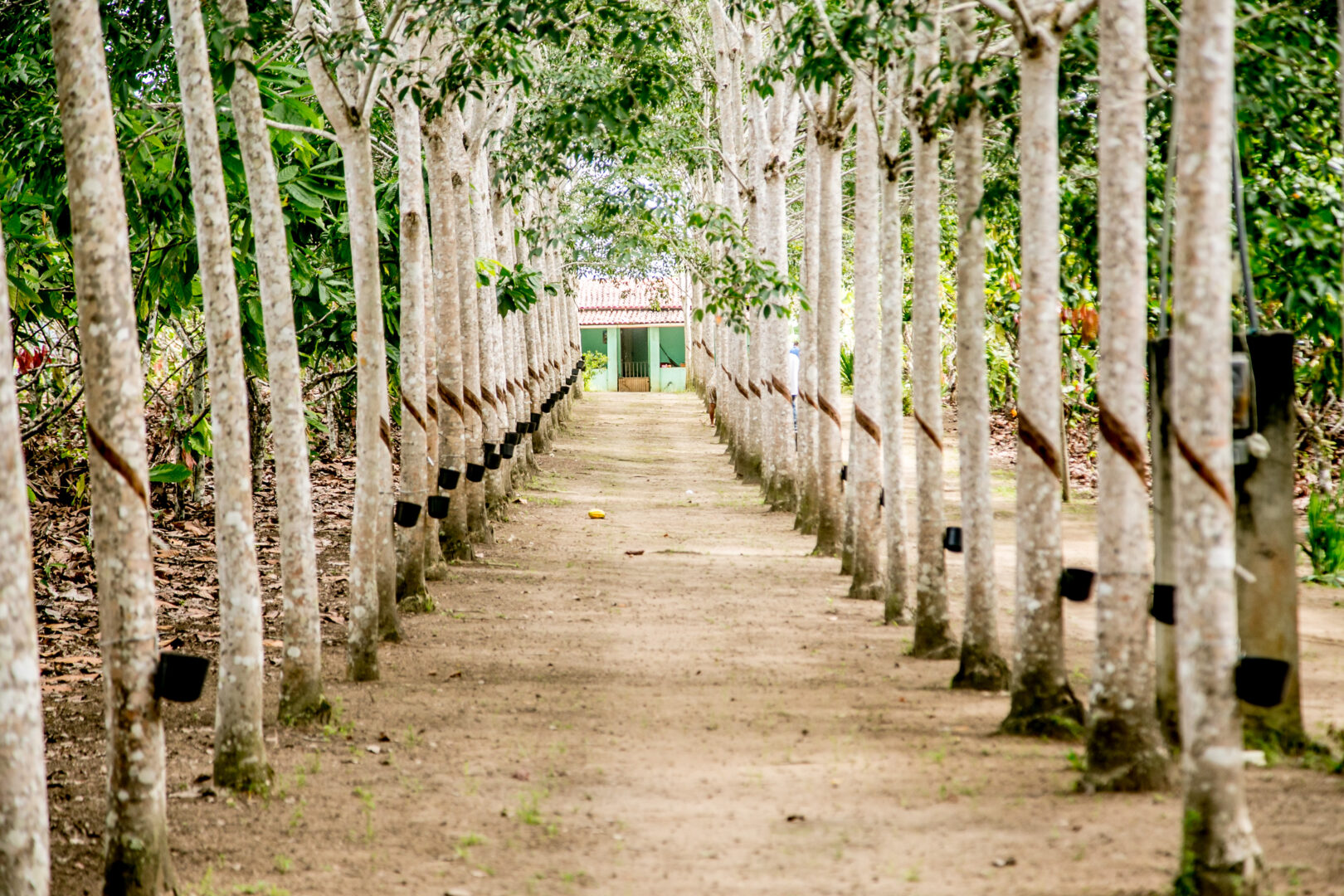
Among the most significant experiences illustrated during the conference are two cases presented as examples of the Michelin approach. The first concerns the RLU project in Indonesia, described as a particularly complex initiative in the initial phase, but later became a reference point for interventions in the sector. The second case is developed in the Brazilian state of Bahia, where a highly degraded forest area has been transformed into a natural reserve of particular value.
Two experiences that testify how interventions on the supply chain can go beyond the simple traceability of the raw material, also contributing to the protection of biodiversity, the recovery of ecosystems and the valorization of the territories. Hervé Deguine, director of relations with NGOs and civil society organizations, also spoke about the difficulties encountered during this course.
“Almost every year we face new unknowns,” he explained, pointing out that the complexity of the projects requires a constant adaptation to local conditions and a continuous dialogue with the organizations and communities involved. A work that, especially in countries characterized by fragmented production, requires collaboration and tools capable of identifying critical issues promptly. The complexity of the supply chain is one of the main challenges for the industry.
The world production of natural rubber involves about 15 million hectares of crops, six million farmers and an articulated network of small producers, traders, large plantations and processing plants. According to the data presented by Michelin, 85% of global production comes from small growers. Within its supply chain, the group involves about 1.5 million farmers. A dimension that makes the control of the origin of the raw material particularly complex and the verification of the environmental conditions in which it is produced.
A further insight into the geographical distribution of world production. In 2025 a total of 14.9 million tonnes of natural rubber was produced. Asia is the predominant area, with 83.7% of global production, followed by Africa with 14.5% and Latin America with 1.8%. Among the main producer countries are Thailand, which alone represents 32% of the total world, Indonesia with 16%, Ivory Coast with 12%, Vietnam with 8%, India with 6% and China with 5%.
Numbers highlighting the concentration of production in some geographical areas and the need to build control systems capable of operating in very different contexts. Michelin uses approximately 5% of the world’s natural rubber production annually. The geographical distribution of the supply of the group highlights a significant weight of Asia, from which 72% of the purchased rubber comes, while 23% comes from Africa and the remaining 5% from Latin America.
The presence in these areas requires a direct involvement of producers and of the different actors involved along the supply chain, from cultivation to processing of raw material. To address this fragmentation, Michelin has developed tools dedicated to mapping and risk assessment. Among these RubberWay, introduced in 2017, allows you to analyze the supply chain and identify the issues related to sustainability, while RubberWay-Geo contributes to the geographical traceability process needed to meet European requirements. Through these instruments the group aims to know more precisely the origin of natural rubber and to verify that production is not associated with areas affected by deforestation phenomena.
The question is also of particular importance in the light of the role of natural rubber in tyre production. Natural elastomers are 12 to 17% in cars, while the percentage rises to 35-40% in truck tyres. This is therefore a strategic raw material for the entire automotive and transport sector, whose responsible management is a central element to reduce the environmental impact of industrial production.
During the conference it was reiterated that the sustainability of the supply chain cannot be guaranteed exclusively through checks carried out downstream of production, but requires structured work directly in the territories. The involvement of small farmers, training, collaboration with local organizations and knowledge of the origin of raw materials are fundamental elements to build a truly traceable system.
With the approach of applying the EUDR Regulation, Michelin reiterated its commitment to comply with the new requirements, underlining how work on traceability and sustainability does not represent a last-minute adjustment, but the result of a strategy built over a decade. The aim is to consolidate a responsible supply model, which can involve the entire production chain and contribute to the global transformation of the natural rubber industry.
-Photos press office Michelin Italia-
(ITALPRESS).