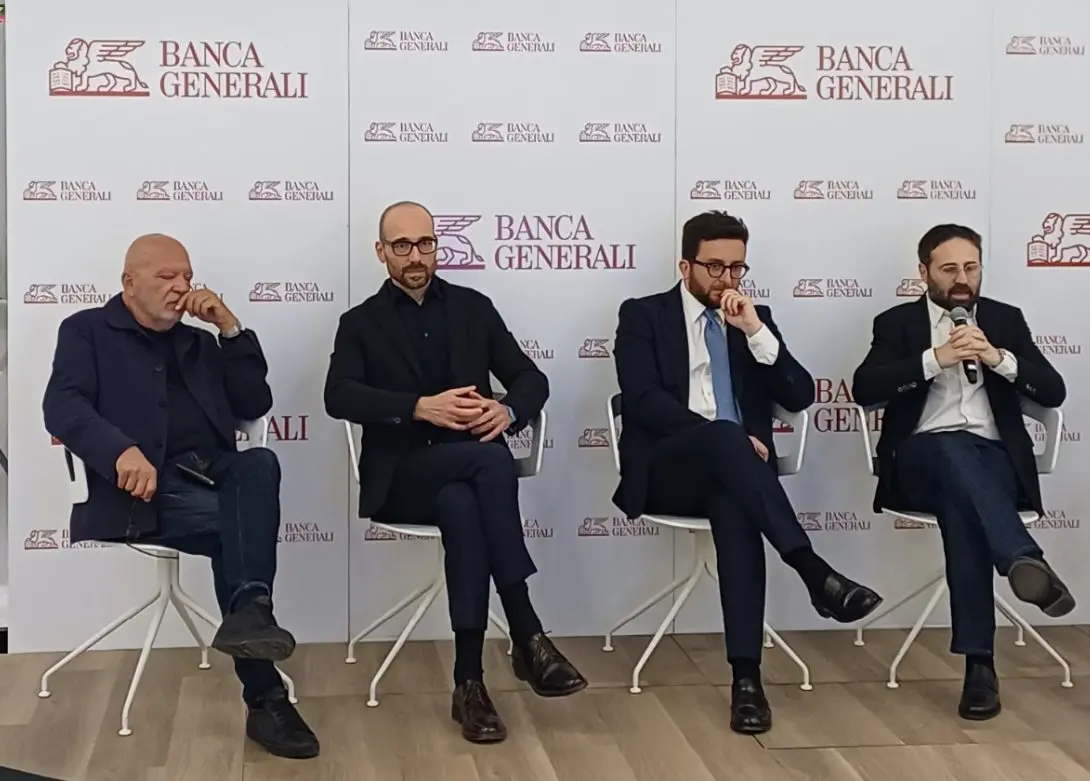
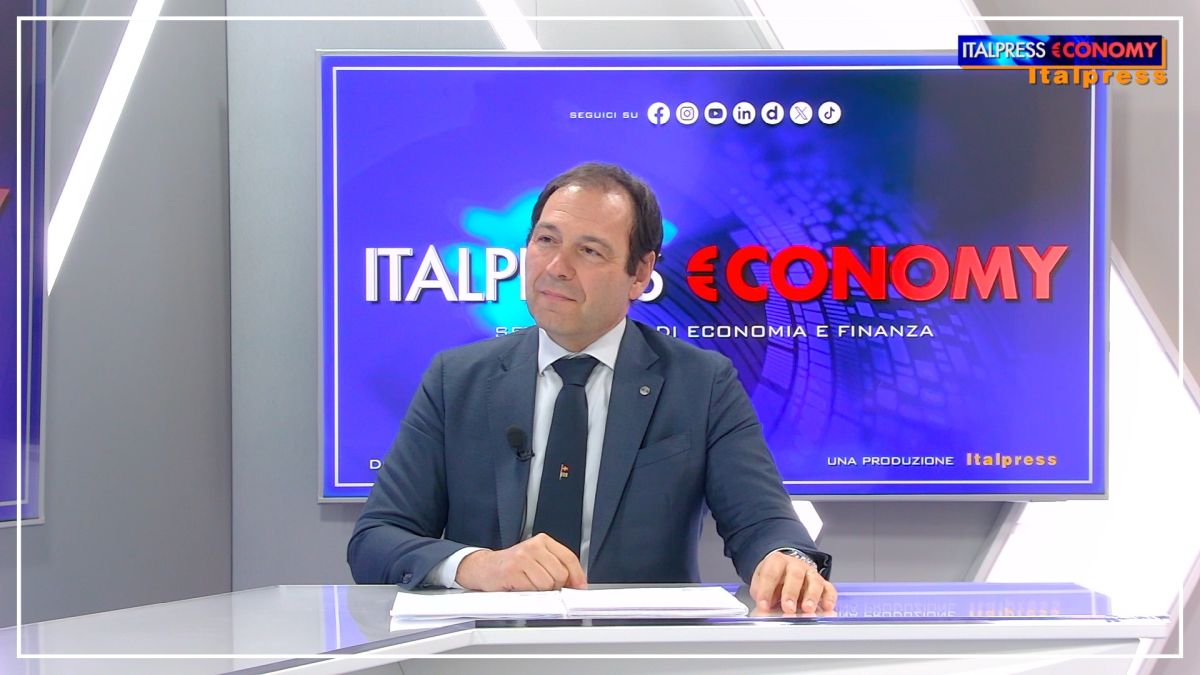
MILANO (ITALPRESS) – The Italian real estate sector is confirmed as a safe landing for international investors, even in a turbulent geopolitical context. To certify it is Roberto Giovenco, Chief Operating Officer of RINA Prime, the real estate division of the multinational group RINA, interviewed by Claudio Brachino for the television magazine Italpress Economy.
“Today it is estimated that about 60% of the investments in real estate Italian come from abroad,” says Giovenco. “This is a very important signal of resilience of our country compared to the geopolitical situations that are shaking the international sector.” A fact that fits into a wider European framework: in the Old Continent, explains the manager, about half of the real estate investments arrives from outside, with the Mediterranean basin which records an increasing concentration of capital.
In this scenario, the ability to ensure transparency, data quality and risk control becomes a determining factor in attracting capital and supporting increasingly complex investment decisions.
RINA is a multinational group that provides a wide range of services in energy, marine, infrastructure & mobility, certification, industry and real estate. RINA Prime represents the component dedicated to real estate and supports public and private operators, investors and institutions in the management, valorisation and transformation of real estate along the entire asset life cycle,
“We work through an integrated model that combines technical, digital, energy and financial skills,” explains Giovenco. “Today the real estate sector cannot be managed without a full awareness of the economic and financial mechanisms that determine its value. The central theme is no longer just management, but the government of the complexity of assets over time.”
The work force of RINA Prime has about 350 professionals distributed throughout Italy and in part in Europe, to which is added a network of loyal external collaborators that almost doubles the overall workforce.
On the international front, RINA Prime has consolidated its presence in the main European markets: Germany, the United Kingdom, Poland – “a country with strong growth, especially from the point of view of European and non-European investments” – and Switzerland. Recently, the group has taken a significant step towards the Iberian peninsula with the acquisition of GLOVAL, a Spanish company that ranks third in the Iberian market of real estate evaluations.
“The European presence for us is important and qualifying”, explains Giovenco, “because today in Europe they are again concentrating investments also from foreign players, according to the international geopolitical situation”. The real estate “is becoming a refuge sector where interests are concentrated in stable contexts. Europe is one of the most stable global contexts.”
The theme of Smart City has been at the centre of the debate for years, but according to Giovenco there is still a universally shared paradigm among operators. The manager looks at Barcelona as a reference workshop: “The public regulator creates an environment where demand and offer intersect. Those with areas to be redeveloped contact the investors concerned, as part of a regulatory plan managed by the municipality. And if we go to Barcelona, we see the positive effect of this intersection.”
For Giovenco Smart City is not a slogan but a real industrial plan applied to cities: “I would start by consolidating a database. Today buildings, infrastructures and services generate a great deal of information: to set up and share this data to obtain new features and services is the challenge of the coming years.” In this context, public heritage management plays a central role in terms of urban cohesion. “The periphery should not be ambiguousbut an integral part of a more balanced and inclusive urban system.” The most emblematic case of this vision is the project created for the Municipality of Rome, renamed “Atlante”. RINA Prime has digitized the entire real estate of Rome Capital: 100,000 properties, 4 million documents treated at a rate of 36,000 per day. A capillary operation of recovery, homogeneization and coherence of data that lacked the Capitol administration. “This work has created a structured information base, enabling new services for administration and users,” explains Giovenco. “It means greater transparency, faster decision-making times and a timely knowledge of the heritage, fundamental elements for its valorisation.” The project has laid the foundations for an advanced public heritage redevelopment and management program, including predictive and preventive maintenance models. The Atlas model, born in Rome, is now a replicable benchmark on a national scale. In-depth studies are already underway with the Sardinia Region, the Metropolitan City of Naples and the Piedmont Region for public economic and residential construction.
On the technological front, RINA Prime is investing in the conversion of its professionalism towards the use of artificial intelligence. “These are powerful enablers to significantly increase both the skills and professionalism of our operators, on the territory and towards customers,” says the manager. “Today the computational ability enables us to do things that a few years ago were not thinkable.”
Finally, on the House Plan of the Government, “we have a specific interest in collaborating and proactive in providing real estate digitization as an asset to allow its implementation, our contribution is precisely to transform data into an operational tool to enable investments, management and valorisation”, concludes Giovenco.
– Photo Italpress –
(ITALPRESS).