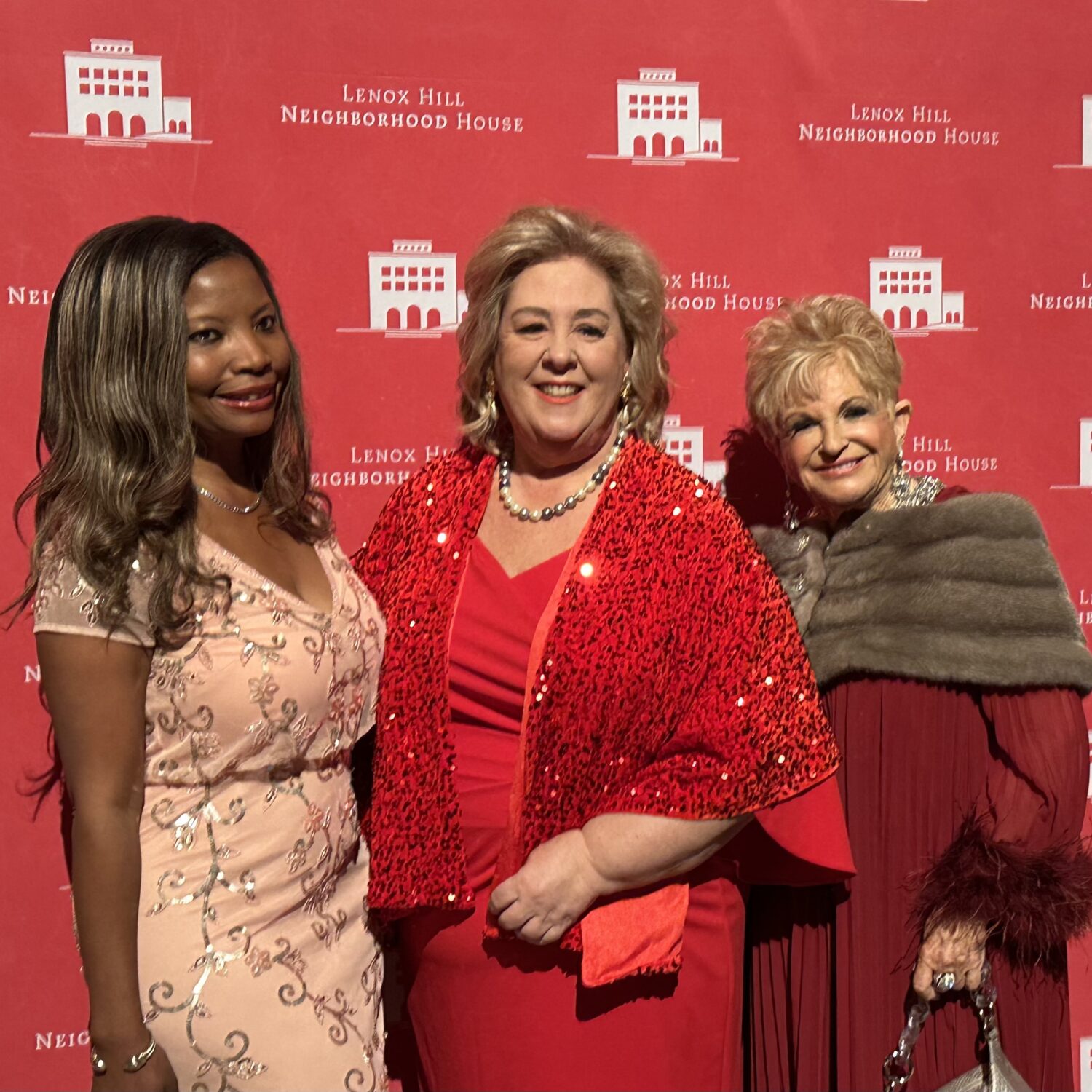
On the evening of yesterday, in the spaces of Cipriani on the 42nd road in New York, the Lenox Hill Neighborhood House Spring Gala 2026 was held, a historic organization founded in 1894 that today offers educational services, assistance to the elderly, food support and social programs for families and vulnerable people of the Upper East Side. This year’s edition, entitled Once Upon a Dream, combines fundraising and interior design into a charity dinner transformed into a great immersive exhibition, where designers and floral artists freely interpret the theme through scenic tables.
During the evening it was paid tribute to the state congresswoman Rebecca A. Seawright, ceramist and designer Christopher Spitzmiller and Wilkinson Global Asset Management, a financial consultancy company that has been supporting the organization’s endowment for years.
Seawright, which represents the 76th district of New York and presides over the Assembly Aging Committee, is a central figure for policies dedicated to the elderly and people with disabilities. Over the years he has gained substantial public funding for senior centres, schools, parks and non-profit organizations, including Lenox Hill Neighborhood House. During the evening, he reiterated his support for the organization: “They are at their side because they offer truly extraordinary services, not only to the elderly, but also to people without abode and children. This is precisely what we need: more concrete services, where public policies become real support for the community.”.
Christopher Spitzmiller, on the other hand, is known in the world of American design for its intense glazed ceramic lamps and for a classic but recognizable aesthetic.
Around them there is a network of supporters: collectors, interior designers and New York entrepreneurs. Among the most visible names are Juan A. Sabater, board president, Rachel Bender, executive director of the Neighborhood House, Diana Ronan Quasha, gala chair emerita, as well as Lindsey Coral Harper and Harry Heissmann, design chairs of the 2026 edition.
Each table is conceived as a small wedding favor. Anthony Bellomo dedicates to Spitzmiller Peony Dream, a tribute to his favorite peony, while Anthony Taccetta builds an imaginary escape made of cold metals, ethereal compositions and theatrical details. Antonio DeLoatch works on the concept of arrival and transformation with Illuminated Arrival, a table focused on light as a symbol of change.
Brianna Scott Interiors and Via Amandola sign Celestine, a lunar and luminous composition built on ivories, reflections and sculptural orchids. Daniella Feldman with Edges of a Dream brings on stage an almost Victorian romanticism, with glass urns containing red fish and an iridescent pink palette inspired in part in Wuthering Heights.
Dean Yoder chooses the narrative spectacularity of 1001 Arabian Nights, with flying carpets, calls to Fez and references to the story of Scheherazade. Elizabeth King prefers the symbolism of metamorphosis in Butterfly Garden, a ceiling table populated by butterflies, botanical motifs and very elaborate decorative details.
Emily Hodge looks instead at France and the fabrics of Antoinette Poisson for Rêverie en Bleu, played on blue, amber and green compositions in ancient pot. Esencial Hogar reads The Jungle Book in a sophisticated way, while Flowers by Special Arrangement builds Clouds in the Sky, a table that uses blue and white flowers to evoke open clouds and horizons.
Among the most New York concept is City of Dreams by Gingham & Gable, which inserts miniatures of brownstones, Scalamandré fabrics and a tribute to the lions of the New York Public Library. Grace Kaynor proposes a marine escape with Smooth Sailing, made of hydrangeas such as waves and a ship at the table center.
Many designers work instead on the fairytale imagination. Harry Heissmann is inspired by Jack and the Beanstalk, Houz of Rebel reinterprets Sleeping Beauty through an enchanted forest, while JLW Interiors and Nsombi Woodson Design build one of the most narrative tables of the evening: Through the Enchanted Looking Glass, a forest to cross physically and symbolically, between green marble, vintage books and forest creatures.
Jolie Korek imagines a table hanging around a floating frame that becomes a portal to the dream, while Katherine Gold creates Bedtime Stories, a celebration of evening rituals and the moment when reading accompanies sleep.
Among the most personal concepts is Dreams of Home by Maison Sheik, inspired by the memory of a family courtyard in rural Syria and transformed into reflection on home, diaspora and identity.
Next to them, Sarah Chesters and Dennis Remorca reflect on the theme of repair with Kintsugi Dreams, while Tamara Stephenson brings the sea to the room with Neptune’s Dream. Taylor Doyle joins botany and references to Neverland, Jared M. Clark builds an equestrian homage to the Year of the Horse and TRP Interiors offers a more intimate table.
Sarah Baderna Studio and Mathilde Droz Blanc, instead, titled their table Between Dream and Dawn: in a half remembered forest. More than telling a precise fairy tale, the project works on a feeling. “The table is inspired by the general theme of the gala, Once Upon a Dream, which invited us to reflect on that intermediate area between the wake and the dream”, says Mathilde Droz Blanc. “We have imagined a forest in which you do not understand well if you are still awake or already immersed in sleep”.
The table is built as a memory fragment: a forest that no longer belongs to the whole night but not to the day. Musk, irregular branches, damp greens and freshly hinted glows make up a deliberately blurred scene, almost like a dream that you try to keep just awake.
“We did not want to inspire a precise geographical place, but a feeling.” “There is a very emotional component: the idea that time slows down, that there are calm and comfort, but also mystery and a small element of unexpected”.
The colour palette also follows this logic. “We chose the greens of the forest and moss, with sometimes more intense tones and others more silent, along with white, to evoke something ethereal,” says Droz Blanc. “The floral stems emerge almost as cotton, to return that feeling of suspension typical of the dream, when you do not understand well what is happening and you simply let yourself be cradled by colors and the atmosphere”.
The idea is not to transport the guest into a fantastic world but in a mental space. It is a table that seems less interested in performance and more to the construction of atmosphere.
In a gala where many tables tell the dream as a show, Sarah Baderna Studio and Mathilde Droz Blanc interpret it as a threshold: that fragile moment in which you have not yet completely come out of imagination.
L’articolo Once Upon a Dream: Lenox Hill charity gala proviene da IlNewyorkese.