MILAN (ITALPRESS) – The Neet phenomenon, young people between 15 and 29 years of age who do not work or study, in Italy is in sharp decline, but continues to represent one of the main social and economic challenges of the country. It is what emerges from the research “The NEET condition. Data, causes and policies of a decreasing phenomenon” presented to the Intesa Sanpaolo skyscraper in Milan.
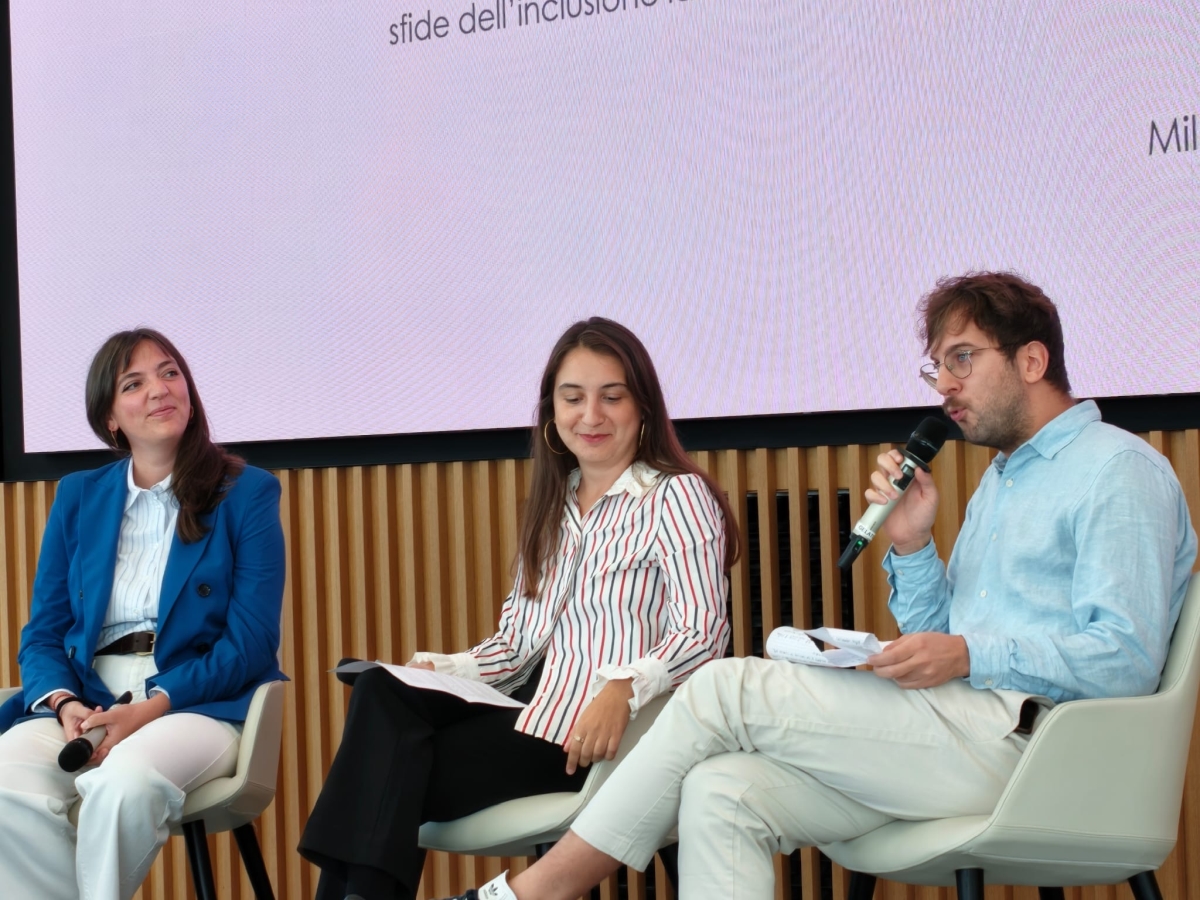
The research, born on impulse and with the support of Intesa Sanpaolo, was carried out with qualitative interviews and analysis of data from sources ISTAT, Eurostat, INAPP, Ministry of Labour and Social Policies and others. At the presentation, where some initiatives already underway promoted by Fondazione Cariplo and Intesa Sanpaolo have been illustrated, Claudio Lindner, deputy director of the School of Journalism Walter Tobagi, with the authors Francesca Fulghesu, Matteo Lefons and Arianna Salvatori, Benedetta Angiari, coordinator ZeroNeet Fondazione Cariplo, Professor Francesca Marinelli, University of Milan, and Andrea Forghieri, Head of Intesa.
The trend towards the reduction of the incidence continues in young people between 15 and 29 years: at 13.3 percent in 2025, is halved compared to 25.7 percent in 2015 and compared to 2024 when it was 15.3 percent (at third place in Europe after Turkey and Romania) has further reduced by two percentage points. The Neet is a social phenomenon with significant economic implications: 1.2 million inactive young people do not contribute to the growth of the country, an unexpressed potential that would bring positive effects on employment, well-being and productivity.
The study points out that there is no single Neet profile, identifying six profiles, some of which are difficult to intercept: young people with low training and few family resources, exposed to the risk of marginality; graduates with high expectations, who continue to look for work consistent with their own training; students who have interrupted their studies; discouraged people; submerged or precarious work, which offers a minimum level of economic autonomy without building a stable professional position; women outside the market for responsibilities.
Of them 35 percent is unemployed; an additional 33.3 percent is available at work but does not actively look for it or is not immediately available; the remaining 31.7 percent does not look for work and is not available to work. In the latter segment women prevail and, in more than half of cases, mothers, with the care of children and family as a prevailing motivation. The term “inactive” itself suggests an absence of activity that does not always exist in everyday life. Those who assist a family, work at home, do occasional jobs, look for work without passing through formal channels or through a phase of passage between two paths share, on paper, the same statistical condition, while living different social realities.
In the course of the conference some of the main experiences put in place today to counter the phenomenon of Neet, highlighting how the response requires an integrated approach involving institutions, schools, enterprises, third sector and territorial communities. Among the initiatives presented, ZeroNeet, the strategic program promoted by Fondazione Cariplo in collaboration with Regione Lombardia and Intesa Sanpaolo, born to prevent and counter the phenomenon of young people who do not study, do not work and are not included in educational paths. ZeroNeet, which consists of 6 major initiatives of prevention and contrast, after just over a year since its start, supports 55 projects funded by the Lombardy Region, involving altogether 459 subjects between non-profit institutions, public institutions and business realities. Through these designs at the end of 2028 it is expected to reach and activate more than 4,500 neet through orientation, training,social inclusion and employment inclusion (https://zeroneet.org/).
Compared to the territorial disparities that concern the phenomenon of Neet, “you cannot think of intervention in the same way in the different territories, you must take into account those that are the conditions of context”, said Benedetta Angiari, coordinator of the ZeroNeet program of Fondazione Cariplo, on the margin of the presentation of the research realized together with Intesa Sanpaolo and the School of journalism Walter Tobagi in Milan. “The Lombardy Region, and Northern Italy in general – added Angiari -, has a fabric of small and medium enterprises of a certain type, South Italy could leverage other sectors such as tourism and catering. In any case – he continued – something that goes transversally to the territory is the importance of intercepting them and giving confidence, motivating these guys, helping them to take self-confidence, gaining awareness of their skills and making them want to get involved.”
“Contrasting the phenomenon of NEET people means intervening on skills, but also helping young people to regain awareness, trust in their abilities and a perspective for the future. With the program “Giovani e Lavoro”, Intesa Sanpaolo formed around 6,000 young people and 80% reached a stable employment. For us it is essential to accompany and support the new generations, offering them concrete tools and opportunities to build their own path,” says Andrea Forghieri, Executive Director of Intesa Sanpaolo for Social.
The updated results of Youth and Labour have also been presented, the Intesa Sanpaolo programme with Generation Italy active in fifteen Italian regions and aimed at filling the gap between the skills required by companies and skills possessed by young people. Since 2019 he has involved about 6,000 young people in 240 classes and 2,500 companies, with 80% of the participants who found an occupation. One of the keys to success is the ability to start from the analysis of the real needs of the enterprises and translate them into a wide range of training, aimed at the professional sectors most affected by the mismatch between demand and supply of skills: from Hi-Tech, to the precision mechanical industry, to the sectors of sales, alberghiero and catering (https://www.intesasanpaolo.com/common/landing).
Among the ideas emerging from the comparison, the importance of an approach that combines professional accompaniment with a support of relational and emotional nature has also been emphasized. Many young people who find themselves in conditions of inactivity live in situations of strong discouragement and personal fragility that require, even before the search for a job, the reconstruction of trust in their abilities and opportunities available. In this perspective, orientation is not only to indicate courses or professional offers, but to help children identify concrete paths and possible choices. Similarly, it has been highlighted as often the problem is not the absence of skills, but the difficulty in enhancing them and effectively communicating them through tools such as curriculum vitae or the selection interview.
– Press Office photos Intesa Sanpaolo –
(ITALPRESS).