ROMA (ITALPRESS) – In a global context crossed by deep megatrends – from demographic transition to digital innovation, from geopolitical tensions to the transformation of economic and productive models – the ability to understand and interpret financial dynamics is increasingly a strategic competence. Not only for economic operators, but for citizens, families and young people called to deal daily with increasingly complex and interconnected choices. It is precisely from this scenario that the FEduF Annual Assembly, dedicated to the theme “Financial education in the complexity of new scenarios”, as a moment of reflection and comparison on the role of financial education in reading, interpreting and governing the great changes in place. An event that aims to focus the strategic value of this competence as a tool for guidance in a context characterized by uncertainty, volatility and increasing complexity. This is a particularly important challenge for Italy, where levels of financial education continue to be lower than international standards. According to OECD surveys, in fact, only 44.3% of adults reach a sufficient level of financial literacy, while just over a third demonstrates to correctly understand the basic economic concepts, such as inflation, interest rate and diversification. The fragility is even more evident among some segments of the population: according to the Edufin Index 2025, women record an average score of 54 points, against the 59 of men, while among the younger ones there are levels below the national average, with the 18-24 years at 50 altitude, confirming the need to strengthen the educational tools precisely in the bands most exposed to the risk of economic vulnerability. In this context, financial education is a fundamental lever of conscious citizenship, economic inclusion and social resilience. It is no longer just a question of transmitting technical knowledge or basic notions, but of providing concrete tools to understand the present and direct future choices, in areas that directly affect the sustainability of people’s lives: from saving management to social planning, from access to credit to risk protection, to the new frontiers of digital and sustainable finance. To confirm this urgency, the most recent data show a persistent fragility in the Italian relationship with the management of its economic resources. The Edufin Index 2025 of Alleanza Assicurazioni records an average level of 56 out of 100 – below the sufficiency threshold – and reports that only 40% of the population are able to adopt really aware financial behaviour. A gap that is not only about knowledge, but above all the ability to translate them into concrete and consistent choices over time. The theme is particularly for women and young people. On the female front, the differences remain marked throughout the economic life cycle: according to the INPS 2024 gender renunciation, in Italy the female employment rate stands at 52.5%, against 70.4% of men, with a gap of 17.9 percentage points, while the pay differential exceeds 20% on average and expands further in the higher qualification sectors. Labour disparities, involuntary part-times and lower contribution continuity thus lead to lower pensions and lower economic autonomy, with effects also affecting the country’s growth potential. For young people, on the other hand, the knot is increasingly previdential: late entry into the labour market, fragmented careers and lower initial wages make it more difficult to build an adequate contribution position over time. Not by chance, according to OECD projections, who enterstoday in the labour market in Italy could reach the retirement age up to 71 years, indicating how urgent it is to immediately strengthen financial education tools capable of accompanying informed choices on work, savings and planning of the future. It is in this perspective that FEduF – Foundation for Financial Education and Savings – renews and strengthens its commitment, promoting an approach to financial education intended as the country’s true cultural infrastructure. A transversal competence, able to connect large global phenomena with daily decisions, reduce economic and social vulnerabilities and promote more active and informed participation in economic life. For years the Foundation has been working in this direction through initiatives aimed at students, teachers, families and citizens, developed in dialogue with institutions, school, banking and business. The goal is to build an educational ecosystem that can make complex content accessible and translate knowledge into conscious, responsible and sustainable behaviors. In the school year 2025/2026, this commitment already results in 785 events, with almost 57,000 participants, of which over 54,000 students and 2,800 teachers. A capillary activity that confirms FEduF’s ability to network and bring financial education into the territories, strengthening its concrete impact on educational communities and the country system. “The FEduF Assembly addresses financial education from an extremely indispensable point of view, which makes it even more useful, and is that of the great changes of this era – says Giovanna Boggio Robutti, General Director of FEduF -. Demographic changes and artificial intelligence are events that have a huge impact on knowledge. Financial education can help citizens face these challenges. According to Giancarlo Blangiardo, president of demography of Milan Bicocca and former president Istat “educating a population that is progressively changing is relevant if you want to make sure that this population makes the right choices. Educating to save is a way to make people more aware of the opportunities that arise so as to make the right choices at the right time.” For Paola Soccorso, Head of Financial Education Office, “Financial education is an active citizenship tool and our attempt is to strengthen the culture of young citizens and to offer them the tools to make quick and daily choices in an increasingly complex context.”.
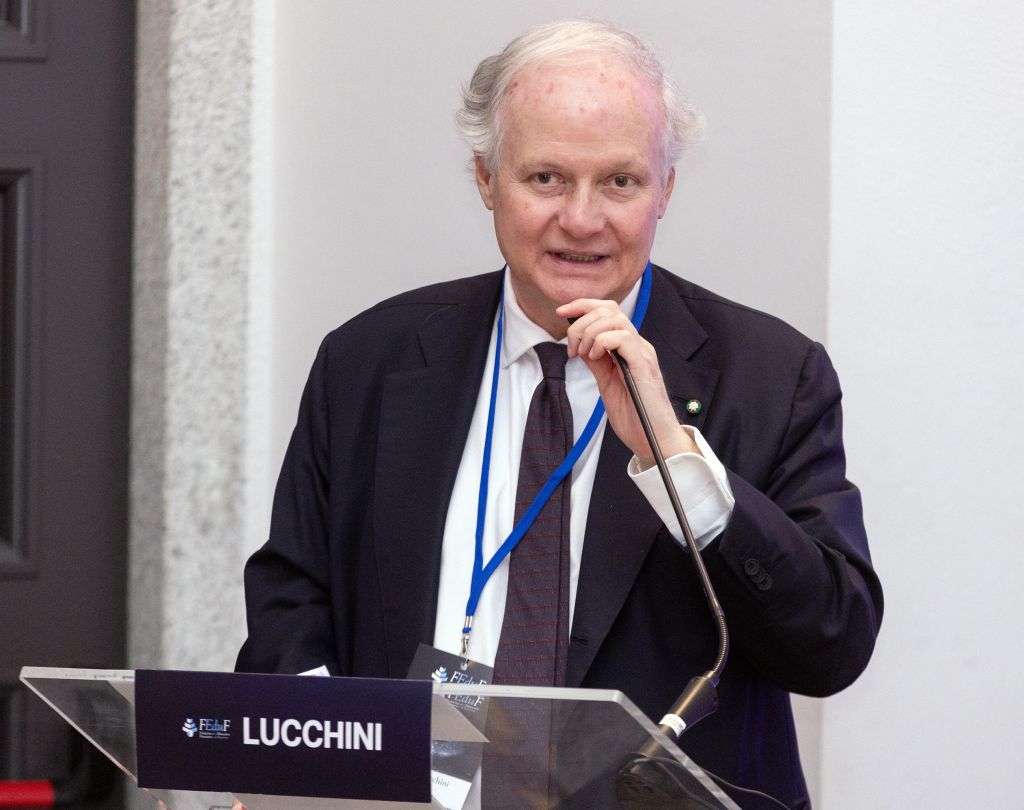
– photo press office FeduF –(ITALPRESS).