ROMA (ITALPRESS) – Energy has become a structural component of the competitiveness of micro and small enterprises. Not only for the price level, but above all for their volatility, which makes it more difficult to program the activity and subtracts investment resources. This is what emerges from the survey “Energy and small enterprises”, carried out by the NAC on a representative sample of associated companies belonging to different productive sectors.
According to the survey, 78.2% of companies consider the consequences of geopolitical tensions on energy markets worrying about their activity. Only 7.1% did not see particular reasons for concern. The cost of energy has a significant impact on business activity of 84%: 39.1% consider it very impactful and 44.9% quite impactful. The energy question, therefore, no longer concerns only the traditionally energetic sectors, but now passes through the entire system of micro and small enterprises.
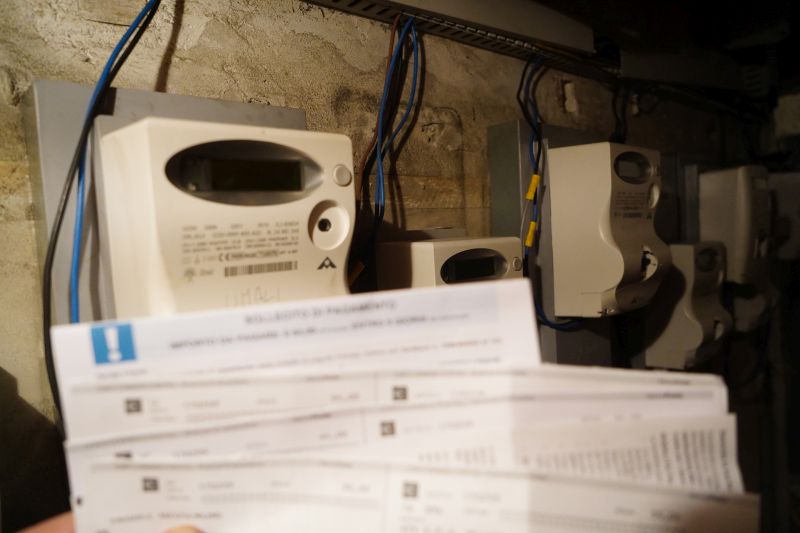
To worry is above all the persistence of the phenomenon. In the last year, for 86.7% of companies increased the alarm level linked to energy costs. For 25.9% he grew a lot, while only 1% reported a decrease. The expectations are confirmed in the bills, emphasizes the Cna. 76.5% of companies declare that they have increased energy spending in the last half of the year. Among the companies that have undergone recovery, 45.8% indicates a growth between 10 and 20% and 19.1% signals increments greater than 20%. Almost two out of three companies, among those affected by the increases, have therefore supported increases greater than 10%. The main effect is the reduction of corporate margins, indicated by 56.8% of companies. Only 20.4% managed to transfer at least partially the higher prices charged to customers, while 2.7% had to reduce production or services offered.
“Our investigation – says National President CNA, Dario Costantini – shows that the energy crisis can no longer be faced as a temporary emergency. Small businesses continue to pay higher bills but, in most cases, they do not have the contractual force to transfer price increases. They absorb shrinkage and, consequently, the resources available to invest, innovate and create jobs.”.
“We realized this survey – continues Constantine – not only to photograph the difficulties, but to build proposals based on the real needs of enterprises. We will bring these results in comparison with the Government and Parliament. Energy policy must recognise the specific nature of the Italian production system and provide tools that are really accessible to small and mediumsized enterprises. More transparency of the market is needed, measures to reduce exposure to price volatility and structural interventions, not episodic measures adopted only during the emergency phases.”.
For the CNA “it is necessary to overcome an energy policy mainly entrusted with economic interventions. Energy now influences profitability, investment decisions and business growth prospects. Ensuring competitive and predictable supply conditions must therefore become a central component of industrial policy.”.
– Photo Ipa Agency –
(ITALPRESS).