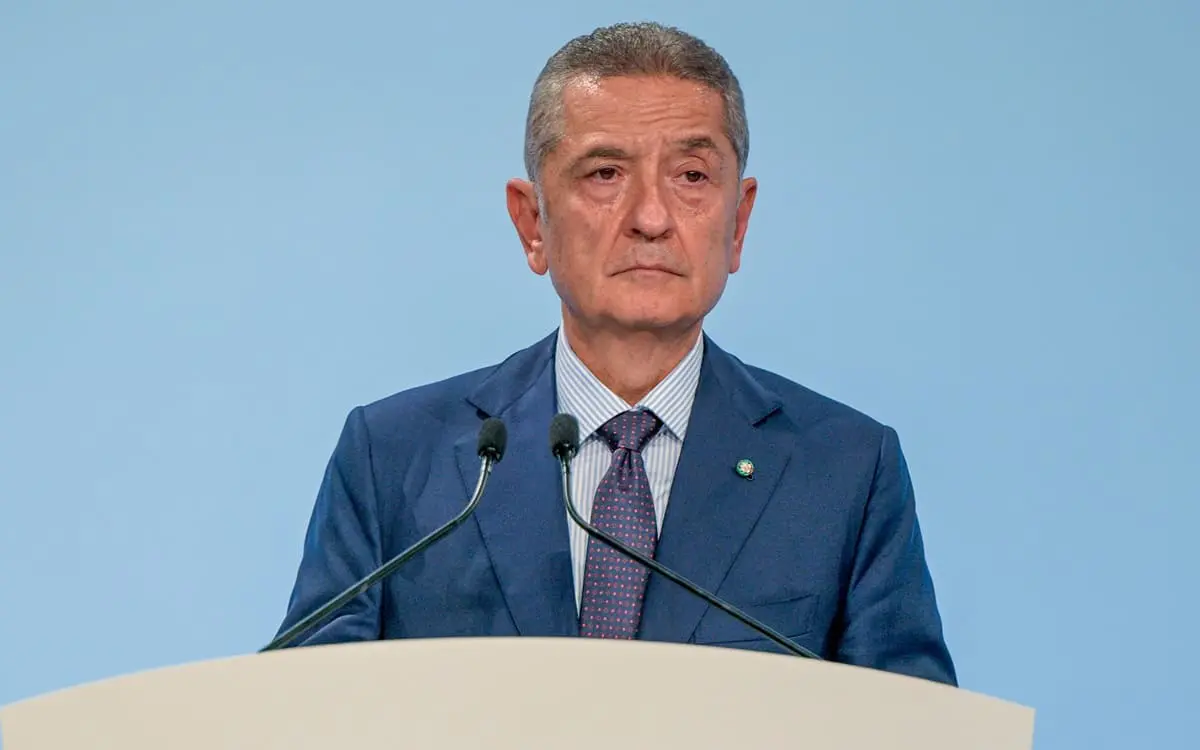
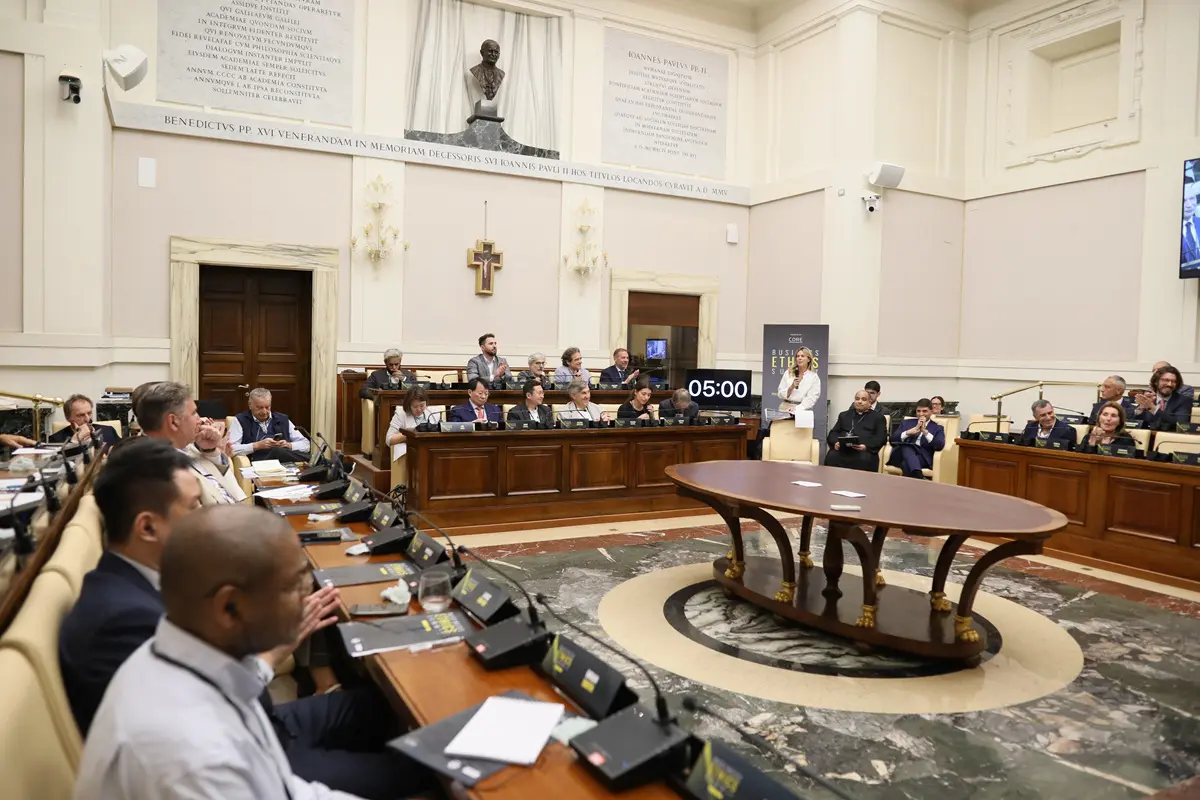
VATICAN CITY (ITALPRESS) – At a historical moment in which artificial intelligence, quantum technologies, robotics and new forms of economic power are redefining the relationship between innovation and responsibility, the Business Ethics Summit 2026 brought together international leaders of institutions, enterprise, finance, technology and academy to reflect on the theme “Humility of Power”.
The 2026 edition has developed around three great questions that cross the contemporary debate: What remains of human when intelligence becomes dominant? Human progress is often guided by confidence in scientific and technological discoveries. How can we balance the conscious use of AI with humility, prudence and intellectual honesty? What responsibility does the exercise of power require in uncertainty?
During the day, moderated by Cristiana Falcone, representatives of the institutions, business leaders, scholars and innovators from Europe, the United States, the Middle East and Asia have been confronted, called to discuss some of the most urgent issues of our time: the future of artificial intelligence, energy security, the potential of quantum technologies, job automation, the governance of digital platforms, trust in institutions and the role of leadership in a context characterized by increasing complexity.
Father Philip Larrey, professor of philosophy at Boston College, opened the work with a reflection dedicated to Socrates and to the limits of human power in the age of intelligent technologies, offering a key to philosophical reading to address the challenges posed by contemporary innovation. “It is important to put man at the centre of everything, which means always fostering the growth, work and well-being of the human being above the tool that is artificial intelligence,” he said.
The first session, “What Becomes Uniquely Human When Intelligence Becomes Abundant?”, explored the impact of artificial intelligence on creativity, culture, education, trust and leadership. “The challenge of this comparison between science, faith and normative vision is not to determine how much machines will become human, but how much we will be able to remain such. As institutions, we have not chosen the path of the ideological brake, but that of an anthropocentric innovation led by clear rules. With the Law 132 of 2025 and the recent implementing decrees, Italy is the first in Europe to equip itself with an organic discipline on ‘ artificial intelligence, demonstrating how industrial development can be combined with the respect of the person”, Federico Mollicone, President of the Commission culture, science and research of the House.
At the center of the second session, “What Are We Too Certain About?”, the theme of the limits of knowledge and risks arising from excessive confidence in technological forecasts. Experts from energy, quantum computing, connectivity and robotics have discussed opportunities and unknowns related to new innovation borders. In a time when technological capacity grows faster than our ability to understand its consequences, the Business Ethics Summit 2026 proposed a reflection that goes beyond technology itself, putting at the centre a fundamental question: how to exercise power with responsibility, awareness and humility. “One of the greatest risks in innovation is not what we do not know, but what we are too sure of. The skills of quantum computers to compromise current cryptographic systems no longer belong to science fiction, but they are now part of the planning horizon of many governments and companies,” said Niccolò De Masi, Chairman & Ceo, IonQ. Stefano Buono, Chief Executive Officer of NewCleo added: “It is essential to have moments dedicated to topics of crucial importance: today it was a day where it was possible to discuss ethics, business and new technologies, sharing each a valuable contribution.”.
The table closed with the third panel, “What Does Responsible Power Require?”, which focused attention on the challenges of governance in the age of artificial intelligence. “The true responsible power arises from man’s doubt and ability to give a sense to progress. The great challenge of the institutions is to accompany innovation while maintaining the principle that every transformation must remain at the service of man”, Gabriele Fava, President of INPS. “This morning we started with Socrates. It is right that the meeting ends with wisdom. We have explored artificial intelligence, creativity, quantum technologies, nuclear energy, robotics, governance and trust. Yet, despite the diversity of the perspectives emerged, a guiding thread crossed the whole day: the more power we acquire, the more humility becomes essential. The challenge we face is not only technological. It’s a human challenge. The real challenge is to innovate without arrogance.” These are the words of Cristiana Falcone, at the end of the Summit.
– photo office printing Business Ethics Summit 2026 –
(ITALPRESS).