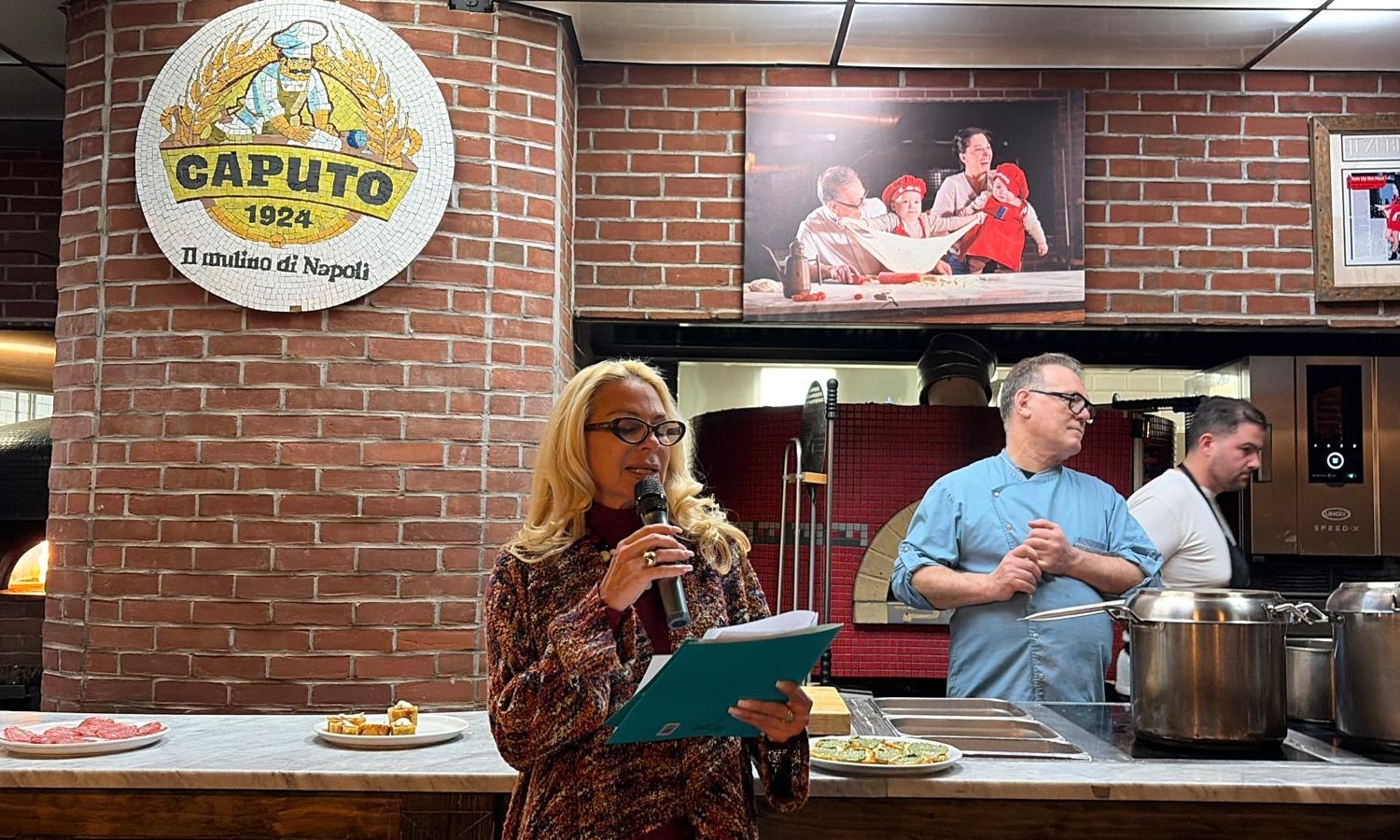
Roberto Caporuscio founded Kesté – Pizza & Vino, at 77 Fulton Street, Financial District, in 2009. On the occasion of the 11th Italian Cuisine Week in the world 2026, the Accademia Italiana della Cucina in New York chose its restaurant as a location to host the second edition of Mani in Pasta, on November 16, 2026.
Caporuscio emphasizes the importance of the event in “demonstrating how Italian cuisine is, what it transmits and what we can do, because there is so much to do to make better known Italian cuisine in America”.
For pizzaiolo, intent on garnishing bread with fresh hand-made pesto behind the counter of his restaurant, making hand-made pasta is a different thing, “that I never do, a little crazy but beautiful”. It reminds us that even within the environments where Italian cuisine is already cultivated and carried out as a symbol of culture, you can always discover new ways to share it with those who do not know it.
During the evening, the audience involved in the workshop is half Italian and half American. Before starting the main activity, an assorted appetizer of croutons and fried pizza made by Caporuscio is served.
The workshop revolves around the preparation of fresh pasta and the rediscovery of the tradition of three fundamental places of the Italian culinary tradition: Bologna, Rome and Genoa. Tagliatelle with ragù, cacio and pepper and pesto are the three dishes that illuminate the menu of the evening (a combination of sauces to remember the Italian tricolor).
Luigi Speranza, chef and founder of La Trafila Pasta Fresca, adds to each table a plate of cakes with cream and parmesan, his specialty, as well as a more sold product of his activity, explains us.
During the laboratory, Hope illustrates how the ingredients for making fresh pasta are simply two: eggs and flour. Those who choose to participate in the kitchen workshop are then educated on how to amalgam them until they form a solid panetto, which is then inserted in the machine that thinnes it.
Hope supervises the process with passion, giving indications in English and in Italian. “The pasta is a UNESCO heritage, and we must defend our culture,” he says. To whom, among those present during the workshop, asks him if it is not repetitive to do the same action every day, Hope keeps us to respond by reasserting that he does what passions him, so he does not consider it tiring.
At the end of the workshop, everyone has a container with their own hand-made pasta to take home. The event also includes Roberta Marini de Plano, delegate of the Accademia della Cucina Italiana, also she with her hands in pasta, curious to learn how to get a good dough for her noodles. The delegate emphasizes the interactive aspect of activity like the fulcrum of the laboratory, “people can make pasta and not only look at the food that is prepared, it is really exciting, and can do it with grandchildren and children, this is what it means to pass the tradition of generation in generation, and to make known our principles, our traditions, our history, our ingredients”.
For many Italians abroad, often the culture around the table and the food for which the Italian culinary tradition has been known for centuries is what makes them feel at home, and this is what the Mani in Pasta initiative proposes to do: to repropose these small moments in daily life so that they can hand them over to future generations.
The event ends with the diploma given by Marini di Plano to Roberto Caporuoscio by the Accademia Italiana della Cucina, and with a homemade panettone accompanied by a zabaione cream, as tradition wants.
L’articolo Sending the Italian tradition of hand pasta in hand proviene da IlNewyorkese.