MILAN (ITALPRESS) – After a continuous growth of the Consumer sector from 394 operations in FY22 to 431 in FY25, the Italian market recorded a slowdown in the homogeneous comparison between the first 8 months of 2025 and 2026, passing from 273 to 251 operations (-8%). However, the decrease in the total number of transactions does not seem to reflect a reduction in interest in the sector, but a growing selectivity in the allocation of capital and a different distribution of investments within its sub segments.
Food & beverage segments (+9%), retail (+14%), leisure & recreation (+52%) and agribusiness (44%) are growing, while fashion has accused a strong slowdown (-40%).
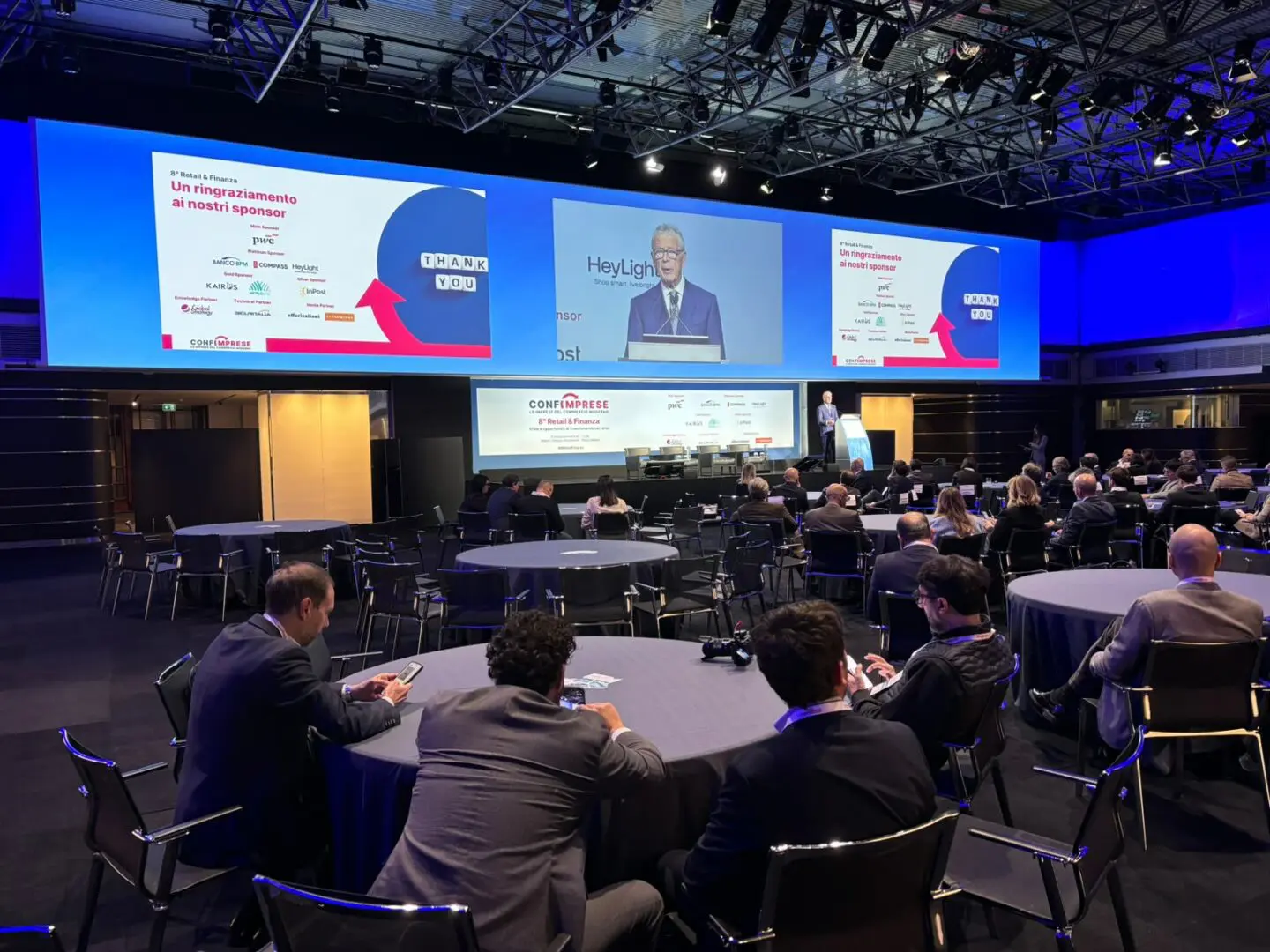
Acquisitions increasingly aim to expand customer access, strengthen distribution channels, integrate digital skills and enhance data to improve loyalty and operational efficiency. This is what emerges from the Retail & Finance research: the trends of the M&A market, realized by PwC for Confimprese and presented at the annual Retail & Finance conference of the association held today in Borsa Italiana.
“The numbers tell a paradigm shift – comments Mario Resca, president Confimprese –. Acquisitions no longer only serve to make critical mass, but to conquer the final customer. Today the real value lies in data, digital skills, loyalty programs and the ability to offer distinctive experiences. For this health, well-being, hospitality and services to the person are becoming the most attractive sectors for investors”.
To mark the true paradigm shift, already emerged in 2025 and confirmed in 2026, is above all the profile of investors. The prevailing share of operations is, in fact, attributable to strategic investors (businesses that buy other companies), which account for between 70% and 86% of the deals concluded, while the weight of private equity funds is reduced. A signal indicating how acquisitions are increasingly used by enterprises as an industrial development leverage and competitive strengthening rather than as a financial opportunity. Moreover, retail is a segment that lives of continuous circulation: investors enter and exit, there is volatility, the circulating moves. Private equity has short-output logic, conditioned by so-called drag-along clauses: you enter to build value and you go out selling everything – dragging everyone to the sale, even minority members – after a few years. It is a finance that enters thinking about when it comes out. That offered by private equity is an enabling but transient finance, aimed at selling, while the real enabling finance is that of strategic investors, who are not simple shareholders because they remain within the company, accompany the growth in continuity of governance and participate in the result year after year.
Not only strategic investors: the role of clubs deals and family offices is growing, that finance does not disappear from retail, but we are witnessing a transformation of finance for retail. The market is moving from a mainly financial logic to an industrial logic. It increases the use of more flexible capital aggregation models, such as clubs deals, to finance development projects, consolidation or generational passage. On the one hand, therefore, strategic investors increase, which acquire companies for strategic reasons. On the other hand, an entrepreneurial finance consists of family office, entrepreneurs and club deals, which flank companies with longer horizons and a less speculative logic. The club deal is now worth 17-22% of private equity operations, investors are mainly entrepreneurs and family office. Retail and consumer is one of the main sectors of club deal investment of around 26% (Global Strategy for Confimprese data).
In the search PwCthe food & beverage dominates the ranking with about 60 operations, whose increase in the 8 months 2026 is concentrated in the segments more directly linked to the evolution of food behaviour. Traditional categories remain important, but are less dynamic.
In the dining & hospitality operations are falling (29 vs 41 of 2025), but the polarization of operations between premium format (Da Vittorio) and casual dining chains (Alice Pizza, Double Malt).
In the fashion the decrease of operations (-17) is led by the appearance and ready-to-wear (-8), followed by the manufacturing account thirds (-4), while the luxury sector is stable (8 operations) and sportswear growing (4 operations, +2). The most important deals of 2026 include Missoni, Loro Piana (minoranza), Roberto Cavalli, Piazza Italia acquired Conbipel.
In leisure & recreation (35 vs 23 in 2025) deals are increasing dominated by operations in the sports sector (+9), digital content&media (+5) and gaming&betting (Lottomatica acquired Cirsa in Spain).
In pharmacies, home care, person care, growth is led by the pharmacy sector (+5). Among the most important deals Pinalli, Get Fit and Kasanova.
“In front of the picture above – Emanuela Pettenò, consumer markets leader and deals markets leader PwC Italia explains – some important evidence emerges. The chains specialized in health services, longevity and care of the person, such as pharmacies, perfumeries, beauty centers, dental networks, veterinarians, ophthalmology centers and gyms, are today in a privileged position. These sectors intercept both the structural trends linked to the increasing interest in welfare and prevention, and the demand for personalised experiences and high relational content, particularly appreciated by younger generations”.
The travel & hospitality sector also continues to attract the interest of investors, supported by the growing demand for premium experiences by high-capacity customers. The focus is mainly on high-end hotel structures, able to differentiate themselves through distinctive services, exclusive positioning and a strong experiential component. The future operations of M&A will be increasingly oriented towards high-potential growth assets, such as premium hotels, wellness resorts, platforms with established loyalty programs and technologies that can improve guest experience, distribution efficiency and revenue management.
The restaurant is more structured. Private equity investments in the sector have seen the extension of the output horizons, also because of the effects of pandemic, which for over two years has curbed growth and, in some cases, questioned the sustainability of business models. The increase in the cost of debt and the high levels of financial leverage have further accentuated the difficulties of some operators, accelerating the use of extraordinary operations. In this context, the main investment thesis will be linked to the construction of multi-brand platforms and the creation of larger groups. The new capitals will instead tend to shift towards the health and beauty and hospitality segments, favouring signs characterized by a strong experiential component, wellness and lifestyle.
“For years acquisitions have been used to earn market shares. Today they serve to conquer consumer attention. This is the most profound change that emerges from the analysis: the value is moving from volumes to the quality of the relationship with the customer” concludes Resca.
-photo xh7/Italpress –
(ITALPRESS).