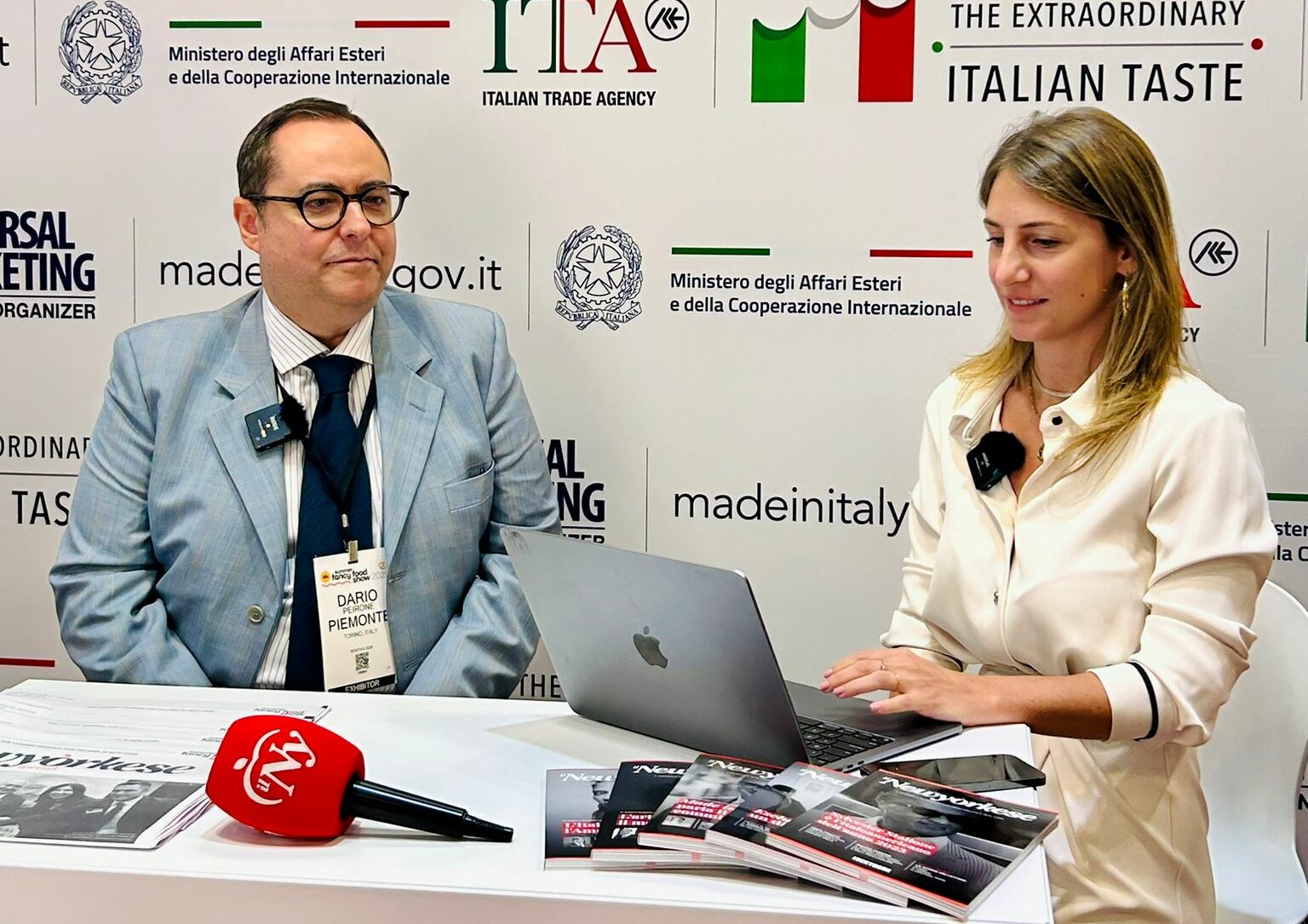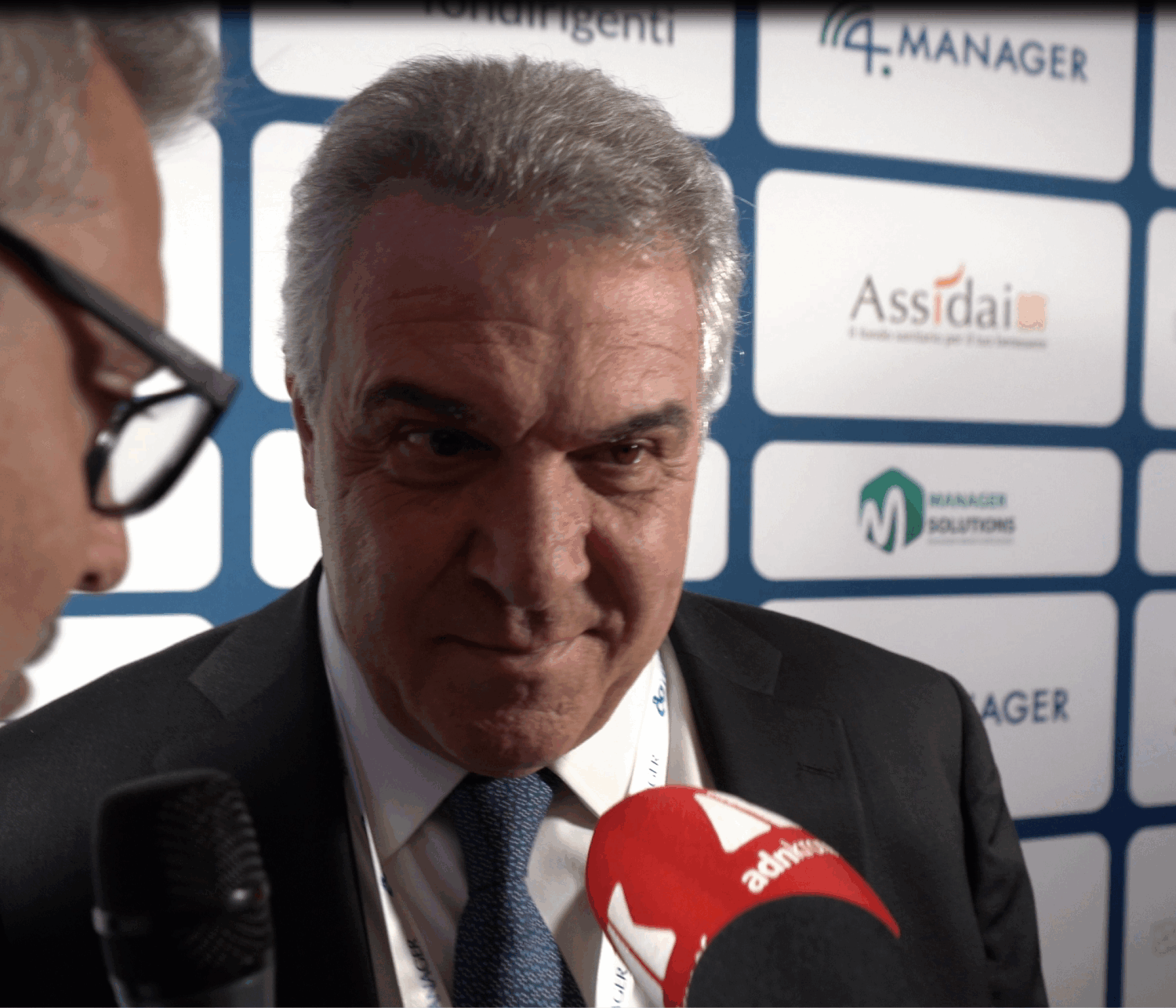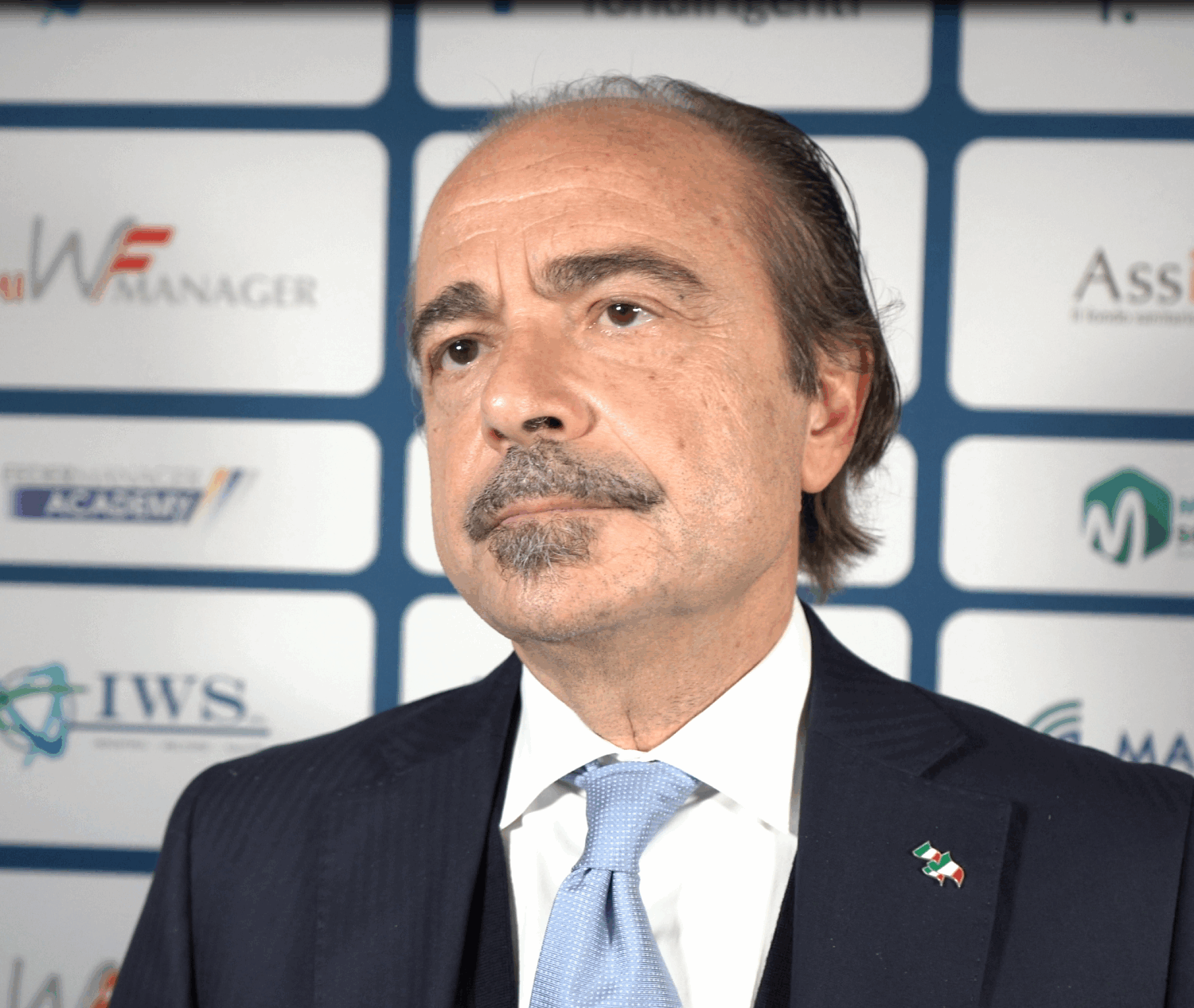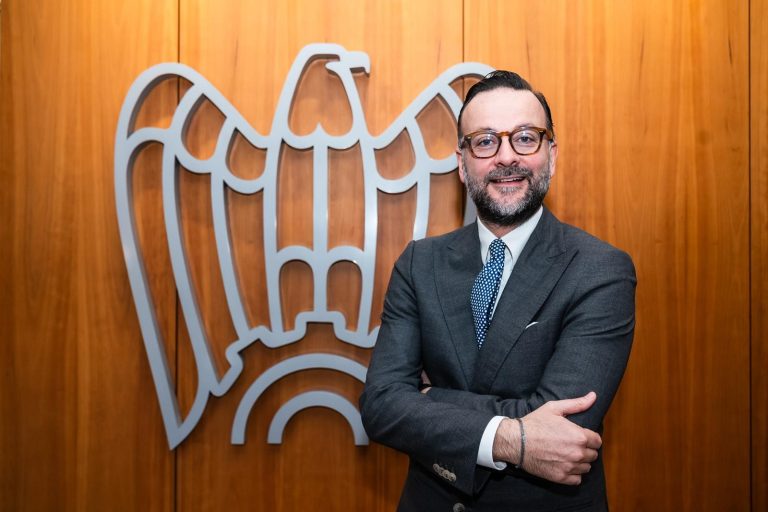
Fausto Bianchi, national vice president of Piccola Industria di Confindustria, says that the size of an enterprise say little about its ability to compete. Italy has built a large part of its economy on small companies, often family and related to the territories, which today have to deal with increasingly competitive markets and technologies that require difficult investments to support individually.
We met him in New York, where he arrived for the second season of The Perfect Pitch, the TV series that puts in contact Italian startups and companies with American investors promoted by Retimpresa in collaboration with the Consulate of Italy in Detroit, the Ministry of Foreign Affairs and International Cooperation and the ROCK contest, as well as with the New York. According to Bianchi, one of the main difficulties of small Italian companies is to face challenges that require resources, skills and knowledge of the markets. This is why it believes it is important to build networks between companies and strengthen innovation support tools.
We also spoke with him about young people, the future of family businesses and the differences between the Italian and American way of doing business. And of the New York Marathon, which Bianchi ran a few years ago and of which mainly preserves the memory of the people who encouraged him along the path.
We’re leaving New York. You are here with The Perfect Pitch, the project that brings Italian companies and startups to American investors. Why is such an experience important?
Because it offers young entrepreneurs and startups the opportunity to confront an extraordinary ecosystem. The United States has an infrastructure of innovation and venture capital that represents an international reference. Coming here means telling your own ideas, but above all measuring with a different way of doing business, thinking about growth and facing risk. It is an experience that can change the perspective of an entrepreneur.
In the United States it seems almost natural to think big since the first day. In Italy, however, we are the country of small enterprises. Is it structural weakness?
Not necessarily. We have to get rid of the idea that all companies must become great. The dimension is not a goal in itself: the goal is to be competitive. Italy has built an important part of its industrial strength on districts, supply chains and common skills. We think about the automotive: behind a car there are dozens, sometimes hundreds of companies that contribute to the realization of the final product. Not all must grow up to become large groups, but all must be able to compete, innovate and work together.
So the problem is not being small, but being alone.
Exactly. When a small business alone faces an international market, it encounters enormous obstacles. They often lack resources, skills and knowledge of the market. The answer is to build networks, create productive ecosystems and system initiatives. Being together allows to overcome difficulties that, individually, would be insurmountable. This is the logic of enterprise networks.
She also met New York by running the marathon. What was left of that experience?
It was wonderful. I had just finished the mandate as president of the Young Entrepreneurs and I had found myself with some free time. Some friends convinced me to run. What struck me most was the American audience. He did not applaud only the champions, but also the common people, those who struggled and simply wanted to get to the finish line. On my shirt it was written “Fausto Bianchi, Italy” and people encouraged me. It was exciting.
Is there anything from the entrepreneur in that runner trying to get to the finish line?
Very much. An entrepreneur faces every day difficulties that often cannot fully share with others. He must continue to lead employees, take responsibility and make decisions. And it must move on even when he is tired or the path becomes complicated. In the end, it’s a bit what happens during a marathon.
We come to one of the most important challenges. In 2025 only 16.4% of Italian companies with at least ten employees used artificial intelligence technologies. Between SMEs the percentage fell to 15.7%. Are we risking losing another industrial revolution?
The risk exists and is concrete. For a small business to adopt a disruptive technology is much more complicated than for a large company. We need investments, skills and qualified people. And these skills are not always available on the market, or have very high costs. We imagine a company with ten, fifteen or twenty employees: to allocate an important part of its resources to a technological transformation can mean to remove them from other immediate needs.
But not investing could cost even more.
That’s the point. Some entrepreneurs tell me: «I in the gallery of technological transformation not within if I first do not see the light at the bottom». It is an understandable but risky reaction, because while we wait for our competitors move. Large enterprises adopt new technologies, increase productivity and change organizational models. If small businesses remain firm, the gap grows. This is why we need a support from the country system.
What should the country system do?
To help businesses face investments that would have difficulty supporting, promoting access to skills and promoting shared tools. We cannot imagine that every small enterprise builds on its own all the necessary infrastructure for digital transformation. Here too, collaboration can make a difference.
Back to the United States. For many Italian companies America represents the dream market, but also one of the most difficult to deal with. What is the most frequent error?
Thinking you can face such a vast market without knowing it properly. The United States is a huge country, with dynamics very different from the European ones. An enterprise can have an excellent product, but this does not mean automatically knowing how to sell it, to whom to turn or how to organize their presence. In the exploration phase it is easy to lose the orientation.
Could New York become a kind of permanent entry door for Italian SMEs?
A stable support could certainly be useful. Businesses need tools to help them understand the market, identify interlocutors, meet potential customers and present their ideas. It is not enough to arrive in the United States with a good product: we must build relationships, know the context and have the possibility to develop a presence over time.
She has led the Young Entrepreneurs and today represents Small Industry at national level. How does it change the way to look at the economy when you move from your company to the representation of thousands of businesses?
Above all, it changes the sense of responsibility. When you are an entrepreneur, you take care of your company, your employees, your goals. When you take a role of representation you must try to improve the context in which so many other enterprises operate. You have to look beyond your individual interest. It is an important responsibility, because behind every enterprise there are people, families and territories.
On 13 and 14 November in Rome will be held the Forum of Piccola Industria, dedicated to the “businesses that grow Italy”. What would you like to make politics understand?
That small industry is not only an economic category. It is a social heritage: it means territories, districts, chains, families. In many areas of the country, small businesses are a fundamental precondition. Without them there would be no shortage of jobs, but also development, services and social cohesion. We must defend this heritage and create conditions so that it can continue to grow.
Yet, political debate often seems to focus on the emergency of the moment.
That’s exactly what we’d like to get through. We need a comparison that goes beyond the single budget law. Enterprises must plan investments, innovation, training and generational steps. These are processes that take years. It therefore needs a medium and long-term vision.
About the future, let’s talk about the young. In Italy we often tell brain escape as a national tragedy. Do you see her the same way?
I think it is right for young people to go abroad. They must study, experience, learn about other countries and confront different cultures. The problem is they’re not leaving. The problem arises when they find no sufficient reasons to return. We must build a country and a productive system capable of offering real opportunities.
Many Italian family companies have difficulty convincing their children to collect the witness. Where is the previous generation wrong?
Sometimes we speak to young people especially of responsibility, sacrifices and duties. That’s not enough. We must also talk about opportunities, prospects, the possibility of achieving our own ambitions. A young man cannot choose to enter the family business only because he feels he has to do it. You must see a project in which to recognize yourself.
What if that young man decides that he doesn’t want to continue his family business?
We can’t force him. But we must also avoid a lost entrepreneurial heritage. A company does not belong only to the history of a family: it gives work, creates value and contributes to the life of a territory. There are alternatives. You can think of an aggregation, the entry of an investor or new forms of governance. The important thing is to find a way for that enterprise to continue to live.
Let’s close with a little experiment. Imagine being in an elevator in Manhattan with a big American investor. He has sixty seconds to convince him to invest in a small Italian company. What does he say?
I would tell him to look at the history of Italy, our ability to create, innovate and realize products recognized worldwide. But above all I would tell him to look at what is behind those products: skills, production chains, territories, an extraordinary ability to adapt. Investing in an Italian company means investing in all this. Our challenge is to demonstrate that, despite the complexity of the system, we know to be competitive on international markets.
It is an answer that brings the conversation back to the starting point. In the United States dimensional growth is often considered a measure of success. Bianchi proposes another idea of competitiveness: not necessarily to become larger, but to learn to be stronger together.
For Italy, which has built much of its wealth on thousands of companies rooted in the territories, the distinction counts. Especially while artificial intelligence, global competition and generational replacement change the conditions in which these companies work.
This is how the metaphor of the marathon told at the beginning of the interview. Not everyone has to get first, but to get to the finish you have to know how to prepare for a journey that changes continuously.
L’articolo Fausto Bianchi, in New York with small Italian companies to become big proviene da IlNewyorkese.