ROMA (ITALPRESS) – What now? What scenarios open after the meeting of 29 October of Mps who rejected the plan presented by CEO Luigi Lovaglio? A possible answer is contained in the speech published this morning on Repubblica by Giovanni Barbara, professor of Commercial Law and expert of Corporate Governance.
The central concept of Barbara’s analysis is that, after such a clear manifestation of the assemblies will, the responsibility of the directors can no longer be interpreted as the defense to obverse the previous strategies. Instead, it must be translated into the ability to govern with diligence, autonomy and institutional sense the new phase that opens for the bank.
The rejection of alternative operations to the Intesa Sanpaolo Opas, rejected by the assembly with a overwhelming majority, is a decisive step. It was not only the rejection of the Ops on Banco Bpm and Banca Generali, but also the failure to approve other relevant proposals, including the merger with Mediobanca and the distribution of a maxi-dividing through the assignment of General Insurance actions. According to Barbara, although not technically configuring a direct vote on Intesa Sanpaolo’s offer, the outcome of the meeting is a clear rejection of the alternative project supported by Lovaglio.
From here comes a precise question of corporate governance. Barbara recalls the discipline of Article 104 of the Single Text of Finance, which, on the slope of a public offer, limits the possibility for administrators to perform acts or operations suitable to counter its objectives without the authorization of the assembly. Authorization denied by the shareholders’ vote.
The point, therefore, is to understand what the behaviour of the administrators should be today. For Barbara, their responsibility is mainly measured in the ability to respect the will of assembly, avoiding that a strategy now rejected is transformed into an end to itself. Insistry on a project that has received such a net refusal could raise questions about the diligence of the directors and the real answer of their decisions to the interest of the company and its shareholders.
The author deepens, in particular the issue of the quality of the decision-making process, recalling the news regarding the abstention of some directors, who would have complained of an insufficient availability of information on essential aspects of alternative operations.
It is a particularly significant step in the perspective of corporate governance: administrators cannot simply assert that they have acted in the interest of the company, but must be able to demonstrate that they have taken their decisions on the basis of adequate information, independent evaluations and an effective comparison of the available alternatives.
In this perspective the reflection on the role of legal advisors is also included. The presence of qualified consultants and the acquisition of professional opinions are important elements of a correct decision-making process, but they do not transfer on them the responsibility that is responsible to administrators. The final decision remains in charge of the council, which must exercise its own judgment.
It is also necessary to distinguish between the legitimate completion of the authorisation steps, including those relating to antitrust and golden power, and the risk of using such procedures to extend a counterposition with the offer of Intesa Sanpaolo.
To strengthen this reading also contribute to the positions expressed by different shareholders, who, in spite of different ways and commitments, seem to outline a progressive isolation of the strategy proposed by Lovaglio.
The vote of the assembly and statements from Intesa Sanpaolo make it unrealistic to imagine that a further counterposition can produce a relaunch of the offer or substantially change the balances emerged.
But Giovanni Barbara’s analysis is not limited to the strictly corporate and financial dimension. In fact, his intervention moves on the relationship between the future of Monte dei Paschi and the city of Siena, stressing the need to overcome the oppositions and to start a new season of dialogue between the bank, the institutions, politics and the local community. Hence the need to overcome opposition. Opas has not yet begun. But this phase can be an opportunity to build the conditions of a shared transition. The commitments announced by Intesa Sanpaolo regarding employment, investments, presence in Siena, development of the technological pole, maintenance of central structures and support to local credit constitute a basis on which to start a concrete comparison with the territory.
For Barbara, dialogue must not be aimed at obtaining abstract guarantees or reopening a game now marked by the assembly vote, but to give content and territorial rooting to future prospects. The most important bridge is not the one between two boards, but the one between the new banking reality and the Sienese community.
The reflection thus closes with a message that holds together corporate law, managerial responsibility and interest of the territory: after the assemblies of the alternative project, it would be paradoxical that the board of directors used their energies to hinder a process instead of helping to govern it in the interest of the bank and its shareholders.
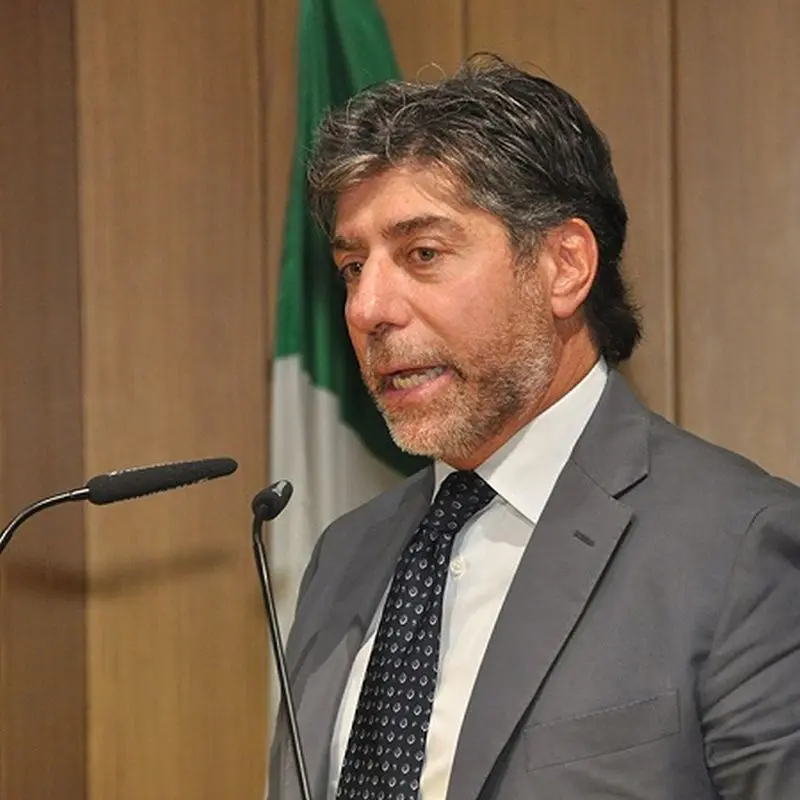
– photo IPA Agency –
(ITALPRESS).