There is a paradox that describes today’s adolescence: a generation that declares Malaysianseri more and more frequent and rarely finds an adult to talk about. The body and the mind throw signals, and those signals remain largely unanswered.
I find therefore interesting the article published on Corriere della Sera and written by Maurizio Tucci, entitled “Adolescents: suffer from anxiety and headache, are in a bad mood and never go to the doctor”, because it puts together two data that are usually read separately: the spread of discomfort and fragility of places where that discomfort could be welcomed.
The first data concerns access to care: “42% of adolescents say they never go to the pediatrician/family medic if not when it has a conclaimed physical problem and a further 38% claims to go there anyway less than once a year.”.
The data comes from the 2026 edition of the Observatory on the lifestyles of adolescents, realized by Laboratorio Adolescenza and Istituto di ricerca IARD, on “a national champion representing 3.040 students between the ages of 13 and 19”.
The second data concerns perceived health. Girls and boys report suffering, more often than in past years, of anxiety (71.4% females, 40.2% males), bad mood (68.8% females, 39.7% males), headache (51.6% females, 33.3% males) and sadness (52.8% females, 29% males).
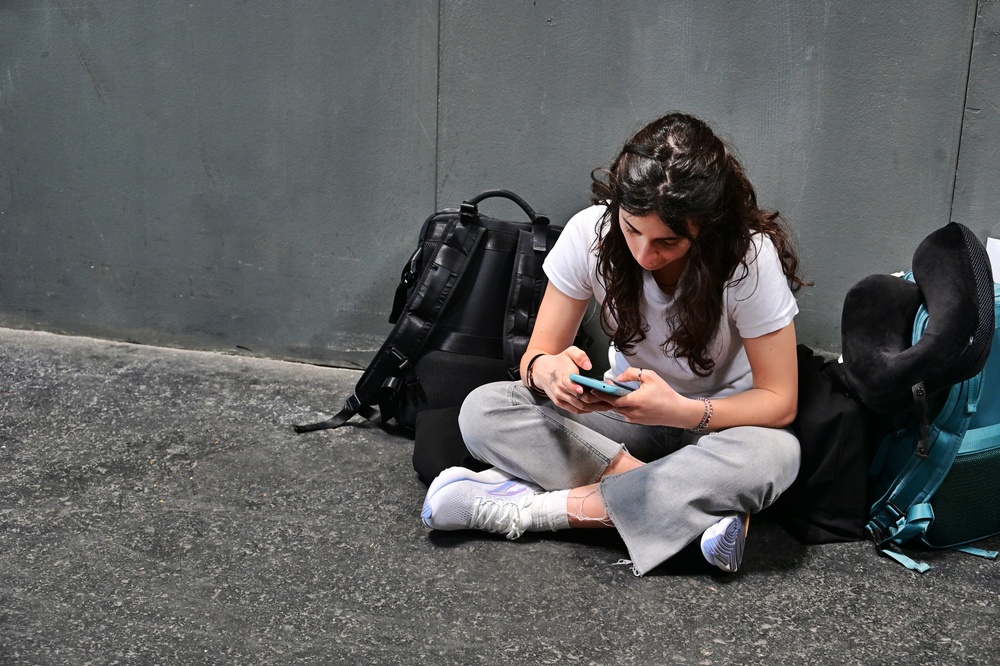
There is then a passage that connects physical malaise to digital habits: the so-called “digital headache”, linked to “a prolonged use of devices, especially in the evening hours, hyper exposure to social media, continuous scrolling and the consequent alteration of sleep”.
Sherry Turkle, U.S. sociologist, has studied for decades the relationship between human beings and machines: permanent connectivity promises to approach us and together makes us less able to support authentic conversations.
The article then documents the social dimension of the network: “88% usually publishes ‘reel’ and ‘story’ on their social profiles in the constant search for followers.” And “Having a good ‘capital’ follower is considered very important by over 60% of adolescents”, both as a trampoline to become influencers, “the new unisex finish that replaced the footballer and adolescents’ dancer beginning the century”, and as a “measure of their popularity within the peer group”.
The term ‘capital’ is exactly what Pierre Bourdieu would use. The French sociologist has shown that social life is a competition for the accumulation of symbolic resources, and today followers represent a visible, measurable and exhibitable capital. The problem arises when digital popularity becomes the measure of its value: at that point, each oscillation of numbers is perceived as a judgement on the person.
Finally, there is a percentage that I find the most significant of the survey. “38% of girls and 34% of males would like to have a moment to stay alone with their pediatrician/medical, without the presence of parents”, and complains of not having this opportunity, which instead claims to have 24%.
Yet, in the private interview “only a minority would address delicate and important issues such as the consumption of substances, sexuality or alcohol consumption.” The reason is clear: “36% of respondents believe that the doctor/paediatrician is obliged to report to parents everything that happens during the private interview.”.
The doctor has the obligation to inform parents only when a serious risk for the child’s health emerges, and in that case he advises him first and involves him in the interview. Rules that the boys know little: and it is the silence on them to push them to silence for fear.
It serves a new alliance between school, family and health. The doctor may become a reference interlocutor, if his function is explained clearly and the confidential interview becomes a normal practice. The school can offer structured listening opportunities, where psychological well-being becomes part of the educational path. The family can learn to recognize signals, which are often physical before verbal: headache, insomnia, bad mood are required to help the body formulate instead of words.
L’articolo The silence of adolescents and the malaise that no one hears comes from IlNewyorkese.