by Stefano Vaccara
NEW YORK (UNITED STATES) (ITALPRESS) – “That young people should be understood seems to me a natural and normal thing. That there is disinterest from our government, no, it is not so, we have just demonstrated it and Guterres considers us pioneers.” The Minister for Institutional Reforms and Simplification, Elisabetta Casellati, responds to Italpress, the United Nations Glass Palace, commenting on the recent statements by Mario Draghi in Bloomberg on youth protests in Europe and the feeling of the new generations not to be heard by politics.
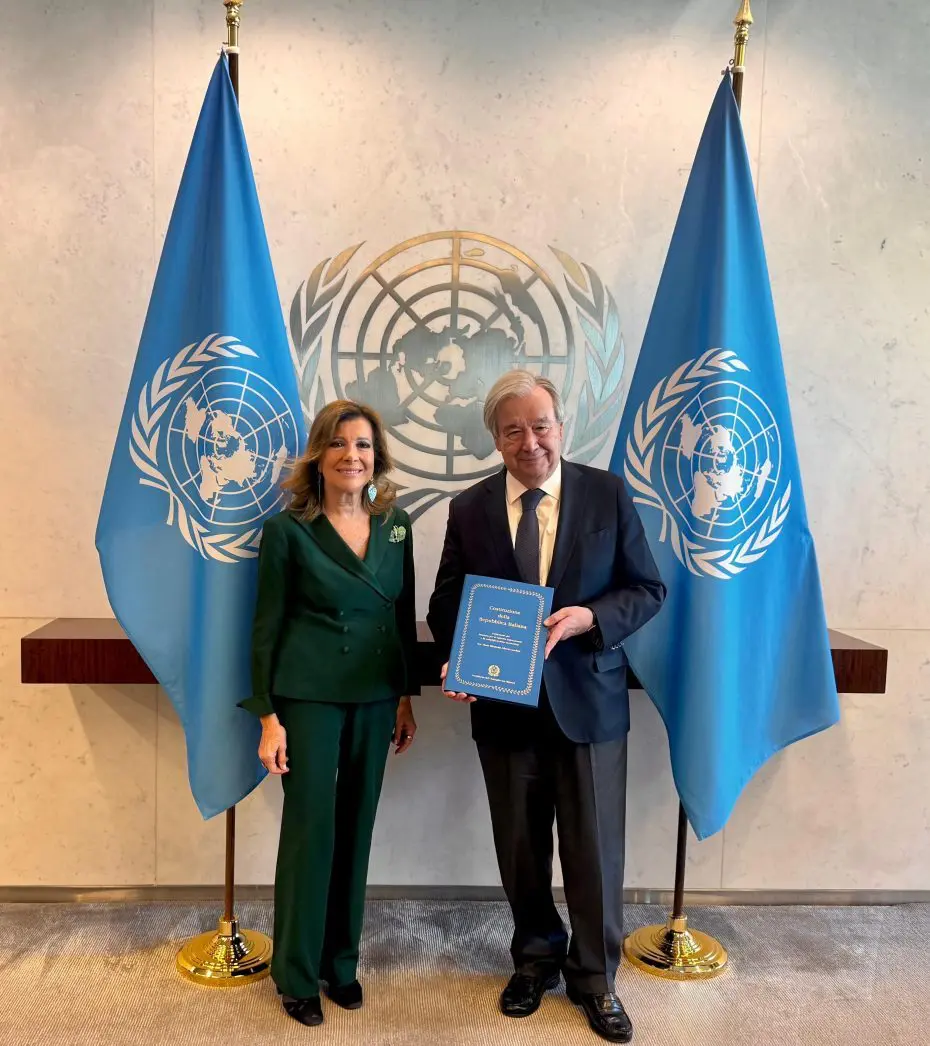
Casellati has just concluded a meeting with the general secretary António Guterres, dedicated above all to the Evaluation of Generational Impact (VIG), introduced in Italy in 2025. According to the Minister, Guterres has recognised Italy as a pioneering role in implementing the commitments made by the United Nations with the 2024 Future Pact.
“It has considered us true pioneers,” says Casellati, underlining that Italy would have transformed into law a principle on which other countries have so far limited themselves to discuss.
The VIG foresees that, in the formation of standards, the consequences on future generations are also assessed. “It is not only a formal or procedural aspect, it becomes a cultural paradigm: the state takes care of the future of young people,” explains the ministra, citing also the problem of brain escape. Casellati also recalls the words spoken by the President of the Republic Sergio Mattarella on youth discomfort and the need to look at the future of the new generations.
“We must take care of them, we must be part of the decision-making process because they feel fully integrated into our society.” But how to reconcile these commitments with the protests that cross Europe? Italpress asks the minister if he shares Draghi’s analysis that he said he understood the frustration of young people, who manifest because they feel neglected by governments. Casellati recognizes that “an discomfort is there”, recalling the events in Italy, Spain and France. However, he rejects the idea that the Meloni government spends the new generations and demands the VIG as a demonstration of the commitment of the executive.
The condemnation of violence: “The expression of violence has no meaning and must be condemned by all with great strength.” The ministra cites the clashes of Milan, Turin and Bologna, distinguishing the right to manifest from the corruption of shops and situations that jeopardize people. Italpress therefore asks if, in the light of his experience on the VIG, he recently suggested to the President of the Council Giorgia Meloni immediate interventions to respond to the discomfort of young people.
“But it is already immediate, because the legislator is obliged to evaluate it. It is part of the standard training process,” says Casellati, without indicating specific advice for the premier. “It is not only a technical formula, it is a change of cultural paradigm.”.
On the implementation of the reform, the ministra reports that the Observatory and the Youth Consultation have already been established and that the path of application regulations is now in the final stage. The observations of the new generations will ensure that the measures are assessed. The American mission will continue in Philadelphia, where Casellati will hold a lectio magistralis at the University of Pennsylvania on regulatory simplification and the VIG. In the last part of the press, questions about European social tensions and immigration, the ministra notes that the conflict between generations is not a novelty, while violence is the real problem. It also identifies a contradiction in contemporary society: “We live at a time when there is a macrocommunication, so you get everywhere through the internet, but there is no microcommunication among people.” A paradox that, according to Casellati, risks moving young people away from direct dialogue with family, school and institutions.
-Photos press office
(ITALPRESS).