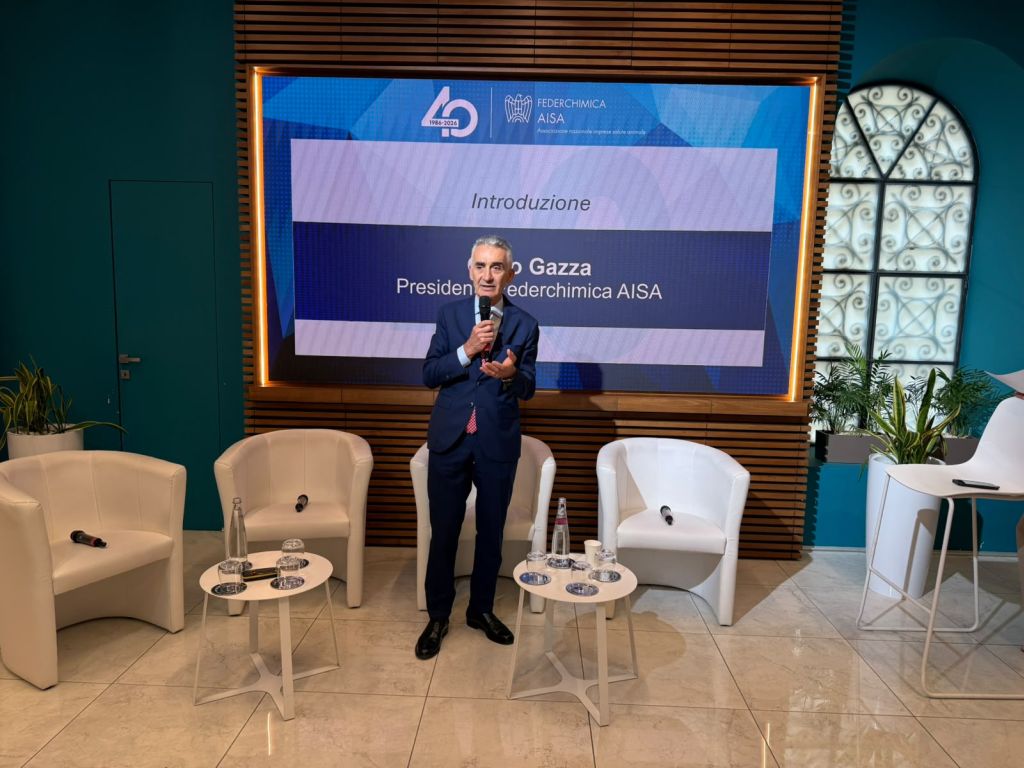
ROMA (ITALPRESS) – Italians bring their pets to the veterinarian even when they are well, but they still know little about the link between animal, human and environmental health. Veterinary prevention is a widespread practice among animal owners in Italy. According to a research conducted by YouTrend for Aisa-Federchimica, 77% of the owners carry out preventive veterinary visits. 34% do it at least every six months and another 34% about once a year. “Prevention in a One Health perspective is very important and is based on systems connected to each other: not only treatments and disinfectants, but coordination of different factors, such as public service, veterinarians, breeders and animal owners. The task of Aisa-Federchimica is to give protocols, training, information and communication among the various stakeholders”, the words of Carlo Gazza, President of Aisa-Federchimica, during the event “Make them Health. Protecting animals, protecting all”, promoted in Rome by Aisa-Federchimica at the conclusion of the awareness campaign on veterinary prevention.
Yet 74% of respondents say they have never heard of One Health, the approach they consider together the health of people, animals and the environment. “The One Health approach is fundamental in the Ministry’s prevention strategies. Protecting human, environmental and animal health at the same time serves to prevent a series of pathologies avoiding conclamation,” adds Marcello Gemmato, Secretary of State to the Ministry of Health.
The veterinarian enjoys a broad confidence: 88% of Italians trust his ability to protect animal health, 86% of the advice he offers to the owners and 75% recognize his contribution to public health. It is also the first source of information on animal health, indicated by 42% of respondents, in front of websites (34%) and social networks (29%). “There are so many challenges that our system is facing and with regard to the theme of affection animals I think it would be a nice message to extend the basket of anti-waste law also to medicines for animals”, says Maria Chiara Gadda, Vice President of the Agriculture Committee of the Chamber of Deputies.
At the heart of the comparison, the role of animal health also in the food safety and sustainability of agri-food chains. “It is the responsibility of policy to train and inform citizens by giving corporate welfare tools to access health protection tools. We must empower the citizen to manage the animal in urban contexts and increase the resources for prevention,” says Senator Manfredi Potenti, National Manager of the Department for the Protection of Animal Health of the League.
The research reports a request for information on diseases transmitted from animals to persons (33%), on animal food safety (28%) and on controls in production chains (23%). Only half of the respondents, however, can correctly define a “zoonosis” and less than one on two accurately recognizes the phenomenon of antibiotic-resistance. “The greatest challenge is to make it clear that animal health is not different than human health. There is a need to invest more in veterinary research and prevention, so that the citizen knows what is behind the work done by breeders and technicians,” said Vita Maria Nocco, member of the Senate Budget Commission.
– photo mec/Italpress –
(ITALPRESS).