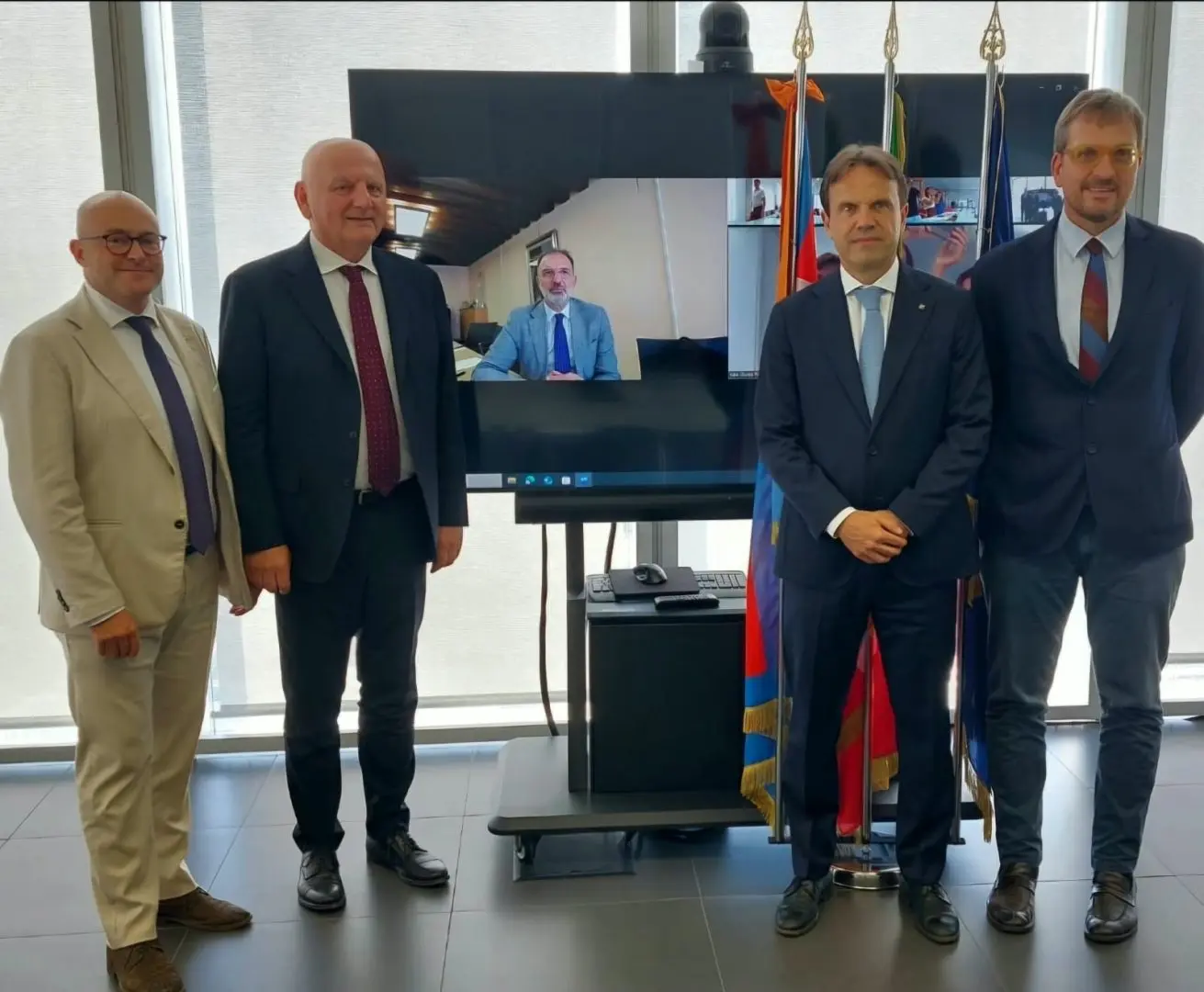
TORINO (ITALPRESS) – Not a simple interlocution between territories, but an attempt to build a common voice of the North economic and productive system. Emilia-Romagna, Liguria, Lombardy, Piedmont and Veneto start a new phase of collaboration through a ‘Cabina di Regia delle Regioni del Nord’, with the aim of coordinating the respective economic and industrial policies and, above all, of making more structured and effective comparison with the Government and the European Commission. The constitution of the Cabina di Regia arrives after the meeting of 30 June in Milan between the councillors for the economic development of the five Regions: Andrea Tronzano (Piemonte), Vincenzo Colla (Regione Emilia-Romagna), Alessio Piana (Liguria), Guido Guidesi (Lombardia) and Massimo Bitonci (Veneto). A comparison that has allowed us to enter into the merits of the issues on which the territories are already working and that, precisely because of their strategic relevance, can be faced with a common perspective. On today’s day in Turin, in the Palazzo della Regione Piemonte, the Cabina di regia has launched the great bet on which it will be worked immediately: the establishment of the Single District of the North Manufactory with the intention to be beneficial in relations with the Italian Government and towards the European Commission. The stake is significant.
Together, Emilia-Romagna, Liguria, Lombardy, Piedmont and Veneto are a component of the Italian economic system that contributes more than half of the national GDP. An economic weight which, in the intention of the promoters of the Cabin of Regia, can be translated into an even more qualified contribution to the definition of industrial, economic and energy policies of the Country and of the European Union. The work initiated by the five Regions is not limited to a single dossier. On the contrary, the shared agenda embraces some of the main nodes that today concern the competitiveness of the productive system. Among the topics identified are the areas of industrial acceleration, together with the territorial instruments such as the Zones of Innovation and Development (ZIS), the Simplified Logistics Zone (ZLS) and the Regional Innovative Networks (RIR), the strengthening of industrial chains and investment support measures. The goal is to understand how to make the use of these tools more effective, promoting new settlements, strengthening existing ones and creating more favourable conditions for productive investment. Another central chapter is access to credit. On the table there are the moratorium of loans, the Central Guarantee Fund for SMEs and, more generally, the tools necessary to guarantee to enterprises adequate financing conditions at a stage in which cost of money, investments and industrial transition are closely linked.
The question is mainly about the fabric of small and medium-sized enterprises, which is an essential part of the production chains in the North. From here also attention to the certifications of SMEs and industrial sectors, considered one of the tools through which to strengthen the quality, reliability and competitive capacity of enterprises. Another area on which the five Regions intend to coordinate is innovation. The theme is particularly relevant for a territory in which large industrial groups, SMEs, universities, research centres and highly specialised industries live. The question, therefore, is not only to support the emergence of new technologies, but to be able to transfer them concretely in the production processes, increasing productivity and competitiveness of enterprises. A new system model to be competitive also in attracting and retaining talent. In this context, collaboration between the Regions can take a precise political value: avoid fragmentation of interventions and try to build a critical mass sufficient to compete with the large European industrial ecosystems. The game is not only played on the ground of resources. A decisive part concerns the rules. Among the themes identified is the revision of the State aid scheme, starting from de minimis, along with the question of the size of enterprises.
The possibility of taking action on enterprises, supporting investment and accompanying them in the process of transformation also depends on the European regulatory framework. For the five regions, comparison with Brussels inevitably becomes an integral part of the strategy. The same applies to national IPCEIs, tools through which to support strategic and technologically advanced projects. In this case, coordination between territories can also serve to build stronger and consistent proposals than individual regional initiatives. The most significant political novelty of the route came with the next meeting that involved, in addition to the councillors of the Regions, also the presidents and representatives of the regional Confindustrie. Not only regional institutions seeking to coordinate their positions, therefore, but institutions and industrial representation trying to build a common agenda. The Cabin of Regia can in fact become something more than an administrative coordination if it manages to become a place where the needs of the territories and those of the productive system are synthesized into shared priorities. The five Regions agreed to continue their work with a forthcoming meeting, scheduled for 23 October in Milan on the occasion of the World Manufacturing Forum and to ask for specific and joint meetings with the Government and the European Commission. The Enterprise Decree announced for October will be a useful first opportunity to make available to the Government proposals in the joint work of the five Regions.
– photo press office Regione Lombardia –
(ITALPRESS).