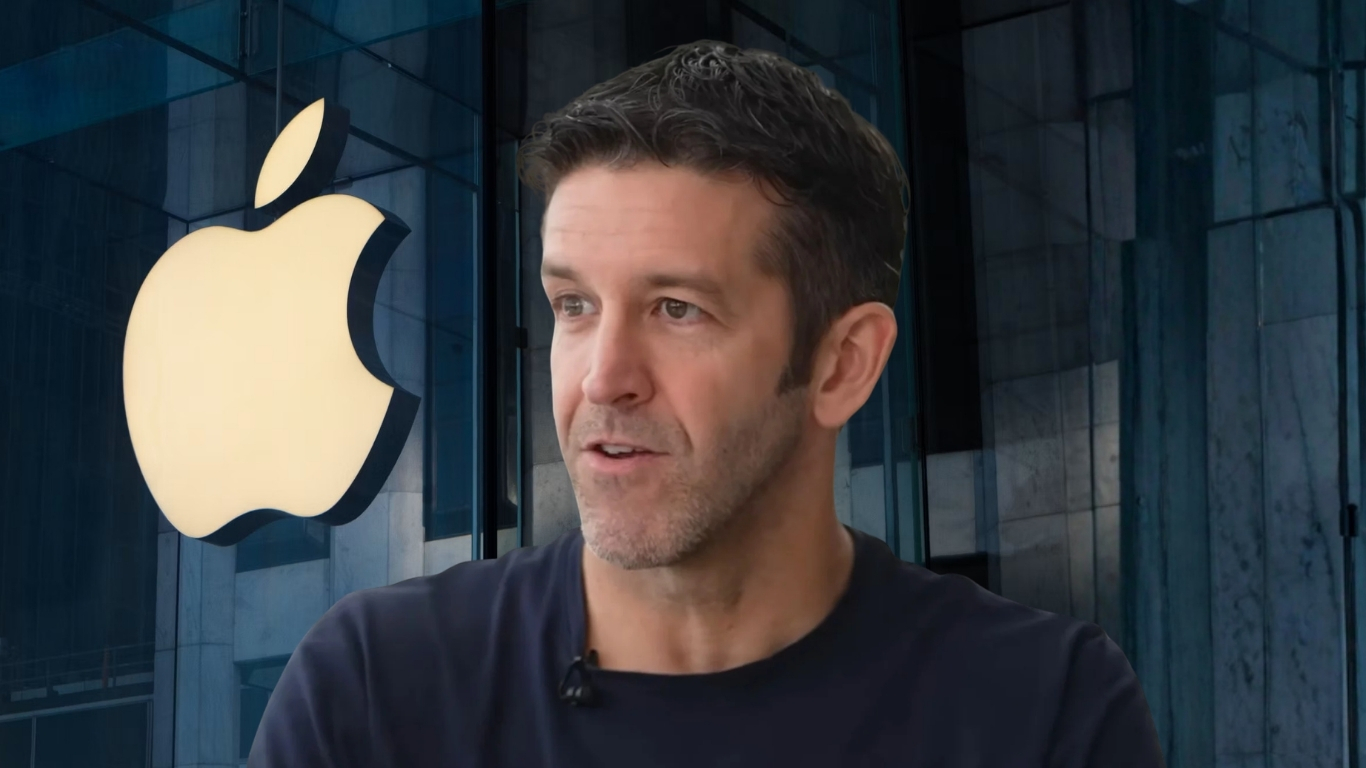
From today, September 1st, John Ternus is the new CEO of Apple. It happens to Tim Cook, who after fifteen years leaves the company’s daily management and becomes Executive Chairman, Executive Chairman of the Board of Directors. The passage was announced in April and unanimously approved by the board, after a process of succession prepared for a long time, according to Apple’s official communication.
Cook will continue to deal with some dossiers, especially relations with governments and international political authorities. Arthur Levinson, who has presided over the board over the last fifteen years, will instead become Lead Independent Director. John Ternus will join the board with the appointment as CEO.
It is the third succession to lead Apple over the last thirty years. Steve Jobs returned as CEO in 1997 and left his post in Cook in 2011. Cook has transformed a company strongly linked to Mac and iPod into a group with a much wider presence in the field of devices, services and accessories.
While running Apple Watch, AirPods and Vision Pro, it has expanded services such as iCloud, Apple Pay, Apple Music and Apple TV+ and has continued the transition to chips designed internally. According to data spread by the same company, annual revenues rose from 108 billion dollars in 2011 to more than 416 billion in 2025, while the base of active devices exceeded 2.5 billion.
Ternus then inherits a larger and more profitable company than Cook found in 2011, but also more exposed to changes affecting the industry as a whole. Its appointment indicates a preference for a manager with a direct knowledge of the products and processes with which they are designed.
Ternus is 50 years old and joined Apple in 2001, when Jobs was still CEO. He previously worked as a mechanical engineer for Virtual Research Systems, a company that developed virtual reality systems. He graduated in mechanical engineering at the University of Pennsylvania.
In 2013 he became vice president of Hardware Engineering. In 2021 he joined the leading group as Senior Vice President of Hardware Engineering, with the responsibility of teams working on iPhone, iPad, Mac, Apple Watch, AirPods and Vision Pro.
As Reuters has reconstructed in the profile dedicated to the new CEO, Ternus has followed some of the major hardware projects of recent years, including the growth of the Mac line and the transition to Apple Silicon processors. Previously he had presented some products during the company’s events, but never had a public role comparable to that of Cook or Craig Federighi.
The first organizational choice of Ternus is the area from which it comes. Johny Srouji, Apple Chip Manager, was promoted to Chief Hardware Officer. The divisions dedicated to hardware engineering, processors and advanced technologies have been assembled under a wider structure. It is a way to keep the skills that Apple considers central to the next devices close.
Ternus will have very little time to adapt to the new role before the first important public event of its management: the appointment of 9 September, entitled “Surprise and shine”, officialized by the company without specifying what products it will present.
Indiscretions talk about the new iPhone 18 Pro, new Apple Watch and the first folding iPhone. Apple has not confirmed the device, which according to internal reports is referred to as iPhone Ultra. The project cannot be considered a personal creation: products of this type require years of work and involve design, chips, software, materials and production.
However, the launch will inevitably be associated with the new CEO. A folding iPhone would also be the first really new product presented by Ternus after the appointment and would test the sector in which he worked for much of his career. Apple would also arrive in a market already presided over by Samsung, Motorola, Google and several Asian manufacturers.
The most delicate problem for Ternus could be out of his area of experience. Apple has been late in the new phase of artificial intelligence and Apple Intelligence, presented in 2024, has not yet produced an assistant comparable to the systems developed by OpenAI, Google and Anthropic.
The most obvious case is Siri. Apple postponed the arrival of the new version on iPhone and iPad in the European Union with iOS 27 and iPadOS 27. The company claims that the Digital Markets Act imposes conditions incompatible with the protection of privacy and security; the European Commission responds that the law does not prevent the launch of the service and that Apple has not found a technical solution in accordance with the rules. Reuters has reconstructed the comparison between Apple and Brussels.
The question is not just about Siri. Apple’s artificial intelligence is designed to work together with operating system, applications, chips and personal data. To work really should be able to do actions within other apps, read user information and maintain continuity between different devices. These are the functions that make European rules more complex.
Ternus will have to decide whether Apple should invest directly in the construction of its own models or focus on devices capable of using models developed by others. The advantage of the company remains hardware control: proprietary chips allow you to perform some functions directly on iPhone and Mac, reducing cloud dependence. But this advantage is not enough if the software fails to exploit it.
There are then less visible problems but equally concrete. The growth of data centers for artificial intelligence has increased demand for memory and storage components. In June, Apple increased the prices of some MacBooks and iPads by explaining that it could no longer fully absorb waste. Reuters’ reconstruction linked increases to competition between consumer devices and AI infrastructure.
Production is also dependent on China, although Apple is moving part of assembly to India and Vietnam. The tension between Washington and Beijing makes the supply chain an industrial and political issue at the same time. Cook has managed this balance for years; Ternus will have to do so while changing tariffs, costs and business relationships.
The comparison on the App Store continues in Europe. Apple has announced new commissions for developers that distribute applications through alternative channels or use external payment systems, with rules that will come into effect from 1 October. The new scheme was reported by Reuters, but the European Commission has already announced that it will control the application.
Cook will remain close to the new CEO and will continue to preside over the advice he will have to assess his work. This presence can make the transition more tidy, but it can also slow the construction of an autonomous leadership. Ternus will have to demonstrate that he can lead not only the groups that design products, but also those that deal with software, finance, regulation and international policy.
The first folding iPhone, if it is really presented, will be the most visible test. The decisive test will come later: to understand whether an engineer of the hardware will be able to indicate to Apple a credible direction also in software and artificial intelligence.
The Apple article changes guide: John Ternus is the new CEO, Tim Cook remains executive chairman from IlNewyorkese.