In the last few hours, the news of Donald Trump’s new immigration tightening is also circulated in Italy with titles that, shortening it, can make a general suspension of visas to enter the United States. That’s not what happened. The measure concerns immigration visas, i.e. those required by those who want to move permanently to the United States, and in particular the appointments and interviews necessary to obtain them. Normal temporary visas for tourism, study or work were not suspended.
The distinction changes a lot the scope of the news: an Italian tourist who has to ask for a visa, a direct student in an American university or a worker who falls into a category of temporary visa is not automatically involved in the provision. Instead, people are following a procedure to permanently immigrate to the United States: for example to reunite with a family, move through a job sponsorship or obtain permanent residence through one of the categories provided by American law. The Wall Street Journal explicitly clarified that the suspension does not concern so-called nonimmigrant visas, those used by tourists, students and temporary workers.
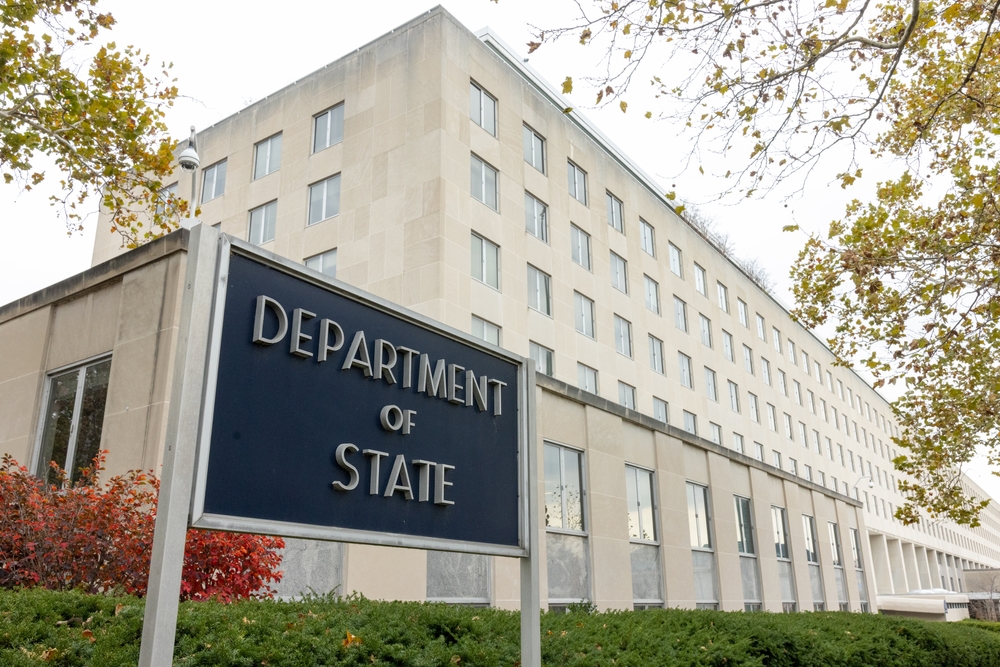
What the Trump administration has done is however quite relevant: it has stopped or postponed all over the world appointments for immigration visas, while embassies and U.S. consulates officials follow a new training on how to assess the economic conditions of applicants. The news was first given by the Financial Times, who told people with interviews already scheduled that they received an email with the cancellation of the appointment and no new date. Reuters also talks about a global break in immigration visa appointments. The State Department hasn’t said anything yet when they’ll normally recover.
In the centre of the new training there is above all the criterion of “public charge”, which in American legislation allows to deny a visa to a person considered potentially dependent on public assistance once arrived in the United States. It is a principle that exists long before Trump, but on which his administration is insisting much more. The law stipulates that consular officials are assessed altogether different elements, including age, state of health, family situation, heritage and economic resources, education and professional skills. The guidelines of the State Department give consular officials the task of determining whether a person risks becoming a ‘public charge’.
The department describes this condition as a state of dependence mainly on the government for its livelihood, for example through some economic subsidies or forms of long-term institutional assistance. In recent months, the Trump administration has greatly expanded its attention to the economic and personal conditions of applicants. In February the State Department had published new indications inviting consulates to consider with particular attention health, economic availability, education, skills and previous use of public benefits. In August, it also launched an experimental programme which allows applicants to request a Public Charge Bond, an economic guarantee aimed at overcoming a previous negative assessment.
The timing of the suspension is particularly significant because it arrives a few days after one of Trump’s most important judicial defeats. On 21 August the federal judge of New York Jeannette Vargas annulled a measure introduced in January by the Secretary of State Marco Rubio, who had blocked the release of immigration visas to citizens of 75 countries, including Brazil, Colombia, Pakistan, Bangladesh, Iran, Russia and several African and Caribbean states. That decision was also justified by claiming that citizens of those countries were more likely to depend on American public assistance.
Vargas established that the Secretary of State could not replace consular officials and generally prevent the issue of visas on the basis of nationality alone. According to the judgment cited by the Associated Press, the law assigns to consulate officials the task of individually examining the requirements of each applicant. The new initiative of the administration at least formally circumvents that problem: it does not identify a group of countries to which to deny visas, but prepares all consular officials to apply the same economic criteria more restrictively to individual questions.
It is also for this reason that the suspension of these days is relevant beyond the delays it is causing. Trump returned to the White House, promising a close on irregular immigration, but during his second term several measures also affected legal immigration channels. The global referral of talks concerns people who have already begun formal procedures to obtain residence in the United States, in many cases to reach family members or occupy jobs for which they have already received a preliminary authorization.
For the moment, it is not clear how long the appointments will be suspended or how concretely the evaluation of questions after training will change. The State Department has explained only that it wants to make the evaluations of the consulates more uniform and deepened.
L’articolo No, the United States has not blocked all visas: this is what changes for Italians come from IlNewyorkese.