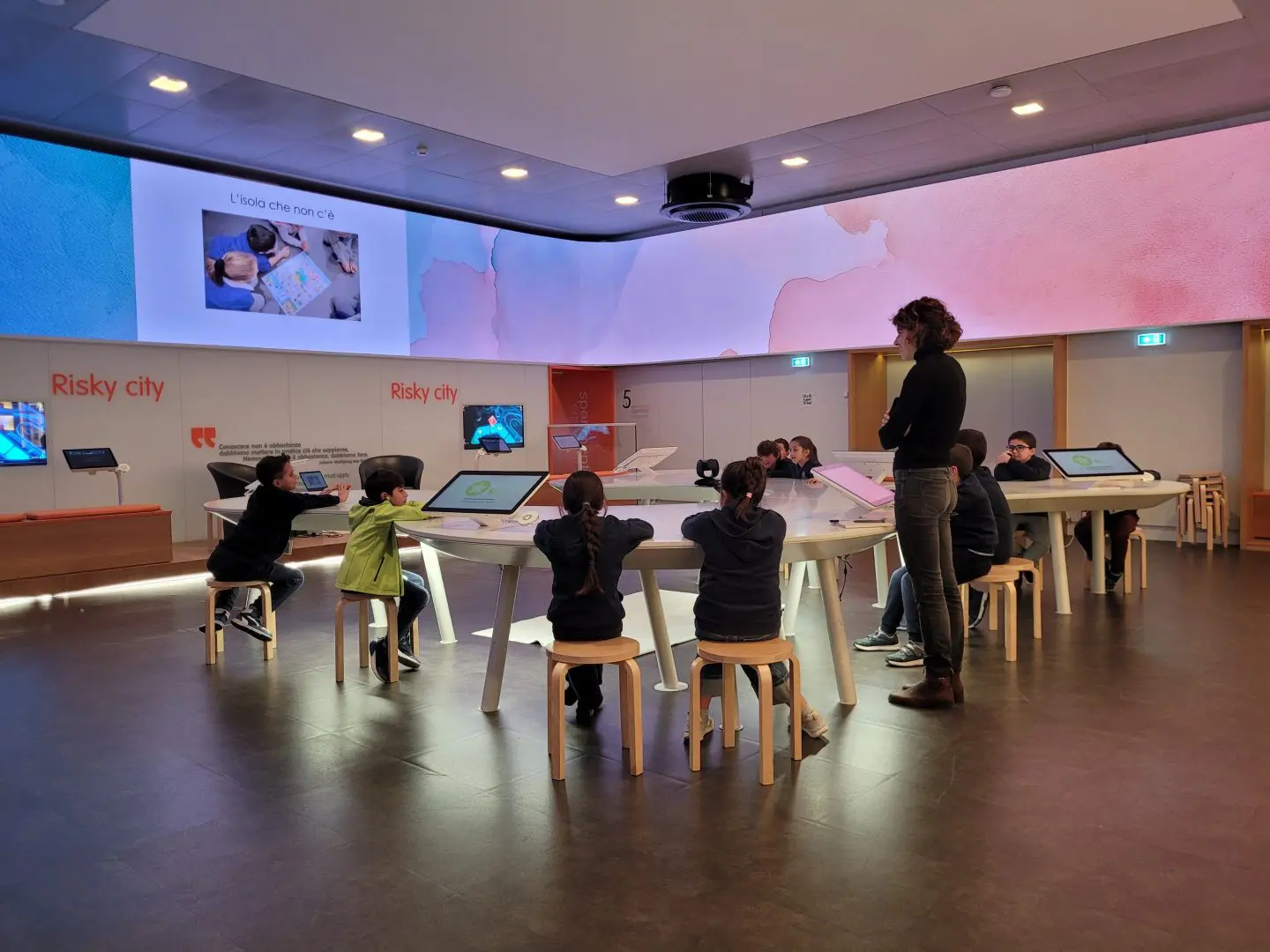
ROMA (ITALPRESS) – In the school year 2025-2026 the Museo del Risparmio di Intesa Sanpaolo “ confirmed its role as a national reference point in education to economic citizenship, consolidating an educational model based on scientific rigour, methodological innovation and inclusion”. That’s what you read in a note. “Thanks to an ever more articulated, inclusive and innovative educational offer, the Museum has involved 155,031 students and teachers of the schools of the I and II cycle, throughout Italy and abroad, up 32% compared to the previous year.” 1.557 educational interventions were offered to schools – including financial education, workshops, guided tours and events – for a total of 2,277 hours of training. Thanks to FLITIN (Financial Literacy International Network), the network of the Intesa Sanpaolo Group active in Italy and in other eleven European and non-European countries, the Museum was able to share and replicate consolidated didactic formats abroad, reaching over 13,000 students outside the national borders.
For Giovanna Paladino, Director and curator of the Museum of Savings, “in a context marked by increasing economic, social and geopolitical uncertainty, the ability to understand the choices concerning money, savings, consumption, work and the future is no longer an accessory competence, but an essential component of citizenship. Economic-financial education is mainly transformed into a tool to read reality, evaluate alternatives, recognize risks, understand the consequences of decisions and develop autonomy, in synthesis educate to choice. The contribution of the Museo del Risparmio is highlighted not only through the numbers of our annual report, but also with the quality and variety of its paths, the dialogue with the school world, the design with public and private partners and the international opening path”. The Museum’s distinctive feature is educational innovation: the educational offer is based on edutainment, interactivity, digital tools and active participation. The interdisciplinary approach relates financial education with other curricular subjects and with the main challenges of the contemporary world, integrating issues such as environmental and social sustainability, digital transformation, online security, artificial intelligence and the development of human capital.
The quality and scientific reliability of the educational offer were recognized in 2025 by the National Committee for Financial Education through the award of “Quality Children”, which certify the absence of commercial purposes and compliance with high standards in the provision of financial education activities. Among the main novelties of the school year 2025-2026 are the Edufin & Literature cycle, which dialogues classics with the economy, and webinars on synergies between sports and money on the occasion of the Olympic and Paralympic Games Milan Cortina 2026. The EDU FIN& routes have also been expanded and consolidated FUN for primary and secondary schools of I degree and the cycle “A window on the world” for secondary schools of II degree, dedicated to deepening economic currentity. At the same time, the training of teachers through specialized webinars and the free FAI META course has continued, with the aim of encouraging the integration of financial education in teaching. The Museum has also strengthened its network of collaborations with institutions, public bodies and associations of the third sector, and signed a Protocol of collaboration with the Regional School Office of Piedmont, the Piedmont Region and the local authorities in promoting financial education in schools.
Starting in 2025, a new system of monitoring the appreciation of the initiatives aimed at schools was introduced, conceived as a tool for continuous listening and improvement, with the aim of making the training offer increasingly aligned with the interests, expectations and needs of teachers. In more than 90% of the cases, teachers expressed their desire to re-enter their class to future editions of the initiatives already experienced, confirming the high appreciation for the proposed initiatives. Looking to the future, the Museum of Savings will continue to invest in the expansion and customization of training courses, in the strengthening of teaching tools to support teachers and in the extension of activities to contexts characterized by greater educational and social fragility. Particular attention “will be devoted to strengthening the international dimension, with the aim of achieving an increasing number of students and contributing to the spread of an increasingly inclusive economic-financial culture, in Italy and abroad”, concludes the note.
– press office photos Intesa Sanpaolo –
(ITALPRESS).