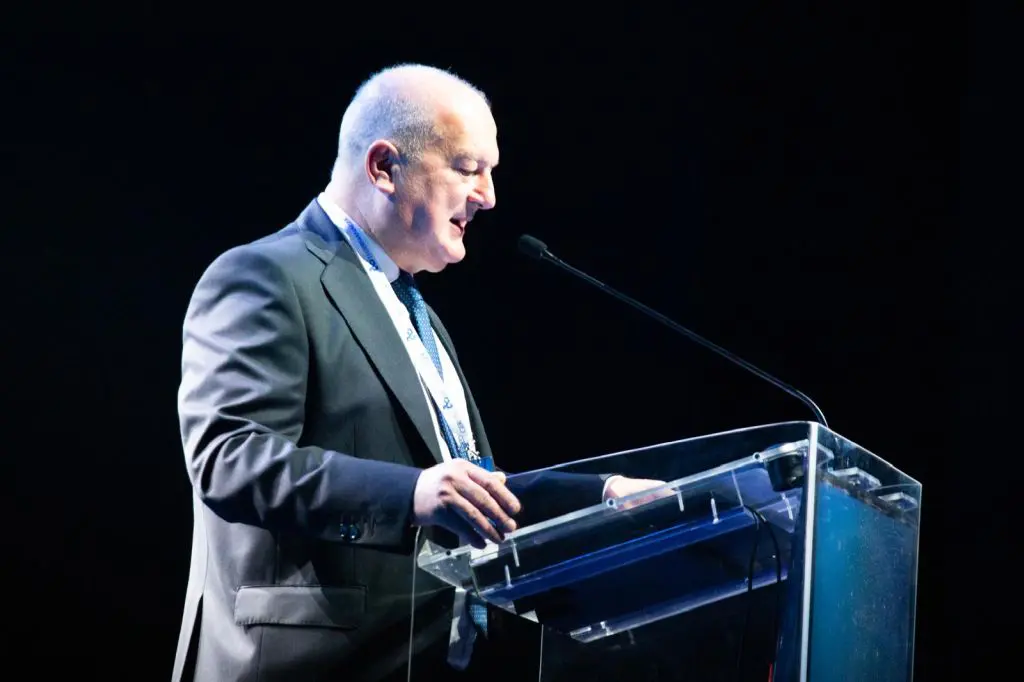
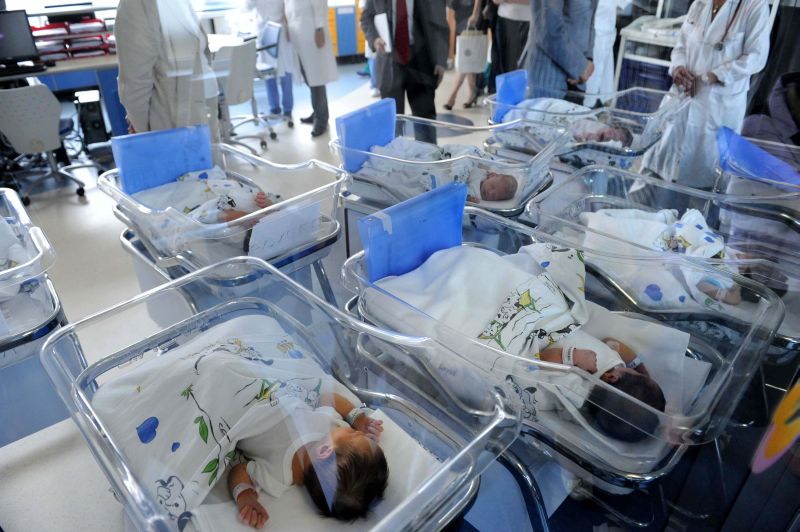
ROMA (ITALPRESS) – The collapse of births in Italy is not the result of a lesser desire to become parents, but of the difficulties that prevent millions of people from fulfilling their project of life. This is the message that emerges from the “Dossier Natalità 2026: Volere o Potere”, realized by the Foundation for Christmas in collaboration with ISTAT and presented today at Palazzo Wedekind, during an event sponsored by INPS, in the presence of Gigi De Palo, President Foundation for Natality, Francesco Maria Chelli, President of ISTAT and Valeria Vittimberga, Director General of INPS. The report photographed a country in which in 2025 only 355.000 children were born, a minimum historical since the Second World War, with a rate of fecundity dropped to 1,14 children per woman, but where the renunciation of parenthood is mainly determined by economic, working and social obstacles.
The dossier highlights how denatility is not the fruit of a cultural change or the lack of desire to have children. On the contrary, the problem is represented by the increasing distance between what people would like to achieve and what they actually manage to do. Among the Italians in a fecund age who will have no other children, 62.2% say that they have given up because of the difficulties encountered, while only 5.5% declares that parenthood does not fall within their project of life. Even more significant is the gap between intentions and reality. If the intentions of fecundity declared by Italian women were realized, in 2025 some 760 thousand children would be born, more than twice as much as those actually come to light.
The causes of renunciation are mainly economic and structural. More than 2.8 million Italians indicate economic and working difficulties as the main obstacle to the choice of having children. Almost one woman on two (49.9%) fears negative consequences on her career in maternity, against 24% of men. To this is added the weight of the welfare with more than 3 million women turned out inactive for family reasons, against 151 thousand men, while 763 thousand people give up children also for the need to assist elderly parents.
The report also describes an increasingly older country with a growing demographic imbalance. In 2025, against 355 thousand births, 652 thousand deaths were recorded, with a negative natural balance of 297 thousand people. If, on the one hand, Italy has one of the highest expectations of life in the world (83.4 years), on the other, this primacy risks putting more and more pressure on the sustainability of the health system, welfare and pension system, called to support an increasingly older population with an increasing number of young people.
“For years we have been told that Italians do not make children because they do not want them. The data proves exactly the opposite. The real problem is that millions of people fail to realize their own life project. Today the theme is not to convince someone to have children, but to give people the freedom to have them. As long as putting a child into the world will continue to be perceived as an economic, working and social risk, we will continue to witness a decline that concerns everyone. The birth is not a private matter, but the condition on which the future of the welfare, economy and cohesion of the country depends,” said Gigi De Palo, President of the Foundation for Christmas.
– photo IPA Agency –
(ITALPRESS).