ROMA (ITALPRESS) – The increase in life expectancy is a great conquest of modern medicine, but living longer does not necessarily mean living better: it is in this context that geriatrics assumes a fundamental role, because it deals with the health of older people, considering illnesses but also functional autonomy, cognitive state, nutrition, mobility and quality of life.
Aging is a complex process that often accompanies the contemporary presence of multiple chronic pathologies, the intake of numerous drugs and a greater physical and psychological vulnerability: the geriatra has the task of evaluating these aspects in an integrated manner, identifying tailored strategies to maintain as long as possible independence and well-being.
In a society where the number of the elderly is constantly growing, geriatrics are destined to become one of the most important medical disciplines: among the challenges on the horizon transform the measure of longevity from the years of life to the opportunity of health and quality of life.
“In geriatrics we often talk about fragility in an inadequate manner: it is not about having diseases, but of loss of physical and mental functions; diseases not only absolutely related to the loss of function. Today we talk a lot about lifestyles, which are extremely important for a healthy aging: this however prepares a lot earlier. Prevention is not done at 65 years, but from birth: today the data is extremely alarming, even in the adult population and in that of the so-called new adults; a 45-year-old on three is co-soft, so it has more than one pathology. Genetics have a weight, but do not affect health aging except for a 20-25%”, said Dario Leosco, professor of Internal Medicine at the Federico II University of Naples and president of the Italian Society of Gerontology and Geriatria (Sigg), interviewed by Marco Klinger for Top Medicine, TV format of the news agency Italpress.
Building a good longevity already in young age is possible but, Leosco explains, is “a very delicate problem. There are various aspects that affect the health of young people such as obesity, smoking and alcohol, but there is one that is emerging especially over the past few years and is the psychological distress that the new generations live: this decisively influences the onset of diseases even in adulthood. This is an exasperated situation also by Covid: today, when we compare the health of the new generations with that of the old, we find a gap according to which the old generations are better than the new ones. This is a worrying thing, because when we go to see the increase of life expectancy in the last hundred years we find a slowdown recently: we had seen it before Covid and probably binds to this aspect, because psychological distress affects well-being; without psychological health there is no physical health”.
Among the factors that influence the prevention of aging, he adds, there are “food, physical activity and cognitive activity: we must promote an adequate diet, we must reiterate that physical activity is a drug and must be cultivated every day, we must remember that even in the elderly social relationships have a decisive importance and must absolutely avoid isolation. Every activity must be progressive: just start from ten minutes a day of walk and then increase up to 2-3 hours a week, always without exaggerating. What can be done is done: we must not pretend that an old man does an exasperated physical activity, but that he does it continuously.”.
The Italian National Health System, according to Leosco, “is not yet ready to manage a population that becomes more and more elderly: this is a huge problem if we consider that we do not age very well. For example, a person who is 85 years old lives at least 12 in non-extraordinary health conditions: the disease during the most advanced age is something that inevitably affects. The problem is that we must also teach the elderly how to age properly: this means in the first place to counteract agism, i.e. the condition of discrimination against the elderly.”.
An elderly person in adequate health conditions, he concludes, “can contribute decisively to society: today we know that it is important to support families especially in fostering the growth of grandchildren. It is a thing that gives great importance to its ageing, because it transmits to the new generations the experience of a generation that has experienced problems and conditions different from the current well-being, but that however has managed to move forward”.
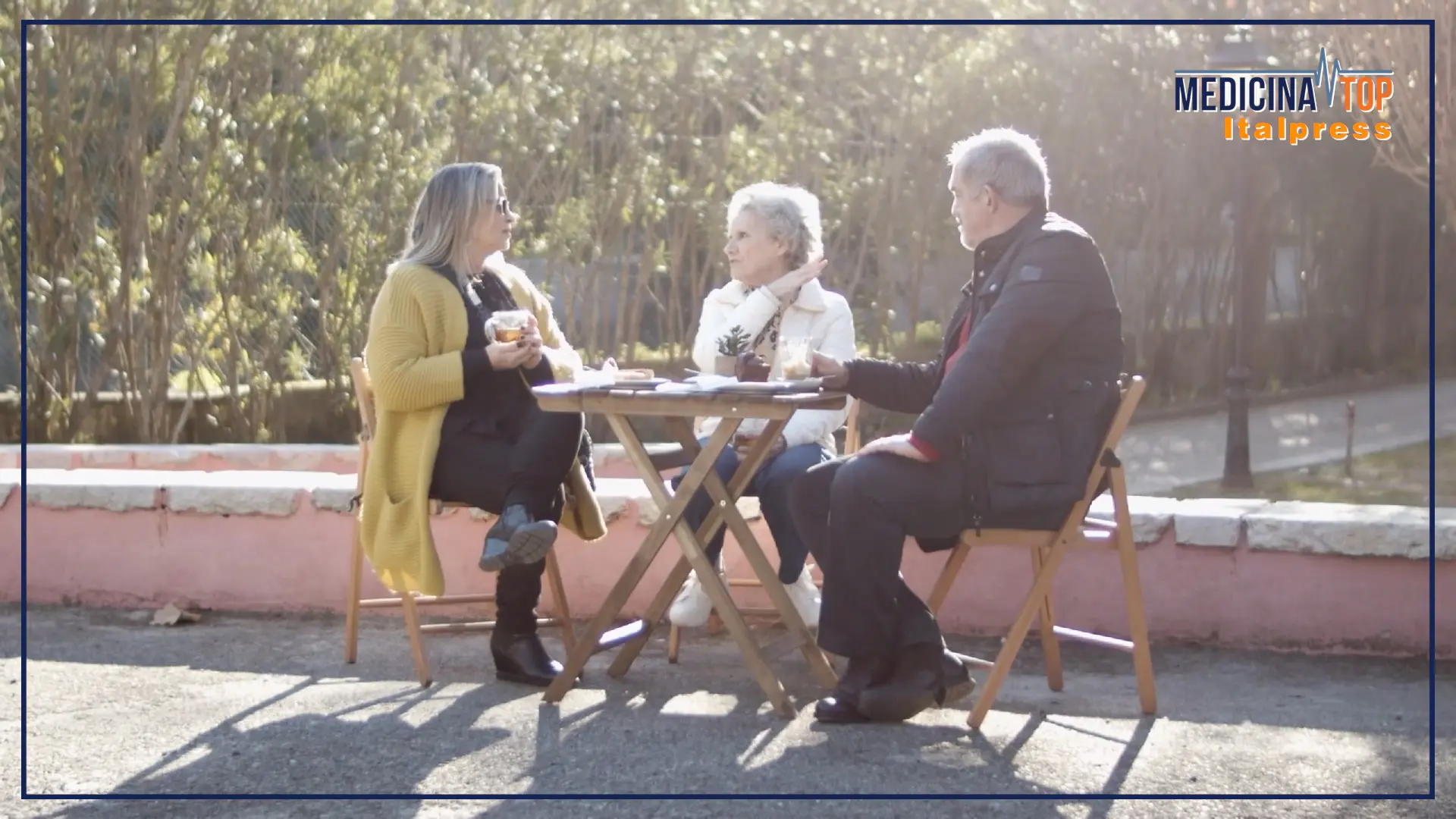
-Photo taken from video Top-Medical Medicine
(ITALPRESS).