In the contemporary debate on the new generations, an emotional and social condition emerges with increasing force that crosses the Gen-Z: the tension between high aspirations and concrete possibilities of self-building It is not only an individual discomfort, but a cultural phenomenon that reflects structural transformations of labor, relationships and social promises inherited from the past, within a context of digital capitalism, economic instability and continuous exposure to globalized recognition models.
It is interesting the contribution published on Vogue Italia, written by Jeanne Ballion, entitled What is cruel optimism, the obscure feeling that afflicts the Gen-Z and prevents it from happening, because it offers a lucid and theoretically founded reading key, which recalls the concept of “cruel optimism” elaborated by the philosopher Lauren Berlant. The author highlights how the promise of personal affirmation risks today to transform itself into a form of constant pressure, almost an invisible grammar that directs individual desires and expectations.
The text describes the “ cruel optimism” as “live in the shadow of unrealizable dreams”, emphasizing as “Laurea, career of dreams, independence: contemporary mirages that fuel desire while implying doubt”. This passage is central because it shows the ambivalent nature of social expectations: agonized and at the same time destabilizing, able to support the collective imagination but also to generate widespread frustration.
According to Berlant, as reported in the piece, “a relationship of cruel optimism exists when what we want becomes actually an obstacle to our realization… becomes cruel when the object of this attachment actively hinders the goal that initially motivated it”. Here emerges the fundamental sociological concept: the desire is never purely individual, but built within cultural, educational and institutional frames that define what is considered “success”.
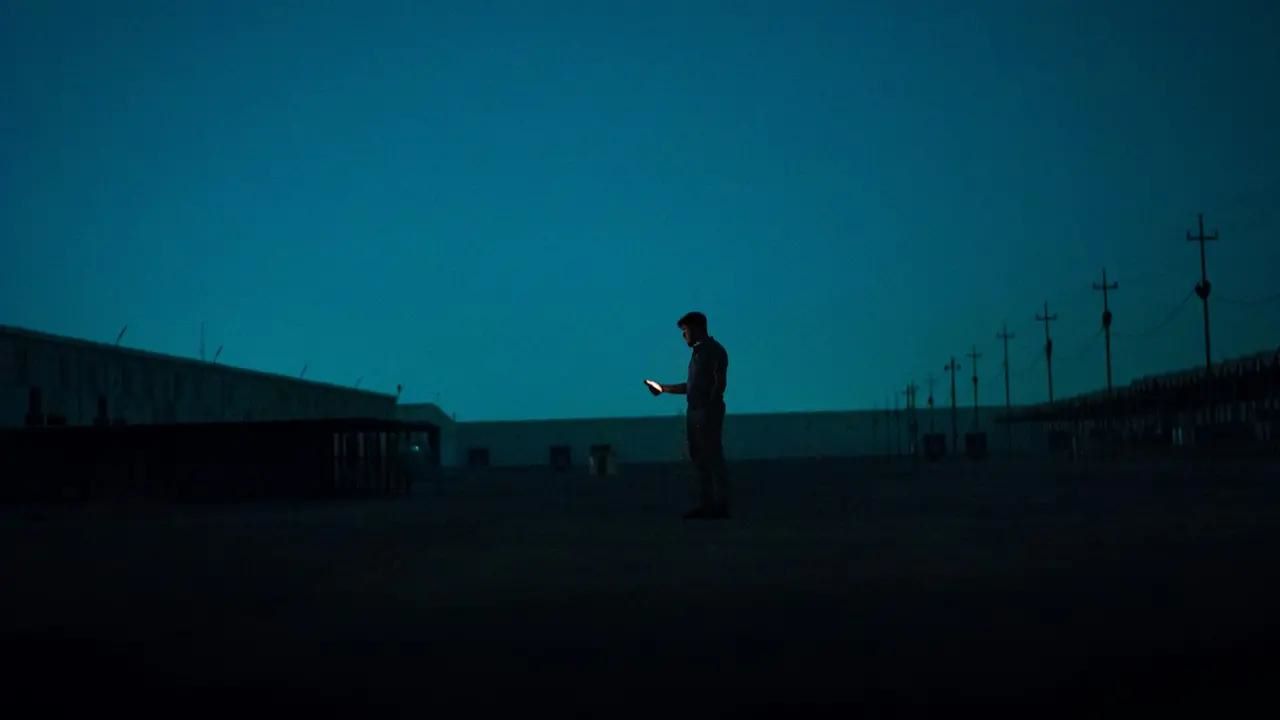
The reflection also points out that these ideals “continue to shine, while the conditions for achieving them are becoming increasingly fragile”, outlining a generation “in precarious equilibrium”, suspended between hope and disincanto. The Gen-Z thus grows within narratives of affirmation that coexist with working precariousness, climate crisis, geopolitical instability and a constant saturation of the market of attention, which amplifies social comparison.
This phenomenon can be interpreted as an increasingly evident fracture between social representation and real structure of opportunities.
The thought of Zygmunt Bauman, with its ‘liquid modernity’, helps to understand how our paths of life have become increasingly less stable and predictable, characterized by continuous changes and increasing uncertainty.
Cruel optimism produces an emotional short circuit when material conditions do not allow access to those goals. We could talk about a new form of anomy, that is, a condition in which the rules of social recognition are continually reiterated but are increasingly difficult to achieve. This sums up the effect of digital platforms, which transform everyday life into a permanent showcase, feeding social comparison, performance anxiety and perception of structural inadequacy.
In this perspective, the contribution of the piece is particularly relevant because it is not limited to describing a generational discomfort, but it highlights the systemic dimension. The problem is not the lack of ambition of young people, but the overlap between still strong social promises and increasingly fragile and unequal conditions of realization.
However, this interpretation does not necessarily imply a pessimistic vision. As the text suggests, overcoming cruel optimism does not mean giving up desires, but redefining them, making them more adherent to the real trajectories of existence. In this context, fragility is not only loss, but also openness to new forms of design.
The Gen-Z, precisely because aware of the contradictions of the present and more exposed to global complexity, can develop a new code of desire, less rigid and more sustainable, based on authentic, plural and adaptive trajectories. Perhaps it is precisely in this capacity to rethink the very idea of success that opens up a space of concrete hope for the future.
L’articolo The generation suspended between dreams and reality comes from IlNewyorkese.