
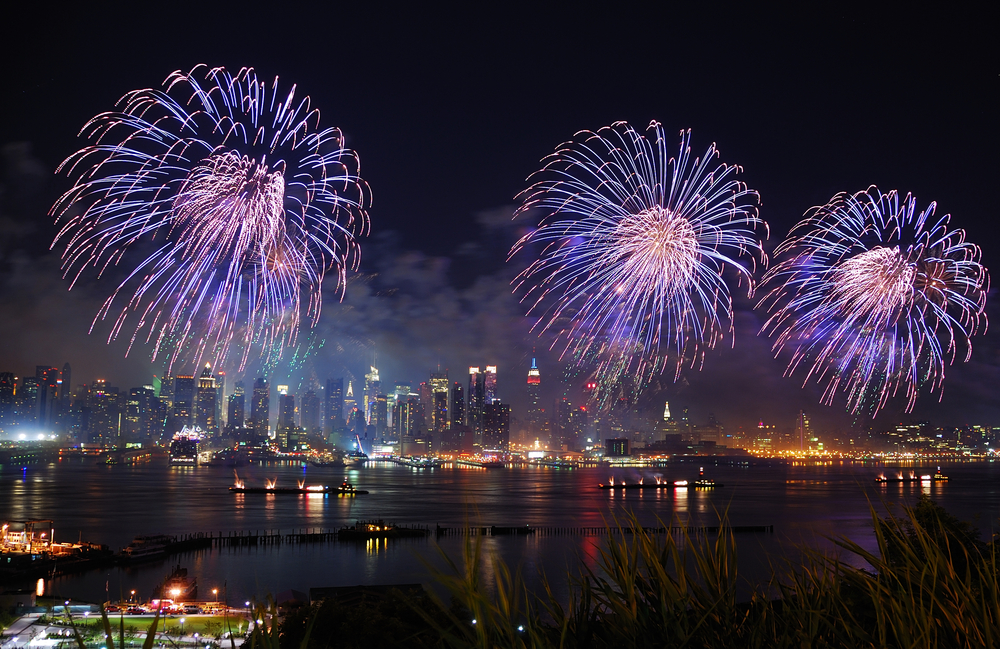
On July 4, the Independence Day is celebrated in the United States, the national holiday commemorating the approval of the Declaration of Independence by the Continental Congress, in Philadelphia, in 1776. In 2026 the anniversary comes to 250 years from that document, and that’s why the celebrations are bigger than usual. But on 4 July it does not coincide with the end of the war against the United Kingdom, nor with the moment when London really recognized the independence of the former colonies: that was only in 1783, with the Treaty of Paris.
The date became the symbolic birthday of the United States because on July 4, 1776 the Congress adopted the text of the Declaration. Two days before, on July 2, the political resolution declared independent of the colonies had been approved; the signature of the document, instead, did not take place all that day and not even all 4 July. The copy on parchment began to be signed on August 2, and some delegates signed even later.
The Declaration was written mainly by Thomas Jefferson, after the work of a five-person committee including John Adams and Benjamin Franklin. The text claimed that governments derive their power from the consent of the governments and that people have rights that cannot be removed from a sovereign. It was a very strong idea in the world of the eighteenth century, but it was not applied to all: women, people reduced to slavery, Native Americans and many people without property remained outside the political promise contained in the words “all men are created equal”.
At first the United States was not the great continental country we know today. They were thirteen former British colonies on the Atlantic coast, conflicting with London especially for fiscal and political issues, and then war in 1775. The Treaty of Paris of 1783 formally closed that war and recognized American independence, but it also opened a new phase: the expansion to the west, the construction of a federal government, the violent relationship with the native populations, slavery and, much later, the civil war.
The party began almost immediately. In 1777, a year after the Declaration, Philadelphia – which at the time was one of the largest and most cosmopolitan cities in the world – celebrated on July 4 with fireworks, bonfires and the historical sound of its Liberty Bell, a symbol of America. During the 19th century the anniversary became the main American civil festival: in 1870 the Congress recognized it as a federal holiday, initially for public employees. Only later the free payday was established for everyone.
In time on July 4 became a great collective habit. There are official speeches, parades and military ceremonies, but for many families the day mainly means barbecue, picnic, beach trips, flags hanging out and fireworks in the evening. The hot dog is one of the symbols of the festival: the National Hot Dog and Sausage Council estimates for years that on 4 July in the United States about 150 million are eaten.
In New York on July 4th it has its frame, made of water, bridges and fireworks. The Macy’s Fourth of July Fireworks, born in 1976 and arrived in 2026 at the 50th edition, is one of the most followed performances of the country. This year Macy’s predicted a larger edition of the usual, with fires launched from the Brooklyn Bridge, the East River and the West Side of Manhattan.
The 250th anniversary also brought back to New York a naval tradition linked to the great American anniversaries. Sail4th 250 previews the arrival of heel ships and military ships from all over the world in the port of New York and New Jersey, with a parade on July 4 in front of the Statue of Liberty. There will also be Nave Amerigo Vespucci, engaged in his World Tour. The sai4th resumes the same initiative that New York saw hosting a great naval parade in 1976, on the occasion of the bicentenary of American independence.
L’articolo 250 years of American independence, proviene da IlNewyorkese.