
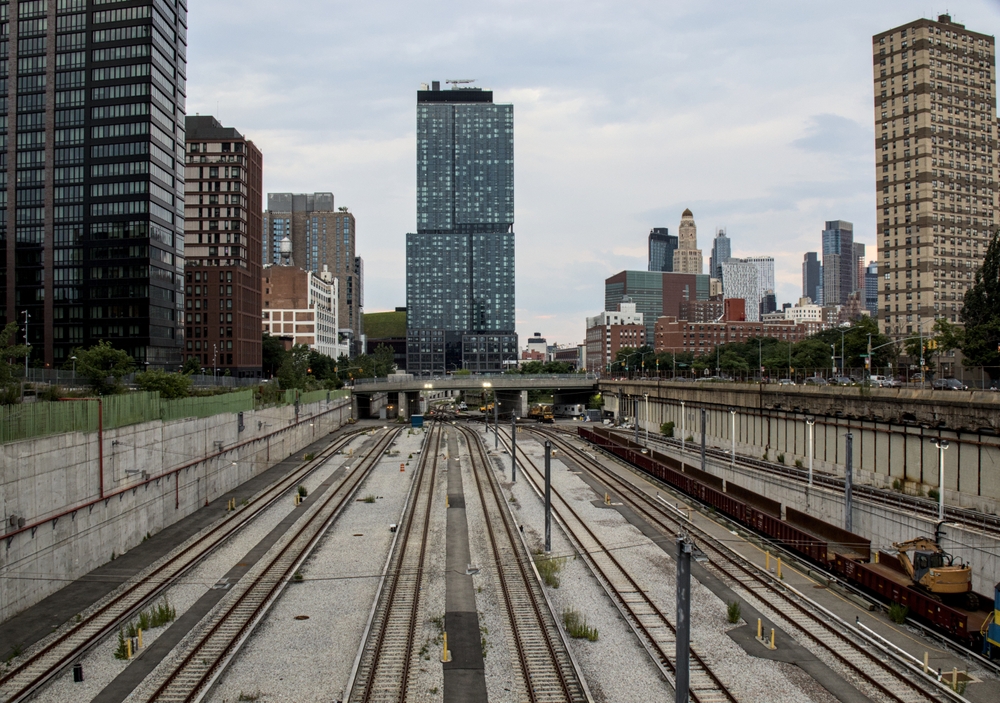
Atlantic Yards had to be a shortcut to be able to erect in a central part of Brooklyn new homes, offices, public spaces and also bring an NBA team. More than 20 years later, the Barclays Center has been there since 2012, the Brooklyn Nets have played us since then, but the rest of the project has remained halfway. On Monday the state of New York presented a new five billion dollar plan to complete it: six new buildings, over 5,600 apartments, more than 1,200 units of calmed canon and new open spaces above and around the railway tracks between Atlantic Avenue and Pacific Street.
The project today is called Pacific Park, but for many in Brooklyn remains Atlantic Yards, the name with which was announced in 2003 by the manufacturer Bruce Ratner. At first it was presented as a major urban transformation operation: an arena designed by well-known architects, residential towers, shops, offices and thousands of apartments “affordable”. The most important promise, even politically, was to build 2,250 houses under the market price. That promise has not been respected in the expected times, and that is why every new announcement on the project is transposed with a certain skepticism or, at most, as an attempt to repair failure to initial delivery.
This, then, is a time when New York really needs homes. According to the latest Housing and Vacancy Survey, the rent rate available in the city fell to 1.4 percent, the lowest level since 1968. In May, according to StreetEasy, the median rent required in Brooklyn arrived at $3,895, the maximum recorded by the platform for the borough. This makes it more difficult to liquidate the plan as yet another gift to the builders: building 5,600 houses in an area served by many metro lines and the Long Island Rail Road would have a decisive effect on the housing offer. But it does not solve the main problem alone, that is for those who will really be accessible those houses.
In the real estate language of New York, “affordable” does not mean automatically cheap for those who already live in the neighborhood. It means that rent is calculated based on income bands defined by the Median Income Area, an indicator that often includes higher income than those of many families living in the areas involved. The proposal provides for a share of apartments for low income families and a quota for moderate incomes, but this second category is already disputed by local associations and politicians, because it risks producing houses formally facilitated but still out of reach for many historical residents.
The plan also has an objective problem: a part of the buildings and public spaces will have to be built over railway tracks still in use. It is the same complication that makes expensive and slow other New York projects built over infrastructure, from Hudson Yards to Sunnyside Yard. The state has already put 175 million dollars, but officials have admitted that they will need more money to realize the platforms above the tracks; according to Gothamist, the overall public commitment could reach approximately 700 million dollars.
Project governance is another piece of history. Atlantic Yards does not pass from the normal route of town planning approval, which involves community board, City Planning Commission and City Council. It is controlled by the State through the Empire State Development, with a community development company that has an advisory role. BrooklynSpeaks, a coalition of civic groups that has been following the project for years, argues that this system has reduced public control over the most important decisions, including changes to the plan, the management of open spaces and penalties for delays.
For this reason, for the new Atlantic Yards it will not be enough to present some renderings or announce a considerable number of apartments. It will serve an environmental review in the coming months, a binding timetable, applicable sanctions, an independent analysis of costs and subsidies and a clear definition of income bands for the facilitated apartments. If everything goes on, jobs could start in 2028 and last many years. In Brooklyn, therefore, the end of Atlantic Yards did not begin. At most another attempt to close a story that left the city with a little distrust.
L’articolo Brooklyn try again with Atlantic Yards proviene da IlNewyorkese.