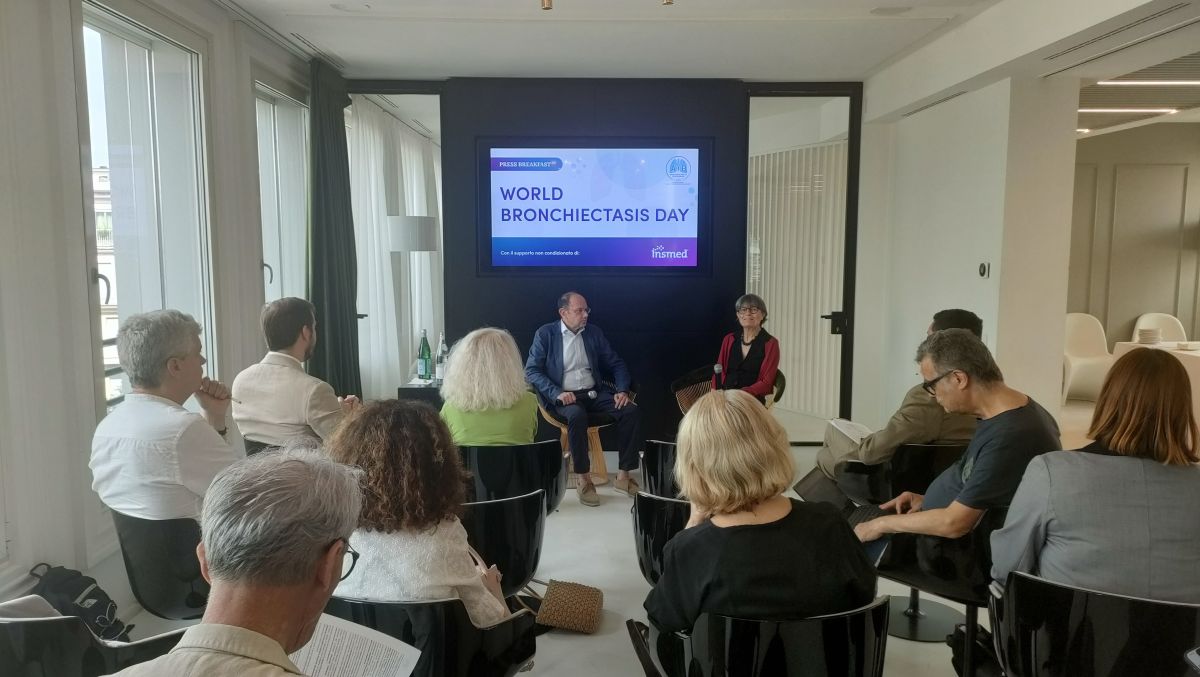
MILAN (ITALPRESS) – On the occasion of the World Day of the Bronchiectasie, AIB – Associazione Italiana Bronchiectasie APS – organized a meeting with the media, realized with the unconditional contribution of Insmed, with the aim of increasing awareness on a pathology still little known and often underestimated, but with a significant impact on the life of patients, and to announce the creation of a multidisciplinary work table aimed at the diagnosis The initiative stems from the need to bring to the attention of health institutions a chronic respiratory pathology that, while representing the third airway disease after asthma and BPCO, continues to be widely underdiagnosed and underestimated in its clinical and organizational impact. bronchiectasias are in fact a chronic and progressive inflammatory disease, characterized by irreversible dilation of the airways, persistent infection and neutrophilic inflammation, which feed each other by determining structural damage of the lung and a progressive impairment of the respiratory function. In recent years, epidemiological data have evidenced an increase in the diagnosis of bronchiectasias not associated with cystic fibrosis: approximately 680 cases are estimated every 100,000 globally, with higher rates among women than men, and a prevalence of approximately 130 cases every 100,000 in Italy. However, diagnosis typically takes years, often more than a decade, after the onset of symptoms, which can lead to a progression of the disease and worsening of the prognosis of patients. “The bronchiectasies represent a heterogeneous and complex condition, in which chronic infection, persistent inflammation and structural damage of the airways contribute to the definition of a clinical framework that evolves over time and which requires a highly specialized approach – says Professor Andrea Gramegna, Professor of Diseases of the AP at the University of Milan – In this scenario, the diagnostic delay and fragmentation of the pathways are not only a challenge for patients. Non FC bronchiectasies have a huge impact on the patient’s life due to symptoms such as persistent cough, expectorate production, short breath and repeated infections, which can affect their everyday life. The real engine of progression of disease are repeated bronchial reacquisites, unpredictable worsening of symptoms requiring changes in treatment, associated with increasing the risk of hospitalization and progressive loss of respiratory function. “People with bronchiectasies are often faced with a long and fragmented path before arriving at a proper diagnosis and takeover, with significant repercussions on the quality of life and the daily management of the disease. To weigh not only the chronic symptoms, but also the uncertainty linked to the reacutizations, which can further compromise daily activities, increase the physical and psychological load of the disease and generate constant uncertainty on the clinical course – emphasizes Elisabetta Stracchi, partner of AIB. – It is therefore essential to strengthen the information and coordination between the different levels of care, so that the patient can be followed continuously and appropriately along the entire path.” The current therapeutic management involves prolonged and repeated intake of antibiotics to control infections, alleviate symptoms and contain the consequences of structural damage to the lungs. Questo treatment of pathology, however, can contribute over time to the development of antibiotic resistance, reducing the effectiveness of the available options and further complicating the therapeutic path. It is in this scenario that the work table promoted by AIB, which involves the involvement of clinicians, experts and institutions with the aim of developing an address document capable of identifying the main critical issues and proposing operational recommendations to improve the management of pathology at national level. “The establishment of this work table is a fundamental step to bridge the gap of recognition that still today characterizes bronchiectasias in our country – says Alessandro Vadilonga, Vice President of AIB. – As an association, but also as people who live daily with this pathology, we know how much diagnostic delay, the difficulty of accessing reference centers and the unevenness of welfare paths can affect the path of care and the quality of life of patients. Through the policy paper we intend to propose a shared path that allows to intervene in a systemic way on diagnosis, taken into account and access to care, reducing territorial disogenity and ensuring greater equality for patients.” In this path, the contribution of the various actors involved is crucial to foster a structured and oriented comparison to the identification of shared priorities. “The setting up of a work table is a concrete opportunity to strengthen the dialogue between scientific communities, patient associations and institutions, contributing to greater sharing of the priorities related to the management of pathology – says Filippo Giordano, General Manager of Insmed Italia – Support for initiatives oriented to the definition of a policy paper is part of our commitment to foster a more coordinated and systemic approach, able to respond more effectively to the still unsatisfied needs of patients.” -photo f03/Italpress- (ITALPRESS).