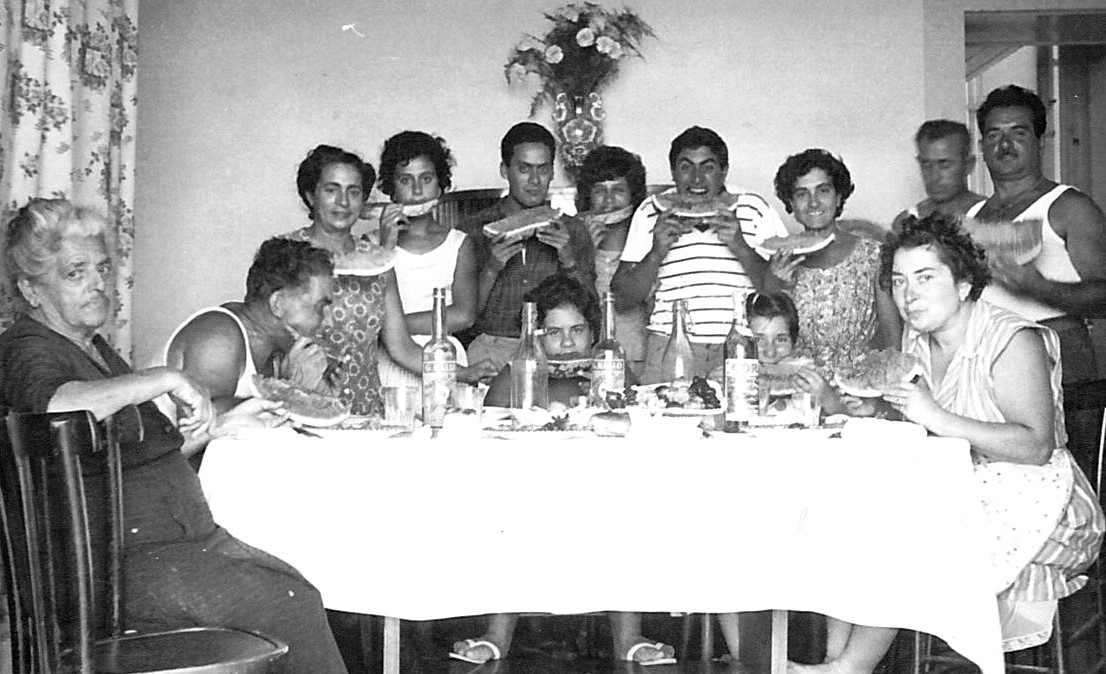
There is something vaguely melancholic in looking for the traces of a community that was there and there is no more entirely. It is different to go to Astoria to look for Greece, where the white and blue flags are still proud and the smell of the grilled octopus reaches you before you even get off the train: to find Italy in Williamsburg you have to look more carefully, slow down the pace, learn to read what remains between the folds of a neighborhood that has changed face several times and that continues to do so, at an increasingly accelerated pace. Yet, in Williamsburg, Italy is still there. You just need to know where to find her.
The neighborhood that interests us occupies the north-east part of Williamsburg, a large part bordered by the streets Montrose, Union, Richardson and Humboldt. For most of the twentieth century, this enclave was one of the most significant Italian American neighbourhoods in New York, although perhaps less famous than Little Italy in Manhattan or Carroll Gardens. Yet, here there was a concrete and daily Italianity, made of family-run shops, social circles, Catholic churches and mutual relief associations. The first Italian immigrants who made these roads their home were mostly from South Italy, arriving in waves after 1860 and still until the end of the second century.
To hold together the Italian community of Williamsburg was the same mixture that we find in every history of migration: food, faith, feast. Among the most important moments there was (and there is still!) the Festival of Lilies, exported from Nola, in the province of Naples, in honor of San Paolino. The nolanian emigrants settled here at the end of the nineteenth century and since then, every summer, they reproduce the famous Giglio lift: a metal obelisk of twenty-five meters raised at the rhythm of music by the Giglio Boys, followed by a wooden ship raised on the shoulder in a ritual dance under a confetti rain. For two weeks every July, the streets around the church of Our Lady of Mount Carmel, at the corner of Havemeyer Street and North 8th Street, turn into a sea of celebrations for a tradition that has roots in Williamsburg even older than the most famous San Gennaro Festival in Little Italy and dating back to 1903. In addition to being a very felt occasion, it is also a question for us Italians of an experience to live at least once in life during the New York summer (for 2026 scheduled from 8 to 19 July).
The festival takes place around the church and it is no coincidence that this stretch of road bears a particular name: North 8th Street between Meeker Avenue and Havemeyer Street was renamed “Father Pio Way” in 2000, to the will of Mayor Giuliani, in honor of the Capuchin Friar of Pietrelcina canonized two years later. A road plaque that for this community is not only toponomastic, but daily devotion that is also found in the sacred images supported on the davanzali and in the statuettes of Our Lady who make heads among the pots of basil to the windows.
Before entering shops and restaurants, it is worth a moment to watch the streets. Because this Italian Williamsburg is not only read through the signs but also and above all in the details: the idrant painted with the colors of the tricolor next to the stars and stripes, the sacred images to the windows, the chairs brought out on the sidewalk in the summer evenings. It takes a moment of adaptation to these roads in appearance like many others, but every Italian passing here soon finds a piece of “house”.
The Italian community of Williamsburg suffered a silent diaspora, accelerated by the gentrification of the 2000s. Many have moved to the suburbs, others have remained but in increasingly small numbers. Yet, some places remain as living garrisons of a memory that continues to nourish those who carry it inside. The first name that comes to mind is Bamonte’s. Founded in 1900 by Pasquale Bamonte, immigrated by Salerno, at 32 Withers Street, it is the oldest Italian restaurant in Brooklyn and one of the longest-lived in all of New York. Still managed by the family, it has an atmosphere suspended over time and a menu that will not amaze the most demanding foodies but that is worth the trip for those who love the living history of New York. A short distance, at 289 Manhattan Avenue, Fortunato Brothers Cafè has been opened since 1976, founded by three brothers who arrived directly from Naples with their original recipes of cannoli, biscuits and pastries handed down perfectly until today. What conquers me here is the atmosphere: the window, the perfume, the feeling of having entered a distant place in space and time.
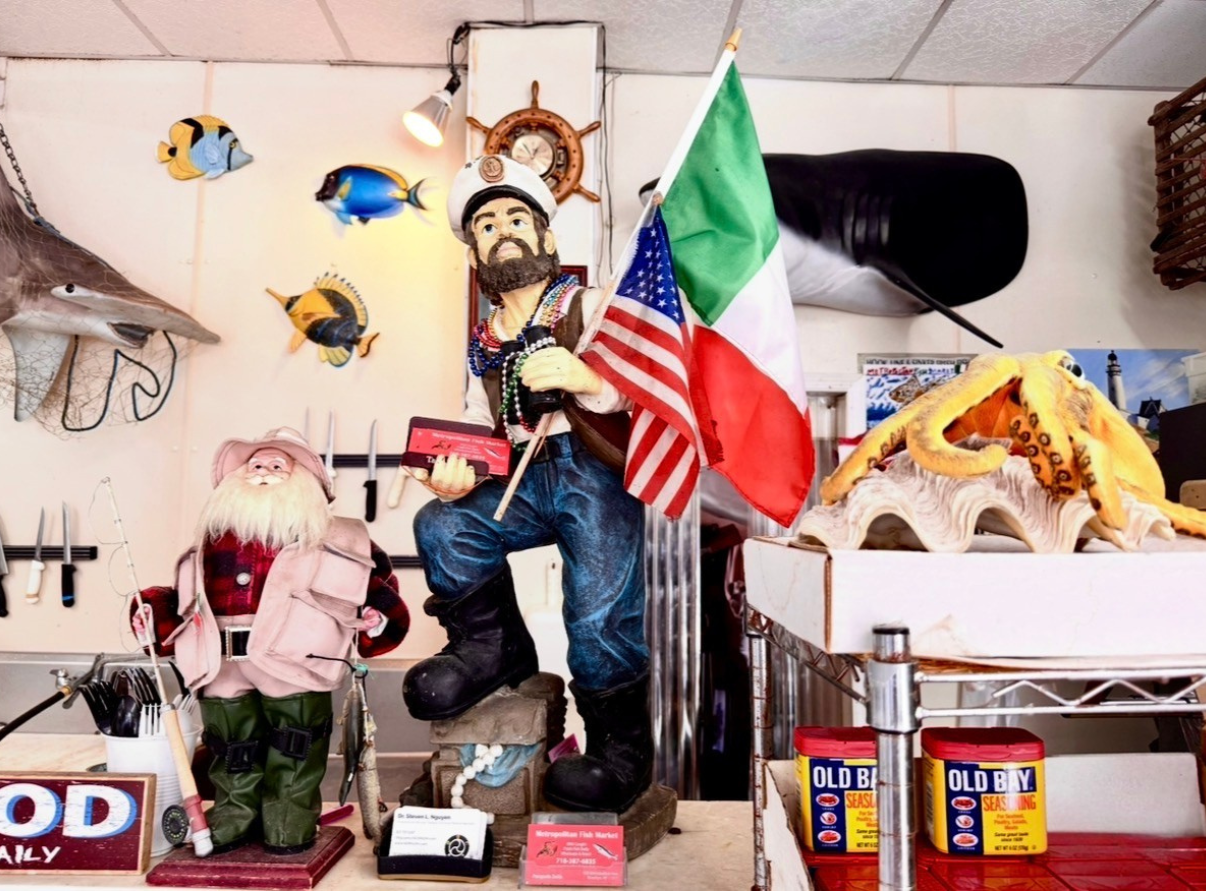
On Graham Avenue, Emily’s Pork Store opened since 1974 and remained almost unchanged while the Metropolitan Fish Market on Metropolitan Avenue is the reference of the fish district that resists with its lobster tanks and the Italian fishing village decorations. Not far away, at 636 of the same street, Pecoraro Latteria, one of my favorite places of this Italian Williamsburg, where the Pecoraro family has been rooted in Brooklyn for over sixty years with its own dairy tradition. What is present today as a cozy modern restaurant, was originally a local cheese factory and with made in Italy products available for purchase is exactly the type of place we take for granted in Italy and that in New York, whenever it is, it is worth double.
Speaking of favorite places, if there is a story that tells better than all the others the sense of this Italian Williamsburg and is that of Settepani Bakery. Chef Nino Settepani arrived from Sicily as a boy, trained at the French Culinary Institute in New York and opened his first bakery in Lorimer Street in 1992, in the Italian neighborhood where he had grown up. With him there has always been his wife Leah Abraham, who in 2000 opened the Settepani restaurant in Harlem, becoming one of the historic premises of Lenox Avenue. Today she is the very nice daughter Bilena to carry out the company with energy and vision, serving with passion old and new customers and spreading the culture of the true Italian pastry shop. These stories of family heritage are the ones that affect me most when I go to discover a new neighborhood and are the same ones that I think deserve to be told for resilience, passion but also the ability to adapt to a reality like the New York that is constantly evolving.
In addition to historic places, Williamsburg also welcomed a new Italianity, more contemporary but not less authentic. Lella Alimentari, on Manhattan Avenue, is the type of place I recognize as Italian at first sight: exuberant and cured shelves, piadines baked with the heart and authentic ingredients. I don’t know for you, but for me these places that are a bridge between generations of Italians in New York always have something deeply reassuring and Sunday evening aperitifs here know exactly Italian summer!
And then there is Lilia, who deserves a separate speech. He has just turned ten years (a goal that in a neighborhood that changes with this speed is not at all discounted) and all this time has never stopped being one of the most beloved Italian restaurants in the city. Chef Missy Robbins turned a former coach on Union Avenue into a bright room where hand-made pasta is, as the New York Times wrote, “a direct way to happiness. ” Booking requires patience and strategy but the counter is walk-in, and it is worth trying. Not to be missed is Best Pizza, on Havemeyer Street, where the owner carries the Sicilian heritage in a wood oven that has more than a hundred years. The name is generic, of course, but pizza is serious. And in this city, where pizza is an identity issue almost as much as the passport, this counts a lot.
Screenshot
What strikes, exploring this Italian Williamsburg, is the subtle difference from the other stages of our World Tour in New York. In Astoria or Greenpoint the community is still visible, tangible, noisy in the best sense of the term. Here Italianity is quieter, almost underground, entrusted to places more than to people. Those who have remained have made the precise choice to carry out the traditions. It is a form of discreet resistance that I respect enormously, perhaps also because I recognize it: it is the same affectionate stubbornness with which we Italians in New York continue to look for the right mozzarella, to bring the Italian coffee in suitcase, to explain to the Americans the difference between a cappuccino and a caffelatte.
In this sense, Williamsburg is perhaps the most personal stage of our journey. Not because there is more or less of the other to discover, but because looking at it I find myself thinking that every community of migrants leaves different traces, some noisy and festive, other quieter, and that all, in their own way, tell the same story: that of those who chose this city as the second homeland and put us in all their history.
L’articolo Williamsburg is also ours proviene da IlNewyorkese.