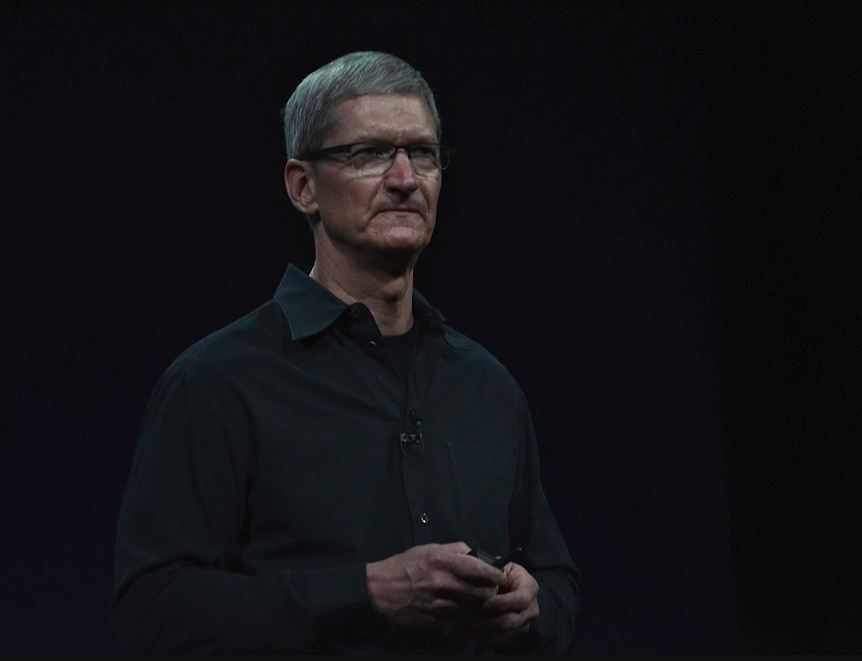
Cook, 65 years old, does not disappear from the scene: he will remain involved in the company with the role of executive chairman, the same kind of transition already seen with Jeff Bezos in Amazon and Reed Hastings in Netflix.
John Ternus is 50 years old and has been in Apple for a quarter of a century. Over the past five years he has overseeed engineering at the base of iPhone, iPad and Mac — the three products that generate the vast majority of the company’s revenues. A career built in silence, far from the spotlight, which made him the natural candidate for succession.
It is not a name known to the general public. But in the tech world, people who count know who they are.
When Tim Cook collected Steve Jobs’ legacy in 2011, Apple was already an extraordinary company. What no one could predict was the scale of growth that would be followed.
Under its leadership, Apple’s market capitalization has increased by more than $3,600 billion, driven by the global domain of the iPhone and an ecosystem of services — App Store, Apple Music, iCloud, Apple Pay — which has transformed the company as a manufacturer of digital platform hardware integrated into the daily life of billions of people.
Cook never had Jobs’ almost mythological vision. It has never been what climbs on stage and changes the world with a phrase. But he was able to do something just as difficult: take a machine already perfect and turn it even faster, even longer, even bigger.
However, the delivery step comes at a moment far from simple for Apple.
Artificial intelligence redesigned the tech industry with the same violence the iPhone redesigned it in 2007. And Apple didn’t come earlier this time. After promising nearly two years ago new AI features integrated into its devices, the company struggled to keep them. Siri — the voice assistant who should have become the center of Apple’s AI experience — stayed behind compared to competitors such as ChatGPT and Google Gemini.
The scene shot: at the beginning of 2026 Apple had to turn to Google — always historical rival — to integrate more advanced AI capabilities in the iPhone. A move that surprised the market and raised questions about the future of the company’s technological strategy.
It is in this context that Ternus inherits the rudder.
The challenge of Ternus is clear: to bring Apple back to the position that competes in the AI era, without losing what Cook has built — operational solidity, extraordinary margins, and the unwavering trust of hundreds of millions of users in the Apple ecosystem.
Its profile as an engineer, built on the hardware that has always been the company’s pulsating heart, suggests continuity with the past. But the market asks for something more: a vision.
September 2026 officially marks the end of the Cook era. The Ternus era has just begun.
L’articolo Tim Cook leaves Apple: who is John Ternus, the new CEO who inherits the morsicata apple comes from IlNewyorkese.