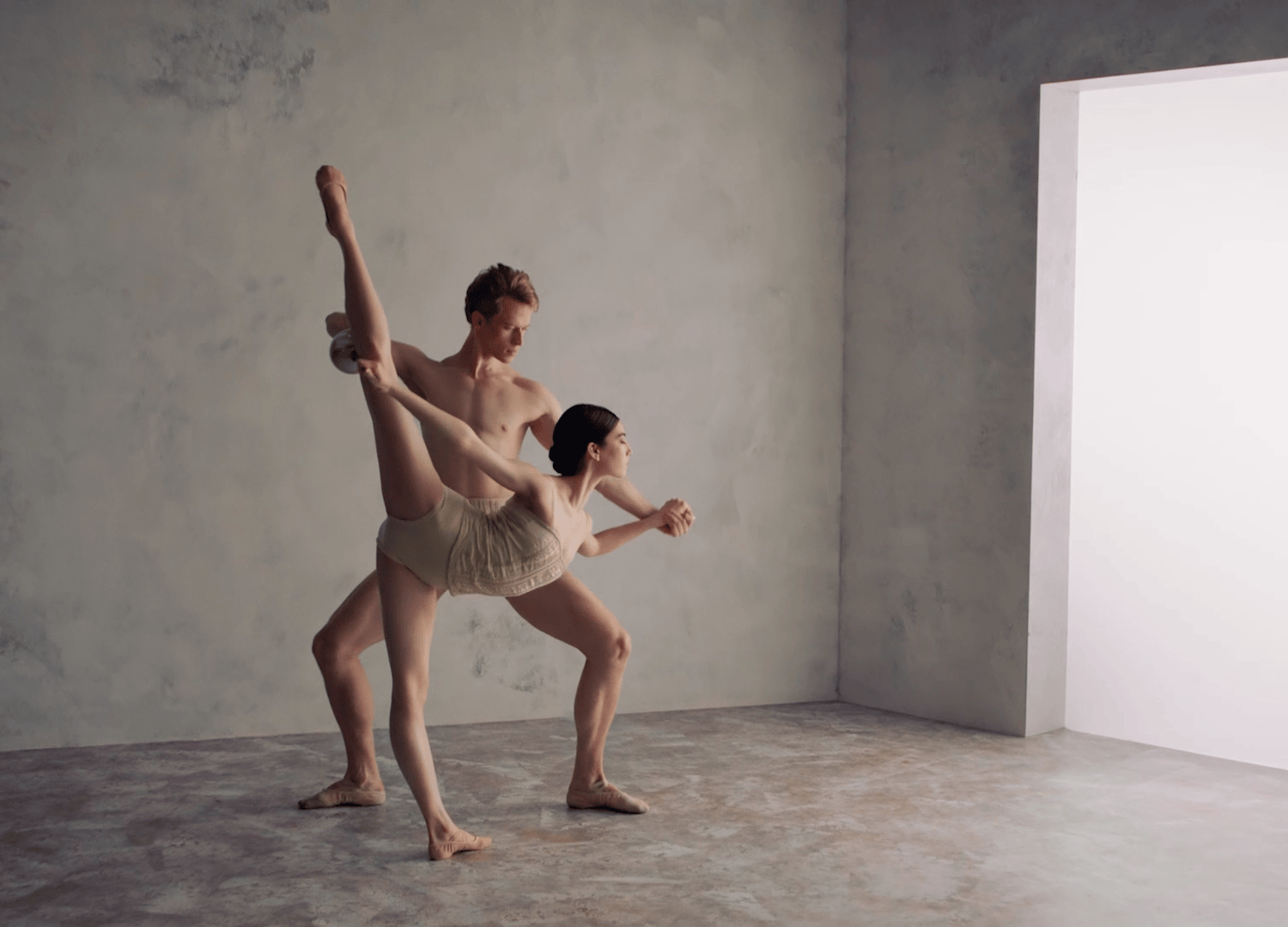
On Tuesday, October 27, on the stage of David H. Koch Theater at the Lincoln Center in New York, the American Ballet Theatre presented the last performance of Fresh Visions and Timeless Classics, one of the programs of his autumn season. On stage three different ballets: Petal by Helen Pickett, Petite Mort by Jiří Kylián and Paquita, in the version signed by Natalia Makarova. Three works that cross different eras, music and languages, from Mozart to Philip Glass, and which tell part of the history and identity of the company.
Founded in 1939 and active on scenes since 1940, the American Ballet Theatre is an American ballet company, as well as the most important institutions of American dance and a world reference for international dance. In 2006, the United States Congress awarded him the recognition of America’s National Ballet Company. Since its origins, its repertoire has flanked the great classics of European tradition to the works of contemporary choreographers, helping to spread ballet even outside its historical centers. Today the company is directed by Susan Jaffe, former ABC dancer, who took artistic direction in December 2022.
The original idea, developed by Lucia Chase and Richard Pleasant, was to build a company that worked as a sort of dance museum: a place capable of preserving the great works of the past and, at the same time, commissioning new ones. In the early years the Ballet Theatre (the original name did not include “American”) involved choreographers such as Michel Fokine, Antony Tudor, Agnes de Mille and Jerome Robbins, contributing to the formation of a repertoire that would become a reference for American dance. Over the decades, they danced with the company some of the most famous names of international ballet, including Mikhail Baryshnikov, Rudolf Nureyev, Natalia Makarova and the Italian Carla Fracci. In 1957, with the support of President Dwight Eisenhower, the company adopted the current name, adding the adjective “American” and strengthening its role in American cultural diplomacy: for example, the only American company to perform in the Soviet Union at the time of the Cold War. Since then his tour has reached all 50 American states and 45 countries, totaling over 480 cities.
In addition to the theatrical activity, the American Ballet Theatre has developed an articulated training system, which includes the Jacqueline Kennedy Onassis School, dedicated to the preparation of young dancers, and the ABT Studio Company, a group of emerging artists representing one of the main links with the professional company. Training is part of a broader project that includes educational programs, initiatives in schools and activities aimed at different publics. The repertoire also continues to evolve: the historical productions of Swan Lake, Giselle and Don Quixote are accompanied by works commissioned to contemporary choreographers and projects dedicated to the search for new languages. It is this coexistence between conservation and experimentation to characterize the programming of the AABT, which alternates great classical productions with evenings composed of shorter ballets, often very different from each other.
The evening opened with Petal, choreography created in 2008 by the American Helen Pickett for Aspen Santa Fe Ballet and entered the repertoire of the American Ballet Theatre only on 21 October. The work takes inspiration from the gerberas, flowers characterized by bright colors and a regular structure, which Pickett used as a starting point for a reflection on movement and human relations. On stage, four pairs of dancers move between meetings, separations and physical contacts, accompanied by music by Philip Glass and Thomas Newman. The exhibition includes yellow and turquoise costumes and a warm backdrop, which contribute to the choreography of the characteristic visual identity.
In the middle of the work there is above all the relationship between the bodies. As Pickett himself told in an interview published in the program of the season, the idea was born during a research dedicated to sensory connections and forms of communication preceding words. The title and the choice of colors came later, after the choreographer was struck by some gerberas exhibited in a flower shop.
With Petite Mort, the program has changed completely register. Created in 1991 by Czech choreographer Jiří Kylián for the Salzburg Festival, on the occasion of the bicentenary of Mozart’s death, the ballet uses slow movements of two piano concerts by the Austrian composer. Six men and six women alternate in a choreography that explores desire, vulnerability, and force relations between the bodies. Particularly recognizable is the use of six florets, handled by dancers as an integral part of the stage composition. Already entered the AABT repertoire in 2003, Petite Mort was represented by the company for the last time in 2023.
To close the evening was Paquita, the ballet that represented one of the most anticipated returns of the season. The American Ballet Theatre has featured the grand divertissement in the 1983 version of Natalia Makarova, absent from the company’s repertoire since 1996. It is a succession of solo variations, steps to two and dances, built on the choreographic tradition of Marius Petipa and on the music of Ludwig Minkus. The ballet requires considerable technical precision and offers dancers the opportunity to show some of the most recognizable features of classical dance.
For the performance of October 27, the main roles were entrusted to Christine Shevchenko and Joo Won Ahn. The show’s resumption involved Makarova, now 86 years old, who returned to the American Ballet Theatre test rooms to work with dancers along with Nancy Raffa.
Born in Leningrad, today Saint Petersburg, Makarova was one of the great dancers of Kirov before leaving the Soviet Union in 1970. In the United States he entered the American Ballet Theatre, where he dated for about fifteen years and also developed an important part of his choreographic activity. The return of Paquita and the very presence of Makarova mark a sort of passage of knowledge between generations of artists.
The Fresh Visions and Timeless Classics cycle ended on Tuesday, also proposed on 21st and 25th October. The autumn season of the American Ballet Theatre continues until 31 October with An Elegy and A Dream, which includes the world premiere of Brady Farrar’s Trio Élégiaque, along with Flight of Jae Man Joo and Frederick Ashton’s The Dream. On Thursday, 29 October the traditional autumn gala of the company is also planned.
L’articolo Three ways to tell dance with the American Ballet Theatre proviene da IlNewyorkese.